Best Dog Toys for Aggression: A Veterinarian’s Guide to Safe and Effective Chew Toys
Does your dog destroy every toy in minutes? As a veterinarian, I explain how to choose the safest, most durable toys for aggressive chewers — and how the right toy can actually reduce aggression.
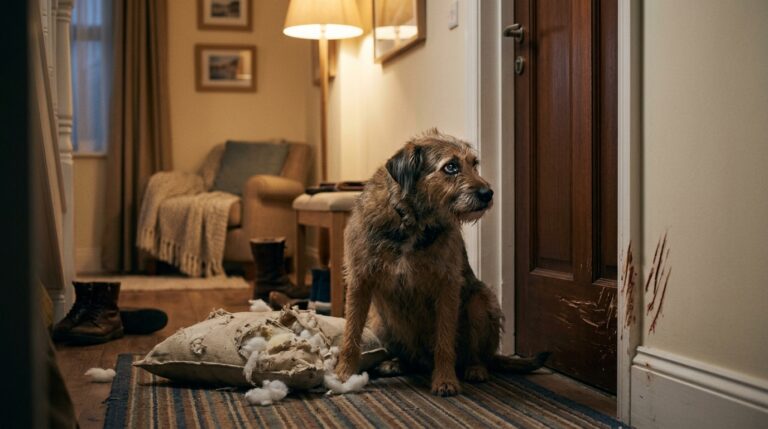
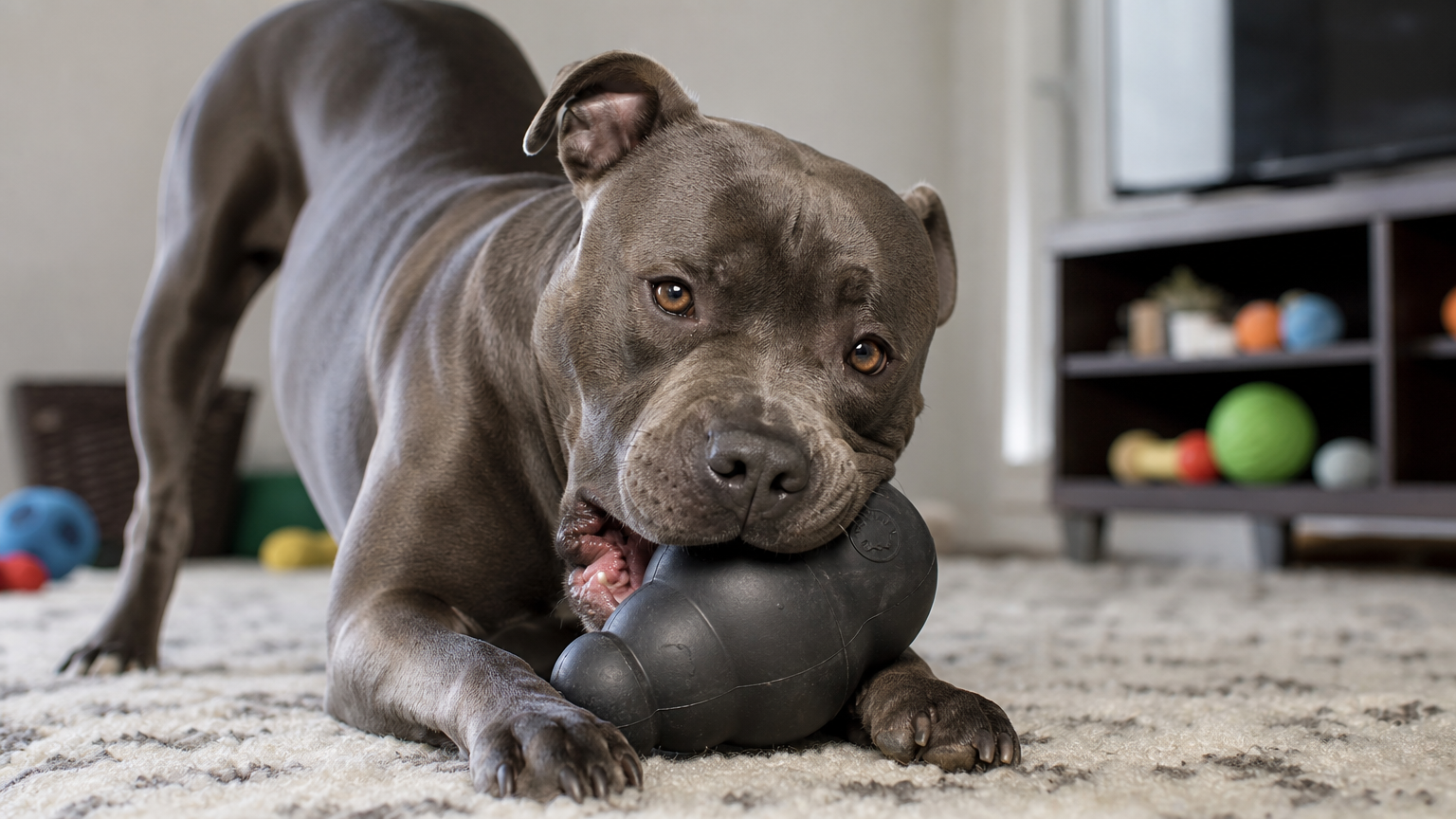
As a veterinarian, I see a lot of destroyed toys. And I mean destroyed — shredded plush, snapped ropes, cracked plastic, and sometimes, pieces of those toys in a dog’s stomach requiring emergency surgery.
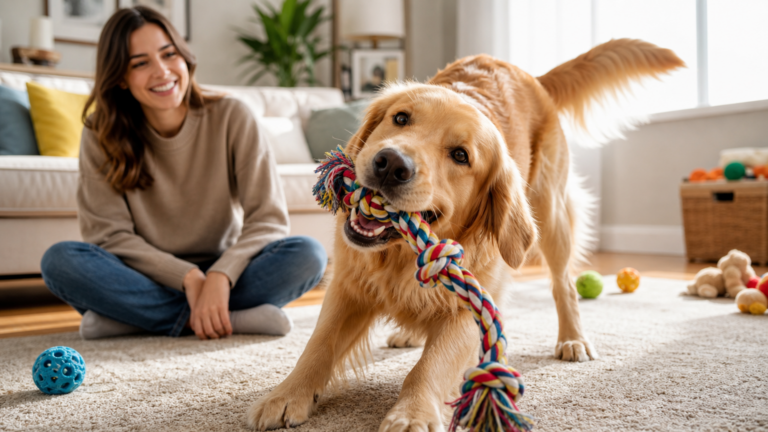
If your dog is an aggressive chewer, you already know the struggle. You buy a toy, and within 10 minutes, it’s in pieces. But here’s what many owners don’t realize: the right toy doesn’t just survive your dog’s jaws — it can actually help reduce the aggressive chewing behavior itself.
Aggressive chewing is often a symptom of boredom, anxiety, excess energy, or a strong natural prey drive. The right toy channels that energy into a productive, calming activity. The wrong toy can be dangerous — or make the behavior worse.
In this guide, I’ll walk you through what to look for, what to avoid, and my top recommendations for aggressive chewers based on both veterinary evidence and real-world testing.
🟢 Understanding Aggressive Chewing — A Veterinary Perspective
First, let’s distinguish between normal chewing and problematic chewing.
Normal chewing — Dog chews toys, bones, and appropriate items; stops when tired — Healthy behavior, natural instinct
Destructive chewing — Dog targets furniture, shoes, walls, doors — Often boredom, anxiety, or lack of appropriate outlets
Obsessive chewing — Dog chews non-stop, ignores other activities, may guard toys — Can indicate frustration, anxiety, or compulsive disorder
Redirected aggression — Dog chews aggressively after being frustrated (e.g., seeing another dog through the window) — Needs management of the trigger first
🔑 Key insight: Aggressive chewing is rarely “bad behavior.” It’s usually unmet needs. A dog that chews aggressively needs:
- More physical exercise — a tired dog chews less
- More mental stimulation — puzzle toys and training
- The right chew toys — durable, safe, and engaging
🟡 What to Look for in a Toy for Aggressive Chewers
Not all “tough” toys are created equal. Here’s what I recommend looking for:
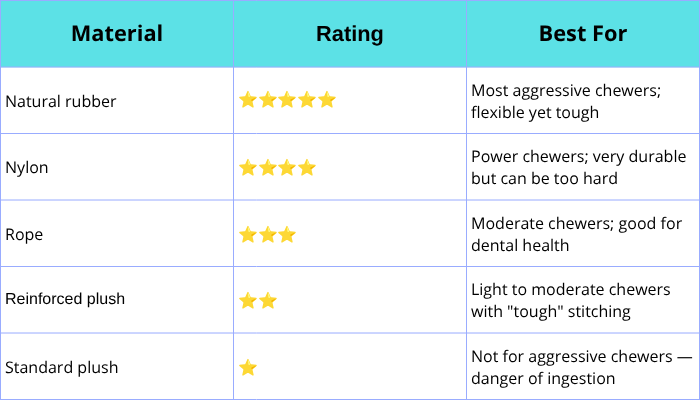
Material Matters
Safety First
As a veterinarian, safety is my number one concern. Every year, I see dogs with:
- Intestinal blockages from swallowed toy pieces
- Broken teeth from toys that are too hard
- Choking hazards from toys that break into small parts
The “thumbnail test”: Press your thumbnail into the toy. If it doesn’t dent, it’s too hard for your dog’s teeth. If it dents easily, it’s likely safe.
Size and Shape
- Size up — A toy that’s too small can be swallowed. When in doubt, go one size larger than recommended
- No small parts — Avoid toys with glued-on eyes, buttons, or squeakers that can be chewed off
- Ergonomic design — Toys that are easy to grip and carry encourage appropriate play
🔴 Top Toy Recommendations for Aggressive Chewers
Based on my experience as a veterinarian and feedback from my clients, here are the toys that consistently perform best:
1. KONG Extreme
The gold standard for aggressive chewers. Made from ultra-durable natural rubber, it’s the same classic KONG shape but in a much tougher formula.
Why it works:
- Nearly indestructible for most dogs
- Can be stuffed with treats, peanut butter, or wet food and frozen
- Bounces unpredictably for interactive play
- Available in multiple sizes, including XX-Large for power chewers
Best for: All breeds, especially Pit Bulls, Labradors, German Shepherds, and Boxers.
2. West Paw Zogoflex Hurley
A bone-shaped chew made from Zogoflex — a BPA-free, non-toxic, recyclable material that’s incredibly tough yet slightly flexible.
Why it works:
- Floats in water (great for fetch)
- Dishwasher safe
- Comes with a one-time replacement guarantee
- Flexible enough to be safe for teeth
Best for: Dogs that love to carry and chew bones; great for water-loving breeds.
3. Goughnuts Maxx 50
Engineered specifically for power chewers. The Goughnuts Maxx 50 has a safety indicator — a red inner layer that becomes visible when your dog has chewed through enough to need replacement.
Why it works:
- Safety indicator ring — you know when to replace it
- Extremely durable natural rubber
- Passes the thumbnail test — tough but tooth-safe
- Made in the USA
Best for: Extreme power chewers that destroy everything else.
4. Nylabone Dura Chew
Nylabone has been a trusted name for decades. Their Dura Chew line is designed for aggressive chewers and comes in various shapes and flavors.
Why it works:
- Flavored to maintain interest
- Textured nubs help clean teeth
- Very affordable compared to other durable options
- Wide variety of shapes
⚠️ Veterinary note: Nylabone is harder than rubber toys. Monitor your dog — if they’re leaving scratch marks on the surface, it’s fine. If they’re breaking off large pieces, remove it.
5. Chuckit! Ultra Ball
Not all aggressive chewing is about sitting and gnawing. Some dogs need to chase, catch, and carry. The Chuckit! Ultra Ball is the toughest fetch ball on the market.
Why it works:
- Natural rubber construction
- Floats in water
- High bounce for exciting fetch sessions
- Compatible with Chuckit! launcher for longer throws
Best for: High-energy dogs that need to run and fetch, not just chew.
6. Bullymake Box Nylon Toys
Bullymake specializes in toys for aggressive chewers. Their nylon toys are some of the toughest available, and they offer a replacement guarantee on their toughest items.
Why it works:
- Specifically designed for power chewers
- Replacement guarantee on select toys
- Subscription option for monthly variety
- Unique shapes that maintain interest
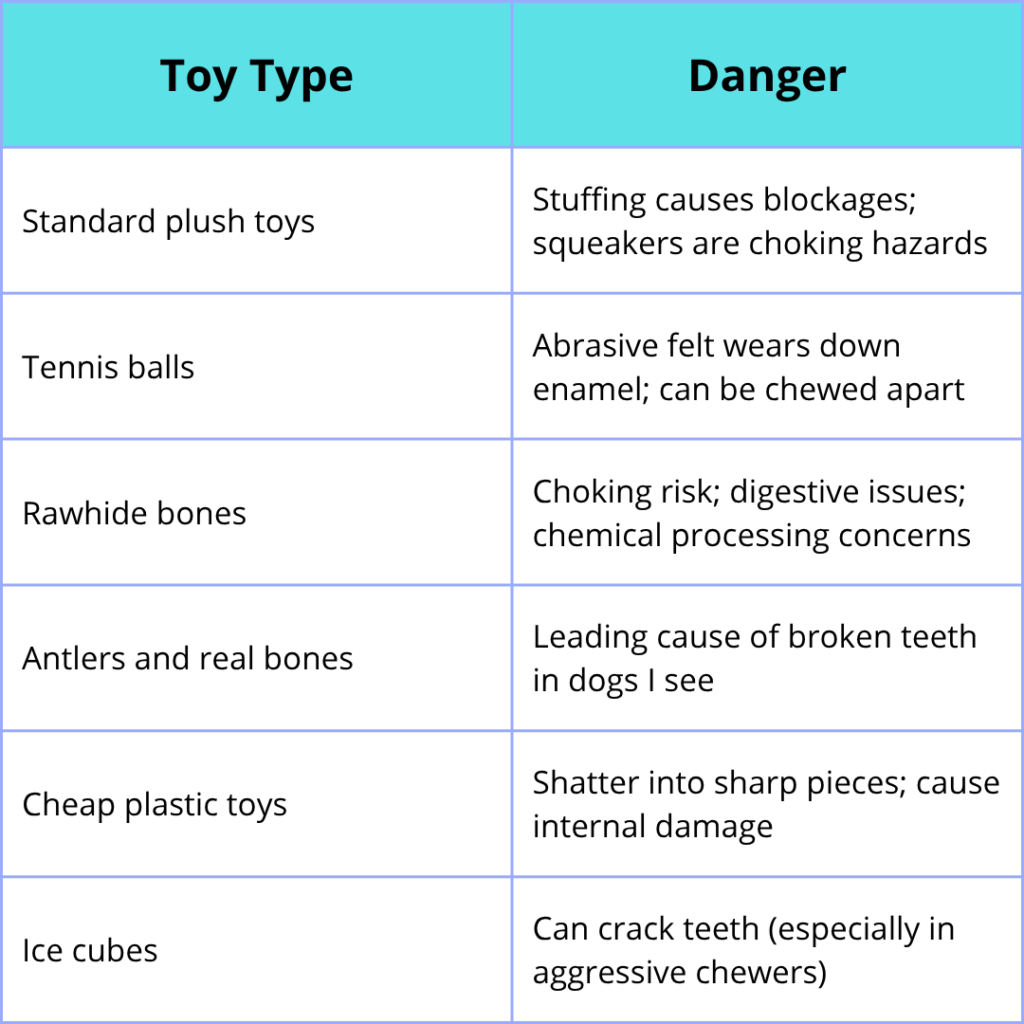
🟠 Toys to Avoid for Aggressive Chewers
As a veterinarian, these are the toys I see cause the most problems:
🟡 How to Use Toys to Reduce Aggression
The right toy isn’t just a distraction — it’s a tool for behavior modification. Here’s how I advise my clients:
Redirect, Don’t Punish
When your dog starts chewing something inappropriate (furniture, shoes), don’t yell. Calmly take the item, say “trade,” and offer an appropriate chew toy. Reward them when they take it.
Use Food-Stuffed Toys for Calmness
A KONG stuffed with wet food, peanut butter, or pumpkin and then frozen provides 30–60 minutes of focused, calming chewing. This is especially useful:
- Before guests arrive
- During thunderstorms or fireworks
- When you need to leave the house
- After exercise to transition to calm time
Rotate Toys Strategically
Dogs get bored. Keep 3–4 toys available and rotate them weekly. When a “new” toy appears, it feels exciting again — reducing the urge to find inappropriate items to chew.
Combine Exercise + Chew Time
A dog that has run for 30 minutes is far more likely to settle down with a chew toy than a dog that has been inside all day. Always exercise before offering a long-lasting chew.
🔵 When to See Your Veterinarian
Schedule a checkup if:
- Your dog’s chewing is compulsive — they can’t stop even when you try to redirect
- Your dog is swallowing toy pieces or you find pieces in their stool
- Your dog shows aggression (growling, snapping) when you approach their toys
- The chewing started suddenly in an adult dog (could indicate dental pain or other medical issues)
- You’re unsure if a toy is safe for your dog’s specific breed or size
We can rule out dental problems, pain, and anxiety disorders — and help you create a customized enrichment plan.
❓ Frequently Asked Questions
How do I know if a toy is too hard for my dog’s teeth? Use the thumbnail test. Press your thumbnail into the toy. If it doesn’t dent at all, it’s too hard. If it leaves a slight mark, it’s safe. If your dog is leaving scratch marks on the toy surface but not breaking pieces off, it’s acceptable.
My dog destroys every “indestructible” toy. What do I do? Try Goughnuts Maxx 50 or KONG Extreme — these are the two toughest options on the market. Also consider whether your dog needs more exercise. A truly exhausted dog is less likely to destroy toys.
Are bully sticks safe for aggressive chewers? Yes, but with supervision. Bully sticks are digestible and safer than rawhide, but aggressive chewers can swallow large pieces. Use a bully stick holder to prevent choking.
Can chewing toys replace exercise? No. Chewing is a complement to exercise, not a replacement. An aggressive chewer still needs 30–60 minutes of physical activity daily.
How many toys should my aggressive chewer have? 5–7 toys total, with 3–4 available at a time. Rotate them weekly. Too many toys at once can be overwhelming; too few leads to boredom.
Final Thoughts
As a veterinarian, my approach to aggressive chewing is simple: don’t fight the instinct — channel it. Your dog needs to chew. It’s calming, satisfying, and mentally enriching. Your job is to provide safe, durable outlets for that drive.
Invest in quality toys. Supervise new toys until you’re sure they’re safe. And remember: the most effective “toy” for reducing aggression is still you — your time, your attention, and your willingness to exercise and engage with your dog every day.
A tired dog with the right toy is a happy, healthy, and calm dog.