Indoor Cat Enrichment: 8 Ideas That Actually Work
Does your cat spend all day indoors while you’re at work? He sleeps, stares out the window, sleeps again — and at some point, starts meowing nonstop, scratching the couch, or knocking things off the table. If that sounds familiar, the problem may not be the cat. It may be the environment.
Indoor cat enrichment is the answer most recommended by veterinarians and feline behavior experts. And it’s not a fad — it’s science. A study published in ScienceDirect found that 61% of indoor cat owners reported at least one behavior problem, from aggression to inappropriate elimination. The good news? Almost all of it can be prevented with the right ideas.
If you’re looking for a simple way to start, a cat tree or climbing shelves is an option worth checking out.
In this article, you’ll understand why enrichment matters and discover 8 ideas that actually work to turn your home into a healthy feline environment.
What Is Indoor Cat Enrichment and Why Does It Matter?
Environmental enrichment is the set of stimuli that allows a cat to express natural behaviors — hunting, climbing, scratching, exploring, hiding — even in a closed space. Without those stimuli, boredom turns into stress, and stress turns into illness and bad behavior.
Indoor cats tend to live longer and are less exposed to accidents and infectious diseases. But, as the Drake Center for Veterinary Care points out, they have a higher risk of behavior problems: anxiety, aggression, excessive grooming, furniture scratching, and elimination outside the litter box.
The good news is that indoor cat enrichment prevents exactly those issues — and it doesn’t have to be expensive.
See, you might also enjoy reading: 5 Signs Your Cat Is Stressed (And How Enrichment Can Help)
Indoor Cat Enrichment: 8 Ideas That Actually Work
Below are 8 practical ideas, tested by feline behavior experts and easy to apply in any home or apartment.
1. Vertical Pathways: Shelves and Cat Trees
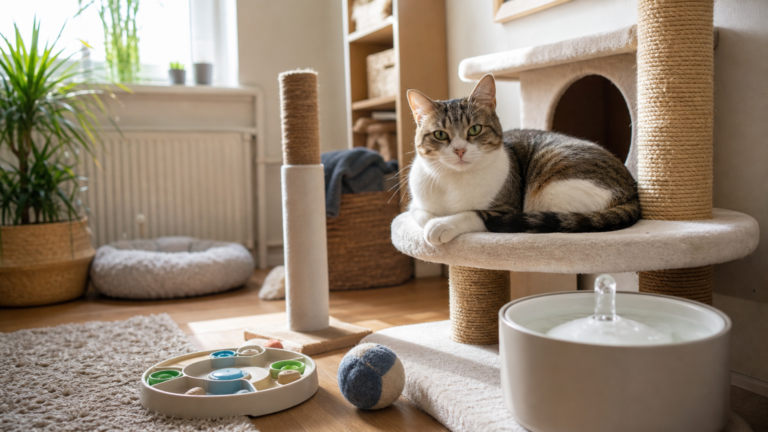
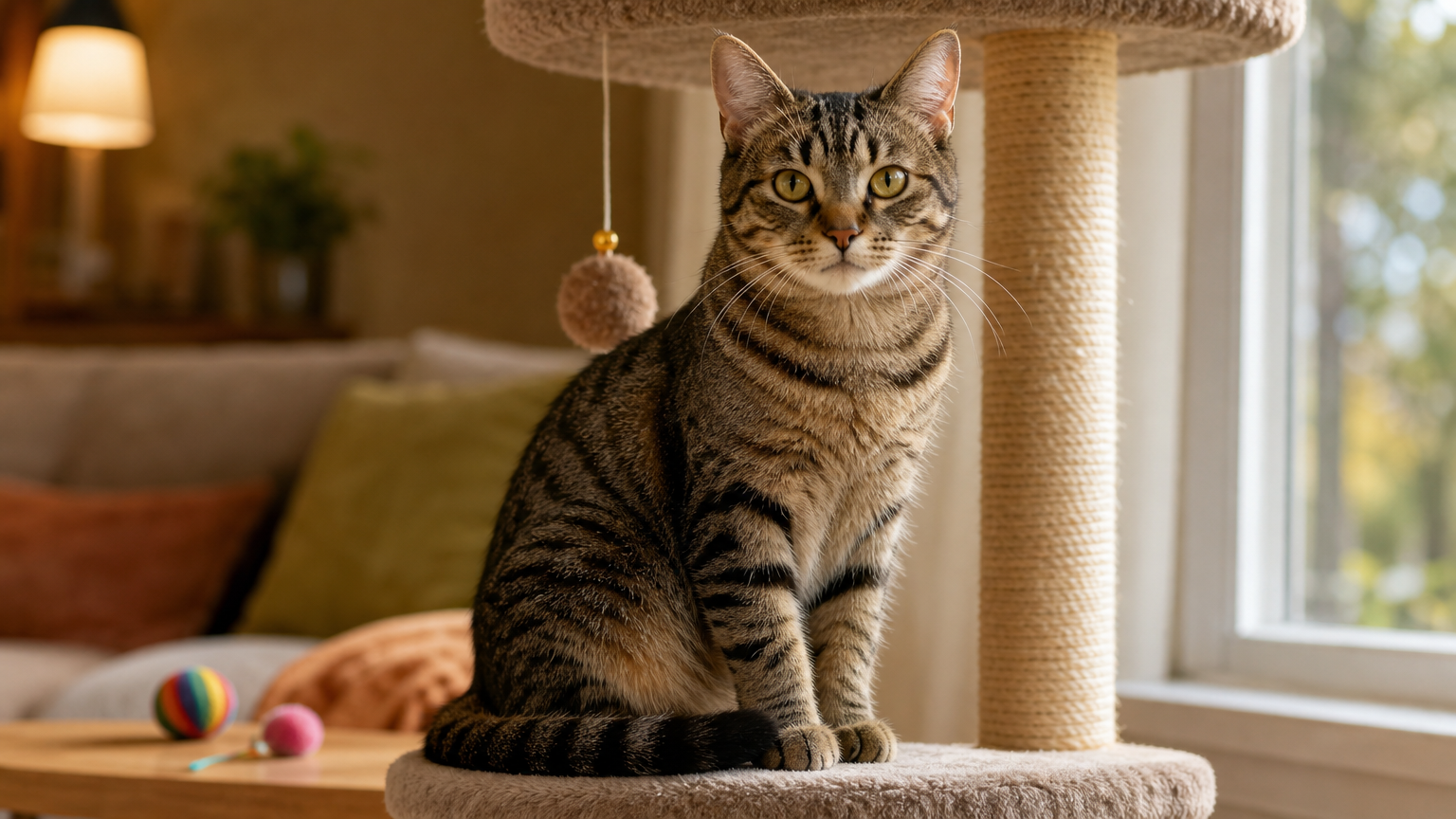
Cats are natural climbers. Indoors, height is valuable territory: the higher, the safer the cat feels. Install shelves, wall perches, or a tall scratching tree near windows. A systematic review published by APA confirmed that vertical spaces and hiding boxes are among the most beneficial enrichments for felines.
2. Scratching Posts in Strategic Spots
Scratching isn’t “mischief” — it’s a biological need. Cats scratch to mark territory, sharpen claws, and stretch muscles. Instead of forbidding it, offer scratching posts in places he already frequents — near the couch, the bed, and the front door. Test different materials: sisal, cardboard, carpet.
3. Hiding Spots and Boxes
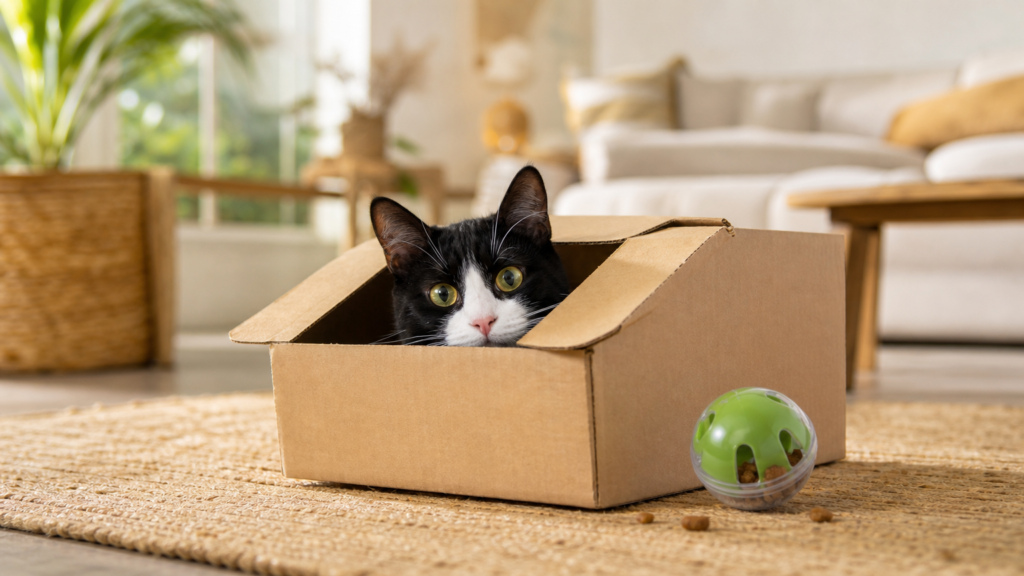
Cardboard boxes, tunnels, and little houses are cheap and beloved. They give the cat a place of control and safety — essential for reducing stress. That delivery box you were about to throw away? Keep it. Your cat will thank you.
4. A Window With a View: “Cat TV”
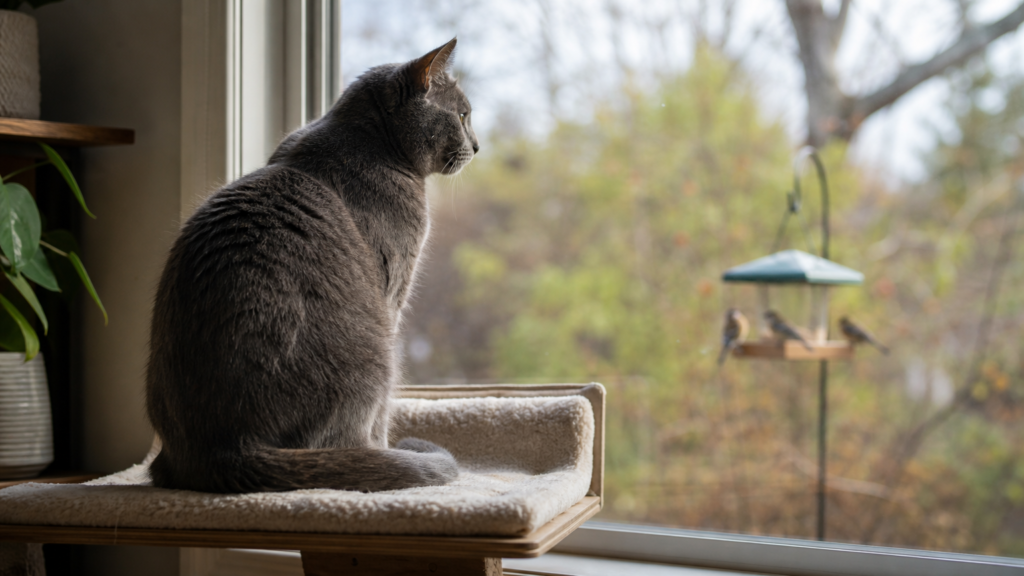
A window overlooking the street is guaranteed entertainment. Birds, people, leaves in the wind: all of it stimulates the feline’s senses. Place a bed or shelf by the window and, if possible, install a screen so you can open it safely.
5. Hunting Play With Wand Toys
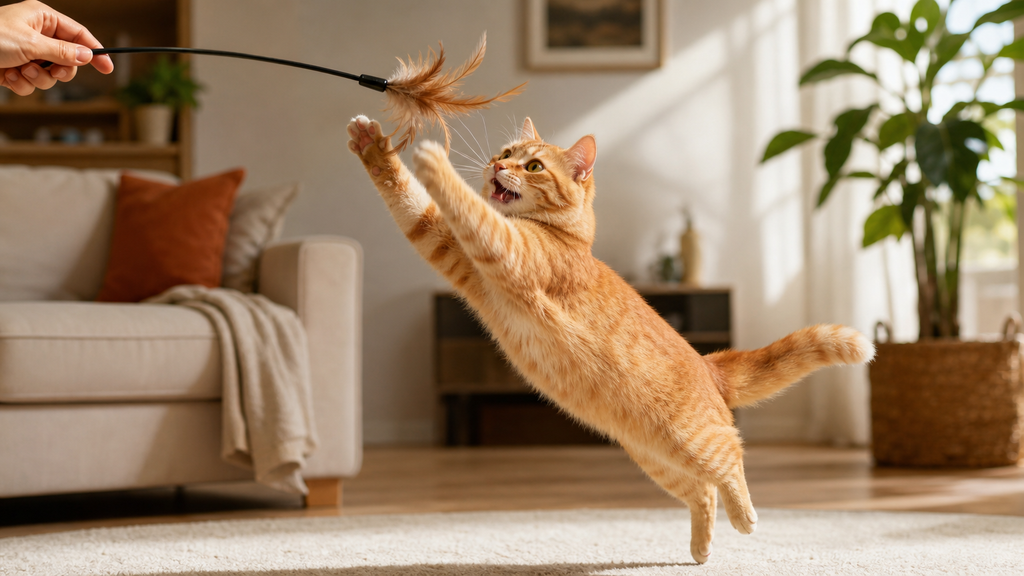
The hunting instinct is the strongest one in cats. Wand and feather toys simulate the hunt and burn physical and mental energy. The secret is technique: move the wand like prey — fast, unpredictable — and let the cat “catch” it at the end. Two 10-to-15-minute sessions a day make a huge difference.
6. Interactive Feeders and Food Hunting
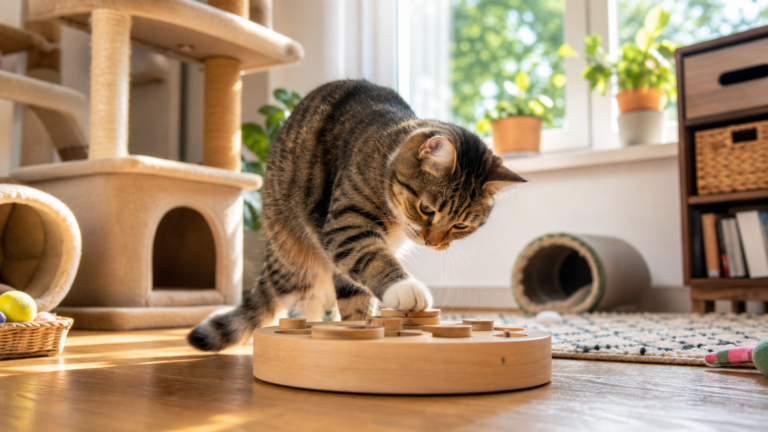
Instead of serving kibble in a bowl, scatter portions around the house, use treat-dispensing balls, or hide treats in puzzle toys. This turns mealtime into a hunt — the cat’s most natural behavior — and fights boredom and obesity at the same time.
7. Cat Grass and Safe Plants
Wheat or oat grass is a simple sensory enrichment: the cat chews, plays, and even aids digestion. Just be careful with toxic plants — lilies, dumb cane, and azaleas, for example, are dangerous. Always choose safe, pet-certified options.
8. A Daily Play Routine
No toy replaces you. Cats are most active at dawn and dusk — use those times to play. Routine provides predictability, and predictability reduces anxiety. Fifteen minutes of quality attention are worth more than hours of forgotten toys.
See, you might also enjoy reading: Best Automatic Cat Feeder: A Veterinarian’s Complete Guide to Smart Feeding (2026)
Common Mistakes in Indoor Cat Enrichment
Even with good intentions, some mistakes sabotage indoor cat enrichment. The most common ones:
- Offering too many toys at once and leaving them scattered — the cat gets used to them and loses interest. Rotate toys every few days.
- Ignoring height: floor-level enrichment alone isn’t enough.
- Forgetting that each cat has preferences: observe what your cat loves most and invest in that.
- Leaving the scratching post in a hidden corner — it needs to be where the cat lives.
How to Build an Indoor Cat Enrichment Plan Without Spending Much
You don’t need to renovate your home. Start like this:
- Pick 2 or 3 ideas from this list to apply this week.
- Watch your cat’s reaction for a few days.
- Add new ideas gradually, always rotating.
- Keep the daily play routine — it’s the pillar of everything.
Indoor cat enrichment is an ongoing process, not a one-time event. The goal is to offer variety and predictability in the right measure.
Conclusion: Indoor Cat Enrichment Is an Investment in Well-Being
Cats that live indoors depend on us for a full life. Indoor cat enrichment isn’t a luxury — it’s the foundation of your feline’s physical and mental health. With the 8 ideas in this article, you can reduce stress, prevent behavior problems, and strengthen the bond with your cat.
And if you want to make it easier to put these ideas into practice, a climbing shelf or cat tree is a great place to start.
Start today: pick one idea, apply it this week, and watch the difference. Your cat — and your couch — will thank you.