How to Entertain a Bored Dog: A Veterinarian’s Guide to Fighting Boredom
Is your dog destructive, restless, or sleeping all day? As a veterinarian, I share the best ways to entertain a bored dog — from DIY enrichment to brain games that actually work.
Introduction
As a veterinarian, I see a pattern every single day. An owner brings in a dog for “behavior problems” — chewing furniture, digging holes, barking at nothing, jumping on guests, or following the owner around the house whining. They ask for medication or a trainer.
Nine times out of ten, the dog isn’t sick or badly behaved. The dog is bored.
Boredom in dogs is a genuine welfare issue. It leads to stress, obesity, destructive behavior, and even health problems like gastrointestinal issues from swallowing foreign objects. The good news? The solution is simple, fun, and doesn’t require expensive equipment.
In this guide, I’ll walk you through how to recognize a bored dog, why boredom happens, and the most effective ways to keep your dog entertained — mentally and physically — every single day.
🟢 How to Tell If Your Dog Is Bored
Dogs don’t say “I’m bored.” They show you. Here are the most common signs I see in my clinic:

🔑 Key insight: Many “behavior problems” resolve within days when proper enrichment is introduced. Before reaching for punishment or medication, ask yourself: Is my dog getting enough mental and physical stimulation?
🟡 Why Do Dogs Get Bored? A Veterinary Perspective
Dogs evolved as working animals. Even breeds that seem “lazy” today — Bulldogs, Basset Hounds, Shih Tzus — were bred for specific jobs. Your Labrador was bred to hunt all day. Your Border Collie was bred to herd sheep for hours. Your Terrier was bred to hunt vermin.
Now, most of these dogs spend 20+ hours a day inside a house or apartment with:
- A bowl of food served with zero effort
- A short walk around the block
- No mental challenges
- No opportunity to use their natural instincts
This mismatch between what your dog was bred to do and what their daily life actually looks like is the root cause of boredom — and most behavioral problems.
🔴 10 Ways to Entertain a Bored Dog
1. Food-Based Enrichment (The Most Effective Tool)
This is the single biggest change you can make. Instead of feeding from a bowl, make your dog work for their food.
Ideas:
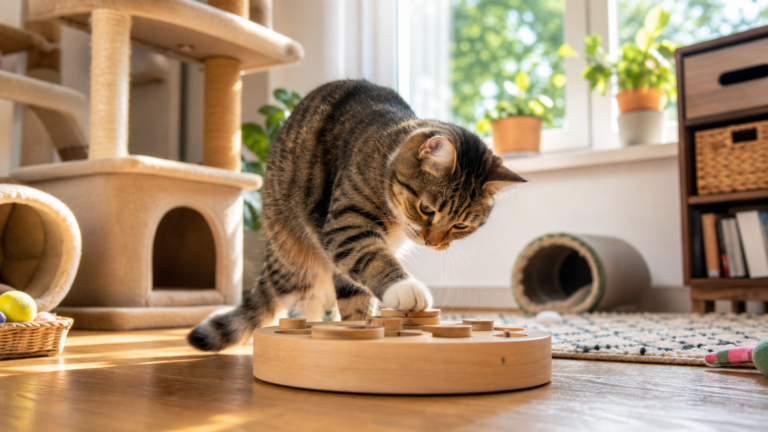
- Puzzle feeders — Treat-dispensing balls, maze bowls, or snuffle mats
- Scatter feeding — Toss kibble across the lawn or floor for foraging
- Stuffed and frozen KONG — Fill with wet food, peanut butter, or pumpkin and freeze
- Training for meals — Use your dog’s kibble as rewards during a 10-minute training session
- Food hide and seek — Hide small portions of kibble around the house
How much time it adds: Replacing one bowl meal with a food-based activity adds 15–30 minutes of mental stimulation — more tiring than a 45-minute walk.
2. Structured Physical Exercise
A tired dog is a happy dog. But not all exercise is equal.

Dogs experience the world primarily through their nose. A 15-minute nose work session is more tiring than an hour of running because it engages their brain fully.
How to start:
- Hide a treat under a cup and let your dog find it
- Progress to hiding treats in different rooms
- Scatter kibble in the yard and let your dog “forage”
- Use empty cardboard boxes with treats hidden inside
4. Trick Training
Teaching your dog new tricks is mentally exhausting and strengthens your bond.
Easy tricks to start:
- Touch (nose to your hand)
- Spin (turn in a circle)
- Place (go to a mat or bed)
- Find it (search for a named object)
- Wait at the door (impulse control)
The rule: Five minutes of training = 30 minutes of mental stimulation.
5. DIY Toys from Household Items
You don’t need expensive equipment. Some of the best boredom busters are free:
- Cardboard boxes — Fill with crumpled paper and hide treats inside
- Muffin tin game — Place treats in a muffin tin, cover with tennis balls
- Bottle with treats — Empty plastic bottle with a few kibbles inside (supervise!)
- Ice block — Freeze treats, kibble, and broth in a block of ice
- Towel roll — Roll treats in a towel and tie it loosely
Dogs are social animals. Isolation is a major cause of boredom.
- Playdates with known friendly dogs
- Daycare (1–2 times per week for high-energy dogs)
- Supervised interaction with calm, dog-savvy children
- Structured group walks with other dogs
⚠️ Note: Not every dog wants to play with other dogs. Respect your dog’s personality.
7. Novel Experiences (New Places = New Smells)
Boredom often comes from a predictable routine. Break it:
- Take a different walking route every day
- Visit a new park or hiking trail weekly
- Drive to a pet-friendly store
- Let your dog explore a new environment safely
8. Interactive Toys That Last
Not all toys engage a bored dog. You need toys that challenge:
- Puzzle toys — Where the dog must figure out how to get the treat
- Treat-dispensing balls — Rewards movement and problem-solving
- Lick mats — Spread peanut butter or yogurt and freeze
- Chew toys — Long-lasting chews for focused alone time
9. Calming Activities
Sometimes a bored dog is actually an overstimulated or anxious dog. Calming activities help:
- Chewing — A natural stress reliever (provide safe, durable chews)
- Licking — Lick mats or frozen treats promote relaxation
- Massage — Gentle massage lowers heart rate and builds trust
- Calming music — Classical music or dog-specific playlists
10. The “Nothing” Game (Teaching Calmness)
Ironically, one of the best things you can teach a bored dog is how to do nothing.
How:
- Ask your dog to lie on a mat or bed
- Reward calmness, not excitement
- Gradually increase the duration
- Use this before meals, before walks, and when guests arrive
This teaches your dog that calmness is rewarding — and helps them self-regulate when bored.
🟠 How Much Enrichment Does a Dog Need?
Here’s a simple daily checklist I give my clients:
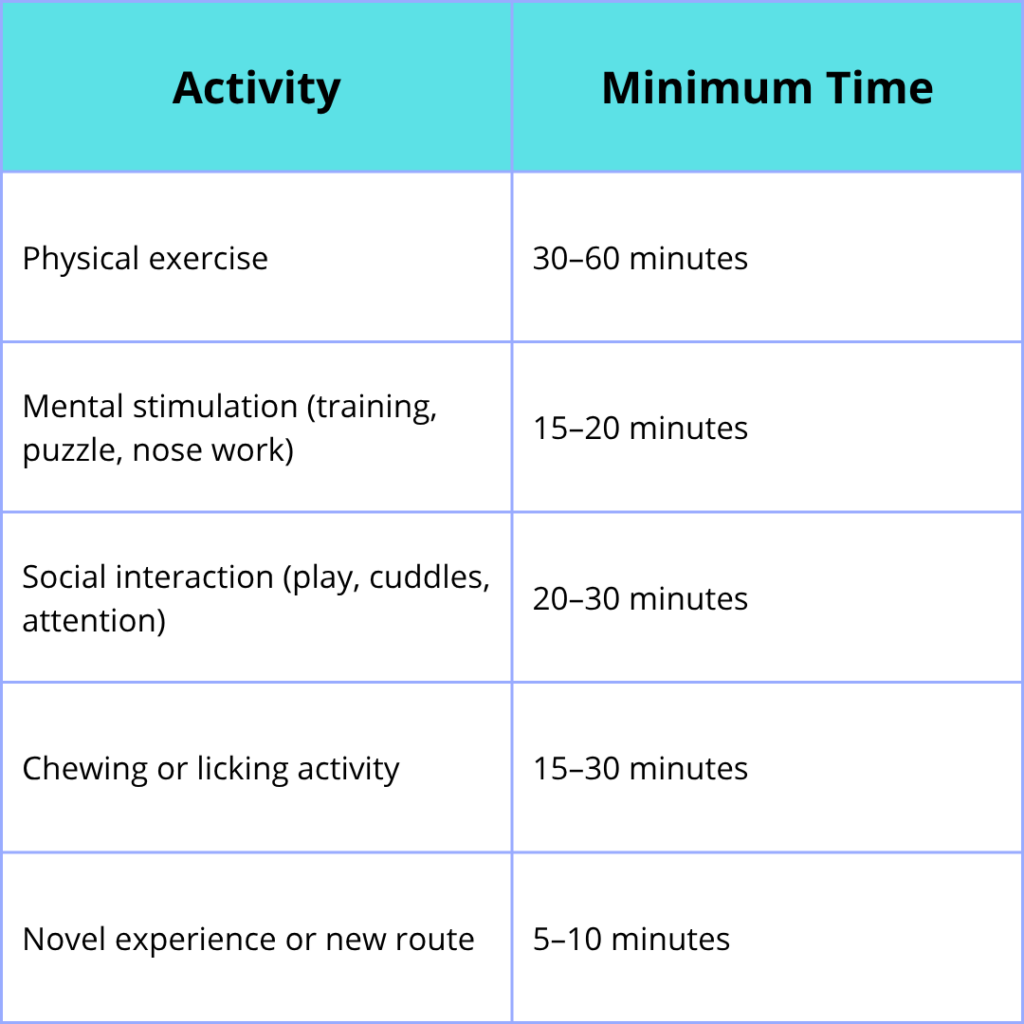
Total: about 1.5–2 hours of intentional engagement per day.
That sounds like a lot, but most of these activities replace things you’re already doing — feeding, walking, relaxing at home. The key is making them engaging instead of passive.
🔵 When to See Your Veterinarian
While boredom is common, some symptoms overlap with medical conditions. Schedule a checkup if:
- Your dog’s energy level has changed dramatically and suddenly
- Your dog is sleeping excessively (20+ hours) even with enrichment
- Your dog is drinking or urinating more than usual
- Your dog shows compulsive behaviors (tail chasing, pacing, fly snapping)
- You’ve increased enrichment for 3–4 weeks with zero improvement
Medical issues — hypothyroidism, pain, cognitive dysfunction, or anxiety disorders — need proper diagnosis, not just more toys.
❓ Frequently Asked Questions
How do I know if my dog is bored or just tired? A bored dog will often follow you around, whine, bring you toys, or start destructive behaviors. A tired dog will settle down when given a comfortable space. If your dog settles after 10–15 minutes of enrichment, they were bored — not tired.
My dog is bored even after a long walk. Why? Physical exercise tires the body, but not the brain. A long walk without mental stimulation still leaves your dog mentally under-stimulated. Add training, nose work, or puzzle feeding to your walk routine.
Can I over-stimulate my dog? Yes. Some dogs — especially anxious or high-strung ones — can become over-aroused. Watch for frantic behavior, inability to settle, or hypervigilance. If you see these, dial back and focus on calming activities like chewing and licking.
What if I work long hours? Focus on high-impact enrichment before and after work: a 30-minute walk plus 10–15 minutes of training in the morning, and puzzle feeders, long-lasting chews, and a calm settling routine while you’re away.
Do dogs get bored of the same toys? Yes. Rotate toys every 3–4 days. Keep 4–5 toys available and swap them weekly. A “new” toy is more exciting than one that’s been on the floor for a month.
Final Thoughts
As a veterinarian, I can tell you this with confidence: most “bad dogs” are just bored dogs. Before you reach for punishment, a new trainer, or medication, take a hard look at your dog’s daily enrichment.
Does your dog get to sniff? To solve puzzles? To run? To learn? To chew? To explore?
A well-enriched dog is calm, content, and healthy. And the best part? Enrichment doesn’t require a big budget or a lot of time — just a little creativity and consistency.
Pick one idea from this list and try it today. Your dog will thank you.