
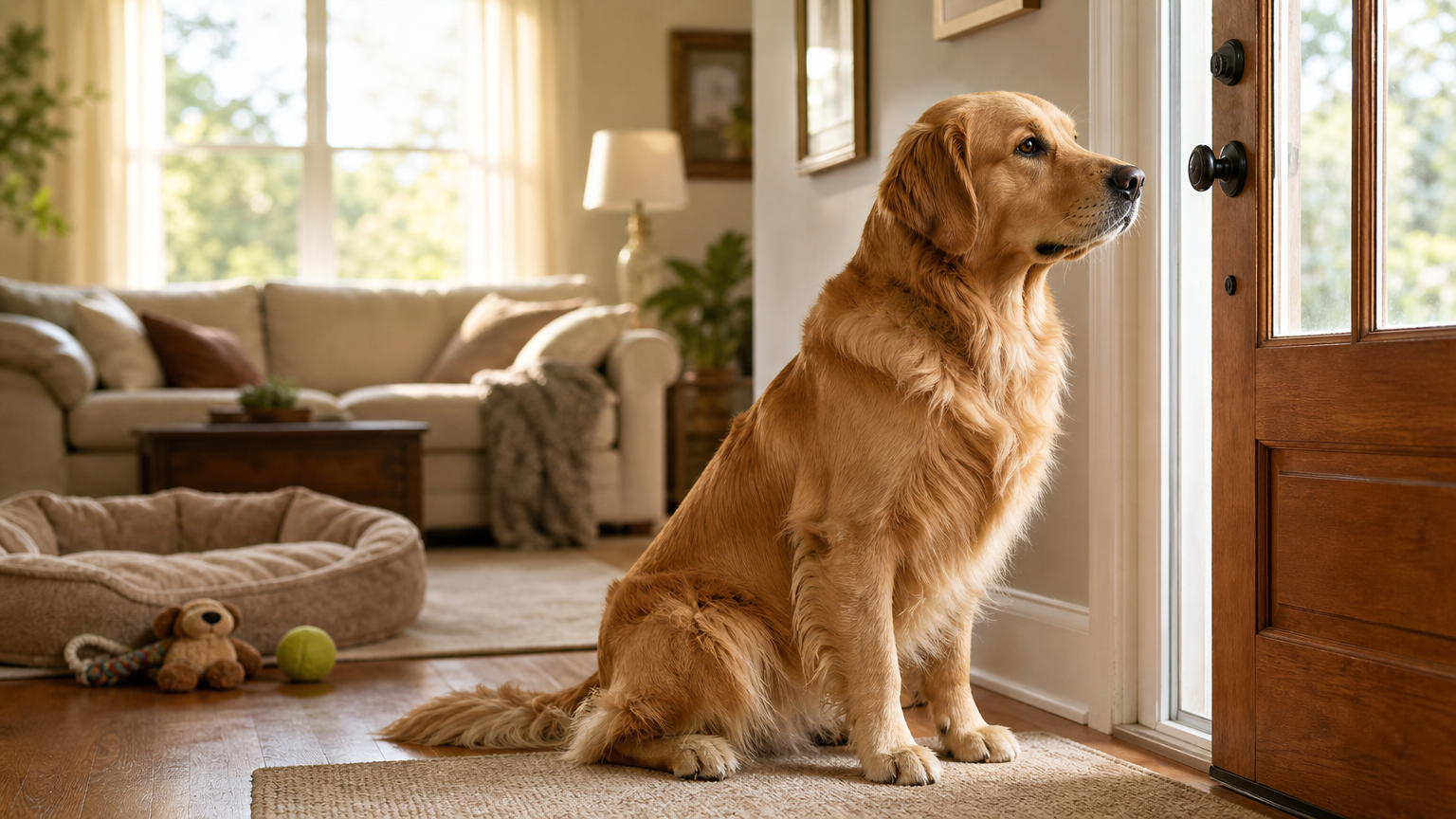
Separation Anxiety in Dogs: A Practical 7-Step Plan
You leave for work and come back to a destroyed couch, neighbors complaining about the barking, or “gifts” in the middle of the living room. If this happens every time you leave home, it’s not “being naughty” or “wanting to destroy things” — it could be separation anxiety in dogs.
The problem is more common than it seems. Studies show that separation anxiety in dogs affects between 14% and 20% of the canine population — and in apartment dogs, the reality can be even worse: a Brazilian study conducted in Niterói (RJ) found signs of the disorder in 55.9% of the dogs evaluated.
The good news? Effective treatment exists. The science is clear: the combination of systematic desensitization and counterconditioning is the most successful approach, and it can be supplemented with medication in the initial phase.
If you’re worried about the vet costs that treatment can involve, an Illness and Injury plan is an option worth checking out.
In this article, you’ll build a practical 7-step plan to help your dog — and get your home and your peace back.
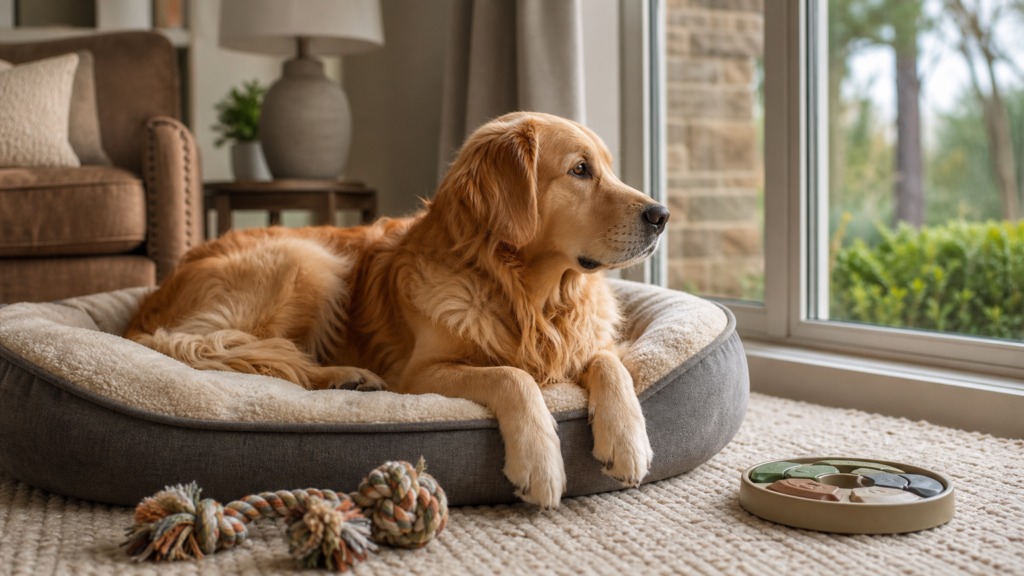
What Is Separation Anxiety in Dogs?
Separation anxiety in dogs is a behavioral disorder marked by intense distress when the dog is left alone or separated from its attachment figure. It’s not laziness or stubbornness: it’s a real state of anguish, with physical and emotional signs.
The most common signs include:
- Excessive vocalization — constant barking, howling, and whining (the most frequent symptom)
- Destructive behaviors — chewed furniture, doors, and objects
- Inappropriate urination and defecation, even in house-trained dogs
- Escape attempts — scratching at doors and windows
- Physical signs — trembling, excessive drooling, rapid heart rate, vomiting, and diarrhea
- Depressive behaviors — apathy, loss of appetite when alone
In the Niterói study, the most frequent manifestations were excessive vocalization (53.8%), destructive behaviors (46.1%), and depressive behaviors (34.6%).
If your dog shows physical signs like vomiting or diarrhea, a vet visit is essential — and a Wellness Plan can make routine care more affordable.
See, you might also enjoy reading: French Bulldog Health Problems: 7 Essential Care Tips
Before the Plan: Is It Really Separation Anxiety?
Not every destructive behavior is separation anxiety. Correct diagnosis is step zero — and it starts with observation.
- When does it happen? Does the destruction occur only when you’re away, or also when you’re home?
- How soon after you leave? Do the signs start right after you leave or hours later?
- Are there other causes? Boredom, lack of exercise, medical issues (like a urinary tract infection), and noise phobias can mimic the symptoms.
A practical tip: record your dog with a camera while you’re away. That reveals what actually happens — and it’s a valuable tool for your vet or behavior specialist.
And if you want to make those vet visits more affordable, a wellness plan for routine vet visits is worth considering.
If the signs appear only in your absence and shortly after you leave, the plan below is for you.
Separation Anxiety in Dogs: The Practical 7-Step Plan
Step 1: Invest in Routine and Exercise
A tired dog with a predictable routine suffers less. Before working on separation, make sure you provide:
- Daily walks with exercise appropriate to age and breed
- Fixed schedules for meals, walks, and playtime
- Mental stimulation with interactive toys and obedience training
Predictability reduces overall anxiety — and a calmer dog tolerates your absence better.
Step 2: Remove the Drama From Goodbyes and Greetings
Long, affectionate goodbyes teach the dog that “leaving home is a huge event.” The same goes for coming back: if you throw a party when you arrive, you reinforce the anxiety.
The rule is simple: leave without fuss and return without excitement. Greet your dog calmly, a few minutes later, once he’s already relaxed.
Step 3: Start Gradual Desensitization
Systematic desensitization is the heart of treatment. The idea is to expose the dog to your absence in doses so small he barely notices — then increase gradually.
How to do it:
- Start with absences of seconds: grab your keys, walk out the door, and come back before he gets anxious.
- Increase the time gradually: 1 minute, 5 minutes, 15 minutes.
- Repeat 3 to 4 short sessions a day — studies used exactly this pattern, progressing over 2 to 8 weeks.
- Move up only when the dog is comfortable at the current level.
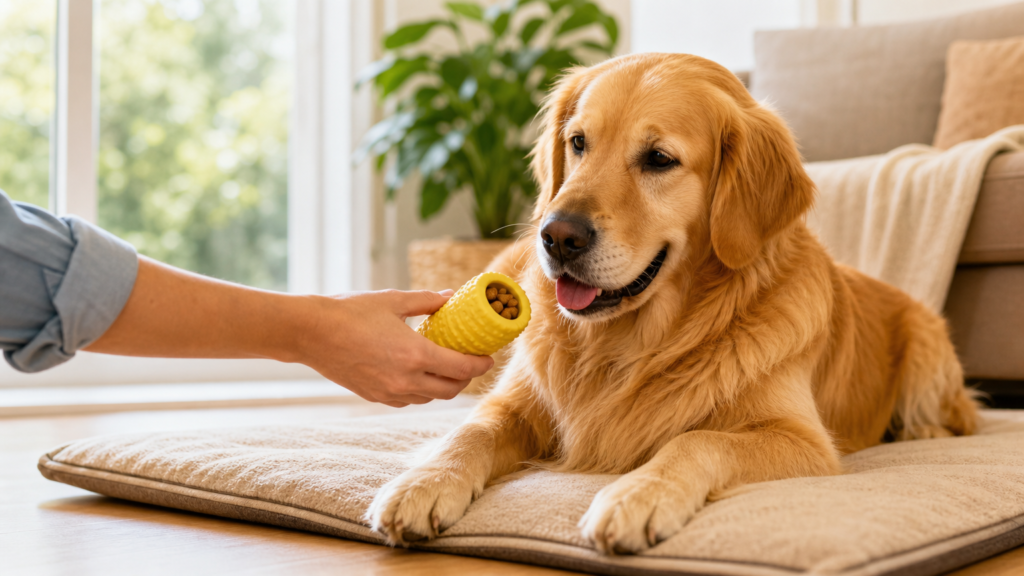
Step 4: Use Counterconditioning
While desensitizing, associate your departure with something positive. Counterconditioning turns the trigger (you leaving) into a pleasant experience.
- Offer a stuffed toy (a Kong with paste, frozen treats) only when you leave
- Use high-value treats the dog only gets at that moment
- Leave the item available for 15 to 20 minutes after you leave
Over time, the dog learns to associate your departure with something good — instead of panic.
Step 5: Enrich the Environment
An interesting environment reduces the focus on your absence:
- Interactive toys and treat-dispensing puzzles
- Toy rotation every few days to keep things novel
- TV, radio, or calm music as background noise (some dogs relax with the sound of voices)
- A window with a view or a comfortable resting spot
Step 6: Avoid Punishment and Accidental Reinforcement
Never scold the dog when you come home — he doesn’t connect the scolding to the destruction, only to your arrival. That increases anxiety instead of solving it.
Also avoid reinforcing the behavior: if the dog barks and you come back to comfort him, he learns that barking “works.” Departures should be without drama and without returning on demand.
Step 7: Seek Professional Help When Needed
Moderate to severe cases require follow-up with a veterinarian specializing in behavior (clinical ethology). In initial situations, medication can complement behavior modification — always prescribed and monitored by a professional.
If you’re concerned about the cost of specialist follow-up, coverage for unexpected vet expenses is worth exploring.
Also consider:
- A dog walker or daycare on days when the dog will be alone for a long time
- Pet sitters during transition periods
- A medical evaluation to rule out organic causes
And for the routine side of care — regular check-ups and preventive visits — a Wellness Plan for regular care is a great option to explore.
See, you might also enjoy reading: Indoor Cat Enrichment: 8 Ideas That Actually Work
Mistakes That Sabotage Separation Anxiety Treatment in Dogs
Even with the right plan, some common mistakes delay improvement:
- Increasing alone time too fast — rushing is the biggest villain
- Treating every case the same — each dog has its own pace
- Ignoring physical exercise — pent-up energy fuels anxiety
- Giving up too early — improvement takes weeks, not days
- Using medication without supervision — never medicate on your own
Conclusion: Separation Anxiety in Dogs Has a Solution
Separation anxiety in dogs is a real problem, but it’s treatable. With the practical 7-step plan — routine, drama-free goodbyes, desensitization, counterconditioning, enrichment, patience, and professional support — you can turn the moment you leave home into something calm for your dog.
Remember: science shows that systematic desensitization combined with counterconditioning is the most effective path, and improvement comes with consistency, not haste.
And if you’d like to protect your dog’s health through every step of this journey, a pet health plan is a great place to start.
Start today with step 1: adjust your dog’s routine and remove the drama from goodbyes. Within a few weeks, you’ll notice the difference — and your dog will gradually learn that being alone isn’t the end of the world.