Dog Separation Anxiety: Complete Guide to Causes, Symptoms, and Treatment
Is your dog destructive when you leave? Learn the signs of canine separation anxiety, proven treatment methods including desensitization and counterconditioning, and when to seek professional help.
Coming home to find your couch chewed, your door scratched, or your neighbors complaining about barking is frustrating. But here’s the truth: your dog isn’t being “bad.” They are likely experiencing separation anxiety — a genuine emotional distress disorder that affects an estimated 14% to 17% of dogs, according to veterinary studies. Some recent 2026 surveys suggest the number may be even higher, especially following the post-pandemic rise in adopted puppies who never learned to be alone.
The good news? Separation anxiety is highly treatable. With the right approach, patience, and consistency, most dogs recover significantly within weeks to months.
This guide covers everything you need to know — from recognizing the symptoms to implementing a step-by-step treatment plan.
What Is Separation Anxiety in Dogs?
Separation anxiety is a panic response triggered when a dog is separated from their owner or left alone. It is not disobedience or spite. It is a genuine phobia — your dog feels trapped and terrified, and the destructive behaviors are panic-driven escape attempts.
Veterinary behaviorists distinguish separation anxiety from simple boredom. A bored dog might chew a shoe and move on. A dog with separation anxiety will obsessively focus on escaping, vocalizing, or self-soothing in destructive ways for the entire duration of your absence.
🔴 Signs and Symptoms
Not all destructive behavior is separation anxiety. Look for these specific signs:
- Excessive vocalization — Barking, howling, or whining non-stop after you leave
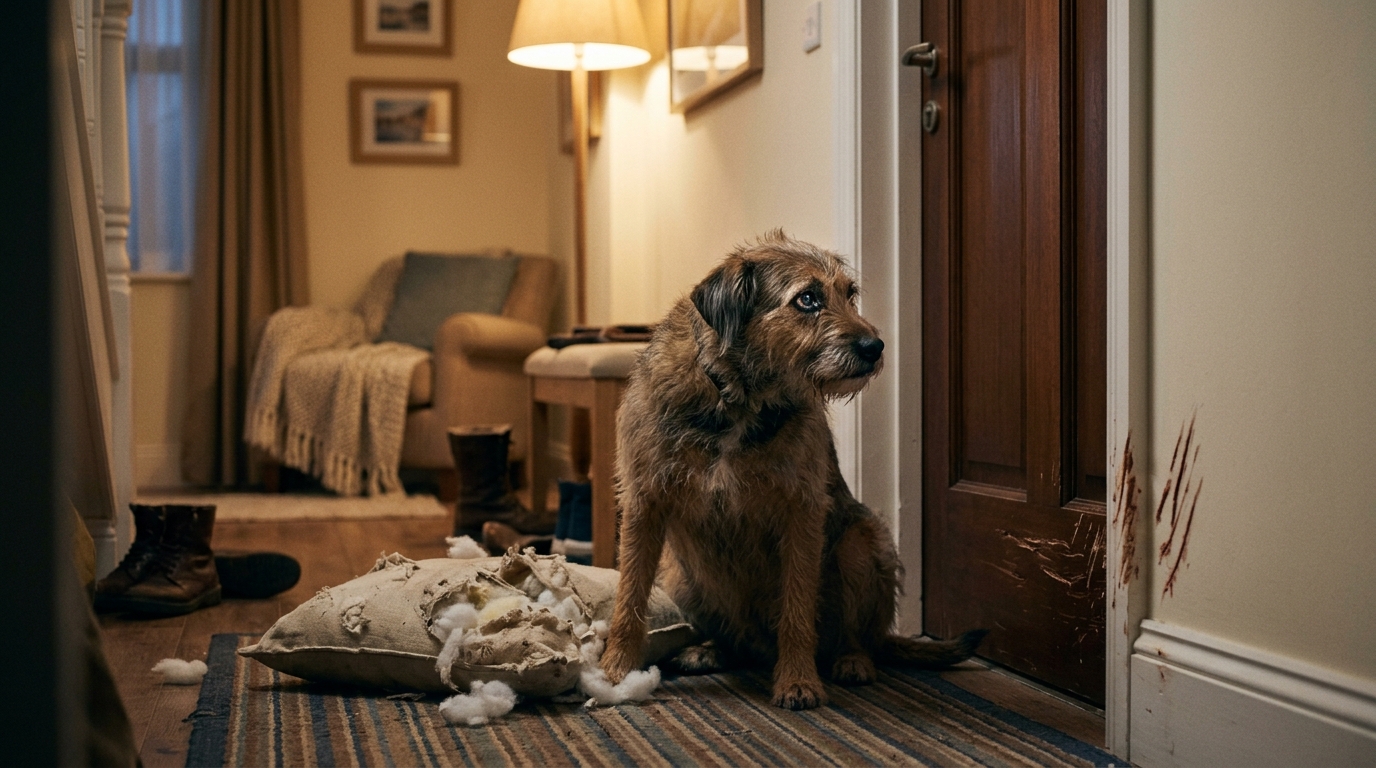
- Destructive chewing — Focused on exits — doors, window frames, gates
- House soiling — Urinating or defecating even in a fully house-trained dog
- Pacing and restlessness — Repetitive walking in patterns, unable to settle
- Escape attempts — Scratched doors, broken windows, damaged crates
- Excessive panting/drooling — Physical stress signs when alone
- Refusal to eat — Leaving treats or meals untouched while you’re gone
- Over-excited greeting — Intense, prolonged excitement when you return
👉 Key distinction: These behaviors happen only when you are away or about to leave. If your dog behaves normally when you’re home, separation anxiety is likely the cause.
🟠 What Causes Separation Anxiety?
There is rarely a single cause. Research points to several contributing factors:
- Early separation from the litter — Puppies separated before 60 days old are at higher risk
- Change in routine — Returning to office after working from home is a massive trigger
- Traumatic experience while alone — A storm, fireworks, or break-in while the dog was isolated
- Over-attachment — Dogs that follow their owner everywhere and never learn independence
- Genetics and breed — Some breeds (Labradors, German Shepherds, Vizslas, Border Collies) show higher predisposition
- Shelter background — Rescue dogs have higher rates of separation anxiety
According to a May 2026 Texas A&M study analyzing over 43,000 dogs, more than 84% of dogs show some signs of fear or anxiety — making this one of the most common behavioral issues in American households.
🟢 How to Treat Separation Anxiety — Step by Step
1. Gradual Desensitization (The Gold Standard)
This is the most effective treatment. The goal is to teach your dog that being alone is safe by exposing them to very short separations and slowly increasing the time.
How to do it:
- Start with your departure cues (picking up keys, putting on shoes). Do them without actually leaving.
- Leave for 5 seconds. Return before your dog panics.
- Gradually increase: 10 seconds → 30 seconds → 1 minute → 5 minutes
- Repeat daily. Progress at your dog’s pace — never rush.
- The goal: your dog learns that you always come back.
2. Counterconditioning
Change your dog’s emotional response to your departure from fear to anticipation of something good.
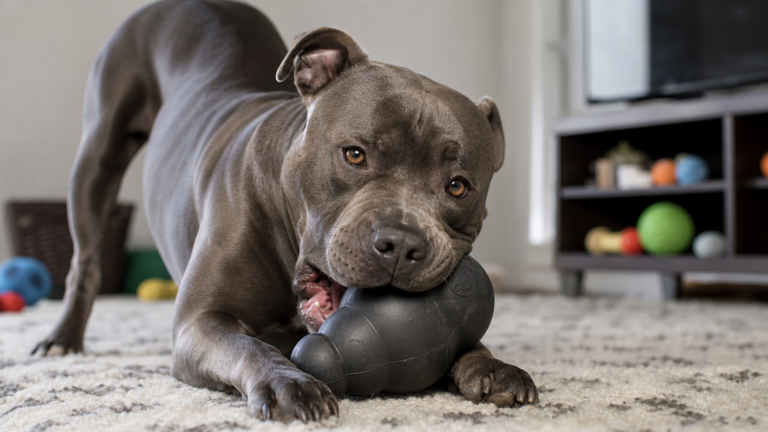
Give your dog a high-value stuffed Kong or puzzle toy only when you leave
Over time, your dog starts associating your departure with “Yay, I get the good stuff!”
3. Exercise and Mental Stimulation
A tired dog is less anxious. Before any departure:
- Take your dog for a brisk 20–30 minute walk
- Add 10 minutes of training or brain games
- A physically and mentally tired dog is far more likely to rest while you’re gone
4. Environmental Enrichment
Create a safe, comfortable space:
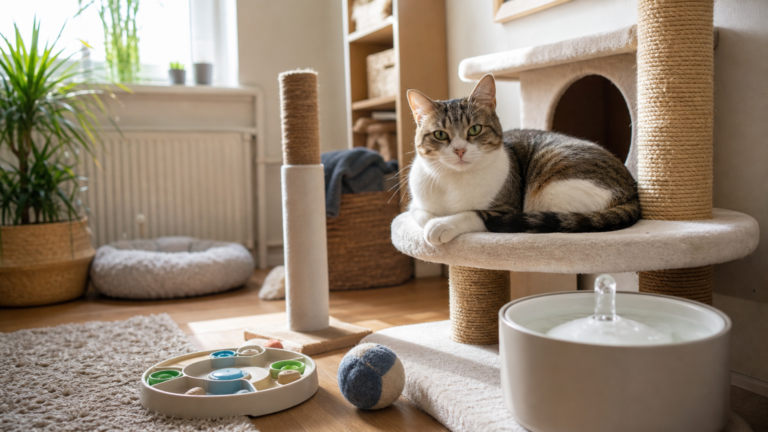
- Leave calming music or dog-specific TV (YouTube has “Dog TV” channels)
- Use adaptil diffusers (dog-appeasing pheromones)
- Close curtains to reduce external triggers
- Leave worn clothing with your scent
5. Professional Help and Medication
For moderate to severe cases, professional intervention may be needed:
- Certified behavior consultant — Look for a DACVB or certified separation anxiety trainer
- Veterinary behaviorist — Can prescribe medication
- Medication options — SSRIs (like fluoxetine) and TCAs (like clomipramine) are commonly prescribed for severe cases. In May 2026, the FDA approved Tessie (tasipimidine oral solution) specifically for canine separation anxiety
👉 Medication is not “giving up.” It lowers the panic threshold so behavior modification can actually work.
🟡 Preventing Separation Anxiety in Puppies
Prevention is far easier than treatment. If you have a new puppy:
Teach independence early — Let them spend time alone in a safe space from day one
Practice short departures — Leave for 2–5 minutes, return calmly (no big greetings)
Avoid over-coddling — Comfort is fine, but don’t reinforce clingy behavior
Crate train properly — The crate should be a safe den, not a punishment
Socialize broadly — A confident, well-socialized puppy is less likely to develop anxiety
🔵 When to See a Veterinarian
Consult your veterinarian if:
- Your dog’s behavior is causing self-injury (broken teeth, bloody paws)
- Your dog is not eating or drinking while you’re away for extended periods
- You’ve tried behavior modification for 4–6 weeks with no improvement
- Your dog has sudden onset of anxiety symptoms (could indicate an underlying medical issue)
- You need guidance on medication options
Your vet can rule out medical causes and refer you to a veterinary behaviorist if needed.
❓ Frequently Asked Questions
How long does it take to treat separation anxiety? Mild cases: 2–4 weeks. Moderate: 2–4 months. Severe: 6 months or more. Consistency is everything.
Should I get another dog to keep my dog company? Not recommended. Separation anxiety is about attachment to a specific person, not loneliness. A second dog often does not help and may add stress.
Does crate training help? For some dogs, yes — the crate becomes a safe space. But for dogs with confinement anxiety, crating makes it worse. Test carefully.
Is punishment effective? Never. Punishing a dog for separation anxiety is like punishing someone for having a panic attack. It increases fear and makes the problem worse.
Final Thoughts
Separation anxiety is challenging, but it is not hopeless. Thousands of dogs recover every year with patient, consistent training. The key is understanding that your dog is not acting out of spite — they are acting out of fear. Treat the fear, and the behavior follows.
Start with small steps today. Leave for 30 seconds, return, and reward. Build from there. Your dog can learn to feel safe alone — they just need your help to get there.