Low-Shedding Dog Breeds for People With Allergies: A Vet’s Honest Guide
As a veterinarian, I hear this from patients all the time: “I’m allergic to dogs, but I really want one. Is there any breed that won’t trigger my allergies?”
The short answer: yes, there are better options — but I need to be honest with you about what “hypoallergenic” really means.
Here’s the truth most people don’t hear: there is no such thing as a 100% allergy-free dog. All dogs produce allergens — in their skin cells (dander), saliva, and urine. What some breeds do better is shed less, which means they release fewer allergens into your home. That can make a huge difference for many allergy sufferers, even if it’s not a perfect solution.
So before you give up on having a dog — or worse, bring one home and end up rehoming it — let’s talk about what actually causes allergies, which breeds shed the least, and how to make it work.
What Actually Causes Dog Allergies (And What “Hypoallergenic” Means)
First, let’s clear up a common myth. It’s not the fur that causes allergies — it’s the dander, saliva, and urine. Dander is tiny flakes of dead skin, and it’s the main culprit. Dogs that shed less fur tend to spread less dander around the house, which is why low-shedding breeds are often better for allergy sufferers.
But here’s the honest truth: “hypoallergenic” doesn’t mean “allergy-free.” It means the breed produces fewer allergens or sheds less — which can reduce symptoms, but doesn’t guarantee you won’t react. Everyone’s allergies are different, and some people react to certain breeds more than others.
That’s why the most important advice I can give is: spend time with the breed before you commit. Visit a breeder, meet the dog, and see how you react. It’s the only way to know for sure.
The 5 Best Low-Shedding Dog Breeds for Allergy Sufferers
1. Poodle — The Allergy-Friendly Classic
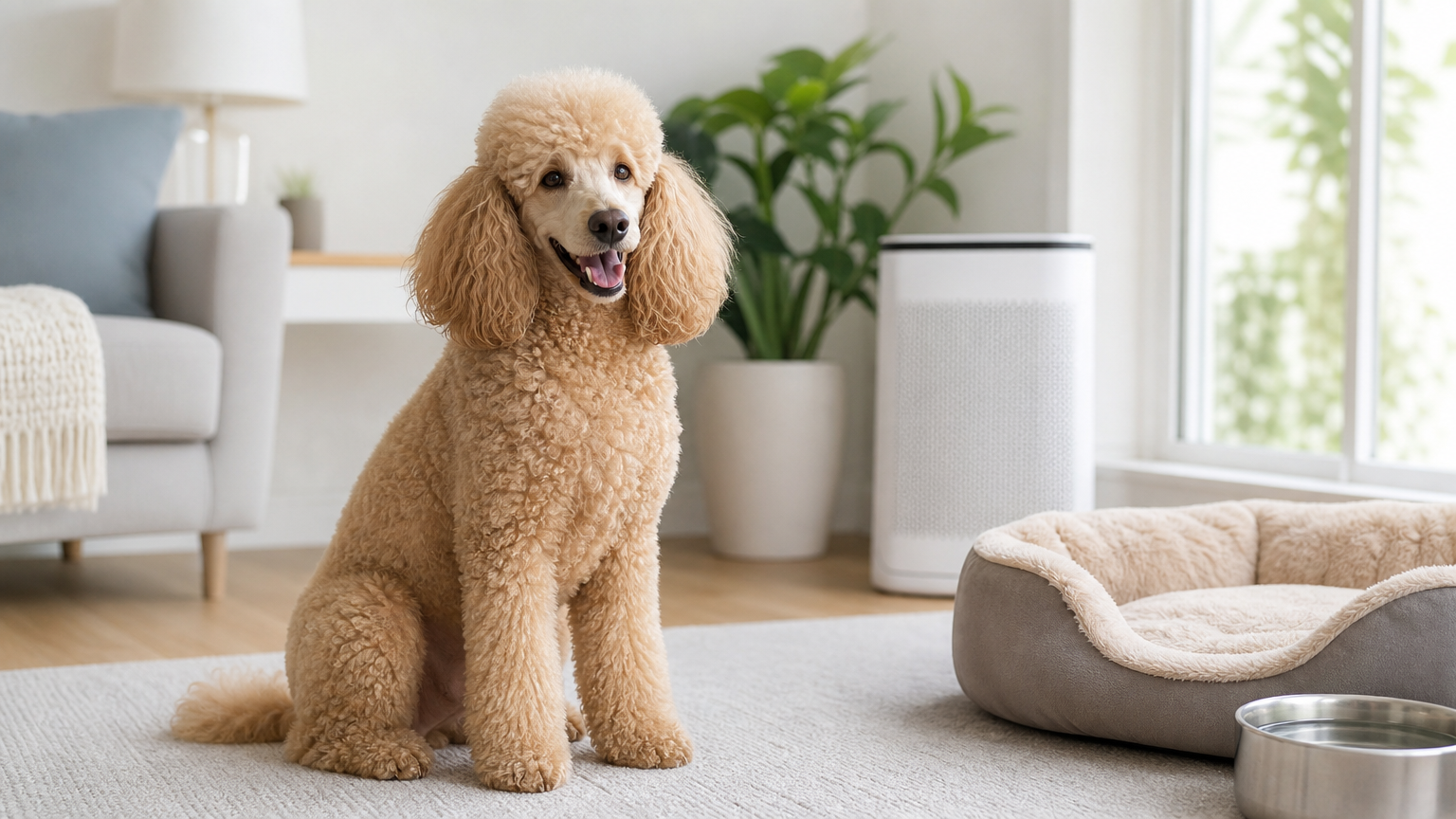
The Poodle is arguably the most famous hypoallergenic breed — and for good reason. They have a single-layer, curly coat that sheds very little and produces less dander than most breeds.
Why they’re great for allergies: Poodles come in three sizes (toy, miniature, and standard), so there’s one for every home. Their curly coat traps dander and loose hair, keeping it out of the air. They’re also incredibly intelligent and trainable.
The honest truth: Poodles need regular professional grooming — their coat doesn’t shed, so it must be trimmed and brushed frequently to prevent matting. They’re also high-energy and need daily exercise and mental stimulation.
2. Bichon Frise — The Cheerful Hypoallergenic Companion
The Bichon Frise is a small, cheerful breed with a soft, curly coat that sheds very little. They’re a popular choice for allergy sufferers who want a small, affectionate companion.
Why they’re great for allergies: Bichons have a single-layer coat that produces minimal dander and sheds very little. They’re also small, which means less surface area for allergens. Their cheerful, playful nature makes them wonderful family pets.
The honest truth: Bichons need frequent professional grooming to keep their coat healthy and mat-free. They can also be prone to separation anxiety and need regular companionship. They’re best for people who are home often.
3. Schnauzer — The Low-Shedding Working Dog
The Schnauzer (miniature, standard, or giant) has a wiry, double coat that sheds very little. They’re a great option for allergy sufferers who want a dog with a bit more personality and energy.
Why they’re great for allergies: Schnauzers have a hard, wiry coat that sheds minimally and produces less dander. They’re also alert, intelligent, and make excellent watchdogs. Their distinctive look is a bonus.
The honest truth: Schnauzers need regular grooming (hand-stripping or clipping) to maintain their coat. They’re also energetic and can be stubborn, so they need consistent training and exercise.
4. Portuguese Water Dog — The Active Hypoallergenic Breed
The Portuguese Water Dog is a medium-sized, athletic breed with a single-layer, non-shedding coat. They’re a wonderful choice for active allergy sufferers who want a larger dog.
Why they’re great for allergies: Portuguese Water Dogs have a curly or wavy coat that sheds very little and produces minimal dander. They’re also intelligent, loyal, and love the water — making them great companions for active families.
The honest truth: Portuguese Water Dogs are high-energy and need lots of daily exercise. They also need regular professional grooming to keep their coat healthy. They’re best for active people who can keep up with them.
5. Maltese — The Tiny Low-Shedding Lap Dog
The Maltese is a tiny, elegant breed with a long, silky coat that sheds very little. They’re a popular choice for allergy sufferers who want a small, devoted companion.
Why they’re great for allergies: Maltese have a single-layer coat that produces minimal dander and sheds very little. They’re also small, which means less allergen spread. Their affectionate, gentle nature makes them wonderful lap dogs.
The honest truth: Maltese need daily grooming to keep their long coat tangle-free, and regular professional trims. They can also be prone to dental issues and need consistent care. They’re best for people who can give them lots of attention.
Breeds to Avoid if You Have Allergies (And Why)
Just as important as knowing what works is knowing what doesn’t. These breeds tend to shed heavily and spread more allergens:
- Labrador and Golden Retrievers — heavy shedders with double coats.
- Huskies and Malamutes — shed massively, especially during seasonal “blowouts.”
- German Shepherds — heavy shedders with a dense double coat.
- Corgis and Beagles — shed constantly throughout the year.
This doesn’t mean these are “bad” dogs — they’re wonderful in the right home. But if allergies are a concern, a low-shedding breed is a much safer bet.
How to Make It Work: Tips for Allergy Sufferers
Choosing a low-shedding breed is step one. Here’s how to reduce allergens in your home even further:
- Groom regularly. Brush your dog outside and bathe them regularly to reduce dander.
- Create allergy-free zones. Keep your dog out of the bedroom to give you an allergen-free place to sleep.
- Use HEPA filters. Air purifiers with HEPA filters can significantly reduce airborne allergens.
- Wash bedding and fabrics. Wash your dog’s bedding and your own regularly to remove dander.
- Consider allergy medication. Talk to your doctor about allergy management — many people manage fine with medication plus a low-shedding breed.
The Bottom Line
You absolutely can have a dog even with allergies — if you choose the right breed and manage your environment. A Poodle, Bichon Frise, or Maltese sheds far less and spreads fewer allergens than a Labrador or Husky.
But remember the honest truth: no dog is 100% allergy-free. Spend time with the breed first, groom regularly, and use HEPA filters — and you’ll give yourself the best chance of enjoying a dog without the sneezing.