
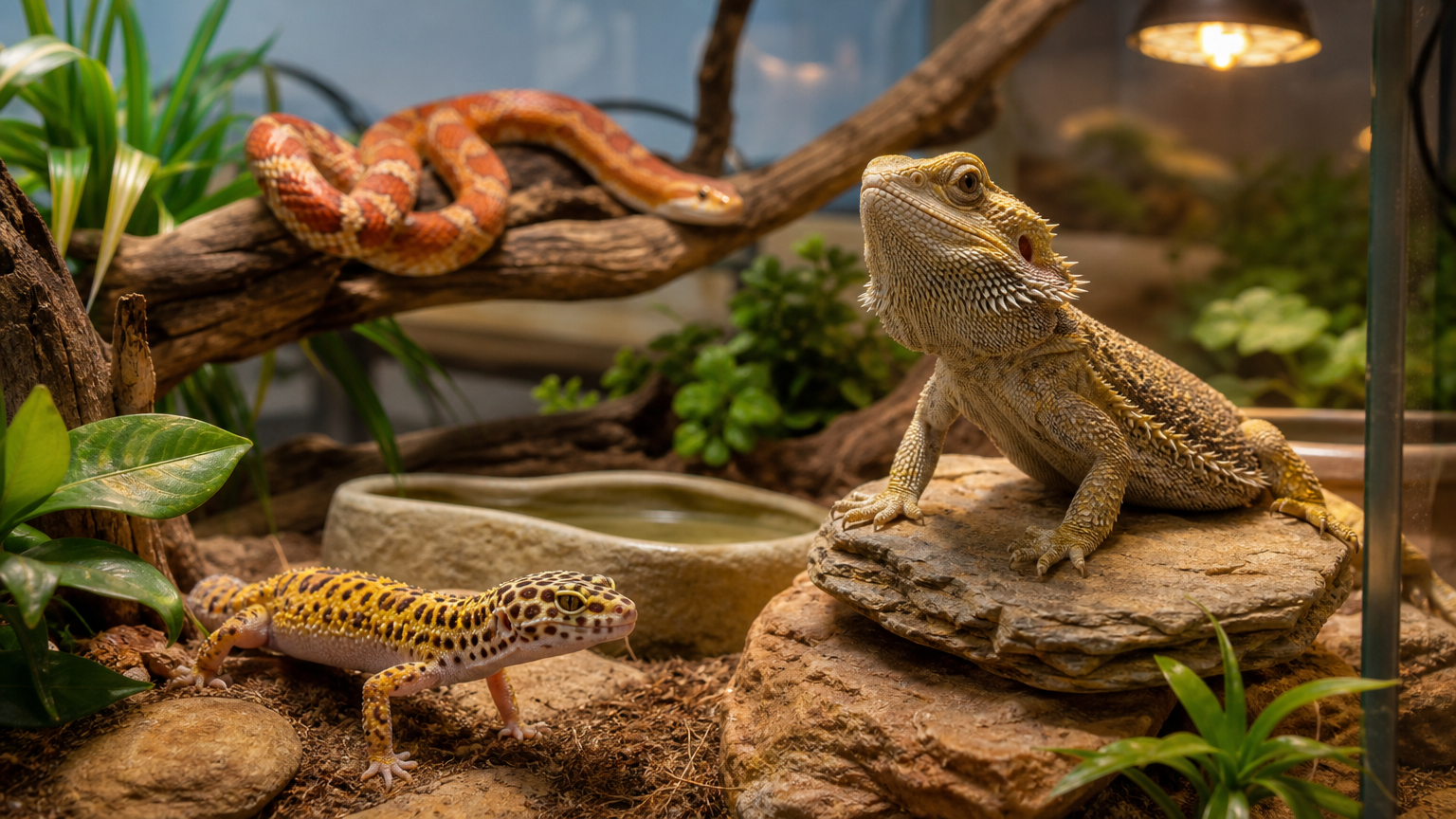
The 5 Most Popular Pet Reptiles in the US: A Vet’s Guide to Choosing Your First Scaly Friend
As a veterinarian, I get asked about reptiles more than you’d think. And the truth is, most people choose the wrong first reptile — not because they’re careless, but because they don’t know what they’re signing up for.
Here’s the reality: reptiles are not low-maintenance pets. They don’t need walks, but they need very specific heat, lighting, humidity, and diet. Get it right, and they’re fascinating, long-lived companions. Get it wrong, and you’ll both be miserable.
That’s why I put together this guide. If you’re thinking about bringing a reptile home, start here — with the 5 most popular pet reptiles in the US, what makes each one special, and the honest truth about caring for them.
Why Reptiles Are So Popular (And What Most People Get Wrong)
Reptiles have exploded in popularity over the last decade. They’re quiet, they don’t shed fur, they don’t bark, and they fit in apartments where a dog or cat might not.
But here’s what most people don’t realize: a reptile’s enclosure is its entire world. You’re not just buying a pet — you’re building a miniature ecosystem. Temperature, UVB lighting, humidity, substrate, hides, and diet all have to be right. That’s the real commitment.
The good news? Once you set it up correctly, most of these species are remarkably hardy and rewarding.
The 5 Most Popular Pet Reptiles in the US
1. Leopard Gecko — The Perfect Beginner Reptile
If there’s one reptile I recommend to almost every first-time owner, it’s the leopard gecko. They’re docile, handleable, and forgiving of small mistakes — which makes them ideal for beginners and even families with older kids.
Why they’re so popular: Leopard geckos are nocturnal, so they don’t need intense UVB lighting like many other reptiles. They eat live insects (crickets and mealworms), live 15–20 years, and come in stunning color morphs.
What they need: A 20-gallon tank, a heat mat with thermostat, three hides (warm, cool, and moist), and a shallow water dish. Simple, but essential.
2. Bearded Dragon — The Friendly “Dog of the Reptile World”
The bearded dragon is the reptile that acts most like a dog. They’re active during the day, recognize their owners, and many genuinely enjoy being handled. It’s no surprise they’re one of the most beloved reptiles in America.
Why they’re so popular: They’re charismatic, interactive, and relatively large without being intimidating. Watching a bearded dragon “wave” or bask under its heat lamp is endlessly entertaining.
What they need: This is where it gets real. Bearded dragons need a large enclosure (minimum 40–75 gallons as adults), UVB lighting (non-negotiable — without it, they develop metabolic bone disease), a basking spot around 100–110°F, and a varied diet of insects and vegetables.
3. Corn Snake — The Calm, Low-Stress Snake
If you want a snake but feel nervous, the corn snake is the answer. They’re gentle, rarely bite, and are much easier to handle than most people expect. They’re also beautiful, with a huge range of color patterns.
Why they’re so popular: Corn snakes are calm, hardy, and don’t need live prey — they eat frozen-thawed mice, which is safer and more humane. They live 15–20 years and are perfect for anyone who wants a snake without the high-stress care of some other species.
What they need: A secure enclosure with proper heating, a temperature gradient, hides, and a water bowl large enough to soak in. They’re escape artists, so a tight-fitting lid is non-negotiable.
4. Red-Eared Slider — The Aquatic Turtle
The red-eared slider is one of the most recognizable turtles in the world — and one of the most commonly rehomed. They’re fascinating, but they’re also a bigger commitment than most people expect.
Why they’re so popular: They’re hardy, active, and entertaining to watch swim and bask. Their bright red “ears” make them instantly recognizable.
The honest truth: Red-eared sliders can live 20–30 years and grow to 12 inches. They need a large aquatic setup with a basking platform, UVB lighting, and powerful filtration. Far too many are surrendered to shelters because owners weren’t prepared for their size and lifespan. If you’re ready for the long haul, they’re wonderful — but please go in with open eyes.
5. Crested Gecko — The Low-Maintenance Arboreal Favorite
Rounding out the list is the crested gecko. These adorable, wide-eyed geckos are arboreal (they live in trees), nocturnal, and — best of all — they don’t need live insects. They eat a specially formulated powdered diet mixed with water.
Why they’re so popular: Crested geckos are low-maintenance, handleable, and don’t require live food or intense lighting. They’re perfect for people who want a reptile but are squeamish about feeding crickets.
What they need: A tall terrarium with branches and foliage to climb, moderate humidity, and a temperature range of 72–78°F. Simple and forgiving — a great second or third reptile.
The Honest Truth: Which Reptile Is Right for You?
Here’s my honest advice as a vet:
- First-time owner? Start with a leopard gecko or crested gecko — both are forgiving and low-stress.
- Want an interactive pet? A bearded dragon is your best bet.
- Always wanted a snake? The corn snake is the perfect entry point.
- Ready for a long-term commitment? A red-eared slider can be a wonderful companion — if you’re prepared for 20+ years and a large setup.
The most important thing is to research before you buy. Every reptile on this list can live a decade or more. That’s not a pet — that’s a commitment.
The Bottom Line
Reptiles make incredible companions — quiet, fascinating, and truly unique. But they’re not “easy pets.” They’re ecosystems you get to build, and when you build them right, you’re rewarded with a healthy, thriving animal that can be part of your life for 15, 20, even 30 years.
Choose the species that fits your lifestyle, set up its home correctly, and you’ll have a scaly friend for life.






[…] See, you might also enjoy reading: The 5 Most Popular Pet Reptiles in the US: A Vet’s Guide to Choosing Your First Scaly Friend […]