
5 Signs Your Cat Is Stressed (And How Enrichment Can Help)
As a veterinarian, I see stressed cats every week. The good news? Most of the time, the right environment can turn things around.
You know the feeling. Your cat — the one who purrs on your lap every evening — has started hiding under the bed. Or meowing all night. Or “missing” the litter box for no reason you can find.
Before you blame the cat, hear me out: these behaviors are rarely “bad behavior.” They’re stress signals. Cats are masters at hiding how they feel, and by the time we notice something is wrong, they’ve usually been stressed for a while.
Here are the 5 signs every cat parent should know — and how to help your cat relax again.
The 5 Signs Your Cat Is Stressed
1. Hiding more than usual. Every cat loves a good hiding spot. But when your cat spends most of the day tucked under the couch or behind the wardrobe — avoiding you, other pets, or loud noises — that’s a red flag.
2. Excessive meowing or yowling. Some cats are chatty by nature. But sudden, persistent meowing — especially at night — often means your cat is anxious and trying to tell you something isn’t right.
3. Litter box accidents. This is one of the most common stress signals. When cats feel threatened or anxious, they may urinate or defecate outside the box. It’s not revenge — it’s insecurity.
4. Overgrooming & bald spots. Stress makes cats groom obsessively. Licking until fur falls out, especially on the belly or legs, is a classic sign of chronic anxiety.
5. Aggression or avoidance. A stressed cat may hiss, swat, or suddenly avoid being touched — even by people they love. When the world feels unsafe, aggression is their way of setting a boundary.
If you see 2 or more of these signs, it’s worth a conversation with your vet. But here’s the part most people don’t know: most of these behaviors can be prevented — or reversed — with the right environment.
Why Stress Happens (And Why Enrichment Fixes It)
Cats are predators, but they’re also prey animals — and that instinct never goes away. In the wild, a cat’s day is full of hunting, climbing, scratching, and exploring. That activity isn’t just exercise; it’s stress relief.
Indoor cats don’t get that. Their world is smaller, more predictable, and less stimulating. When a cat has no outlet for their natural instincts, the energy turns inward — and that’s when the hiding, yowling, and litter box accidents start.
The solution isn’t medication or punishment. It’s environmental enrichment: giving your cat safe, natural ways to climb, scratch, hunt, and feel in control of their territory.
Enrichment Solutions That Actually Work
Here are the four types of enrichment that make the biggest difference — each one directly addresses a natural instinct.
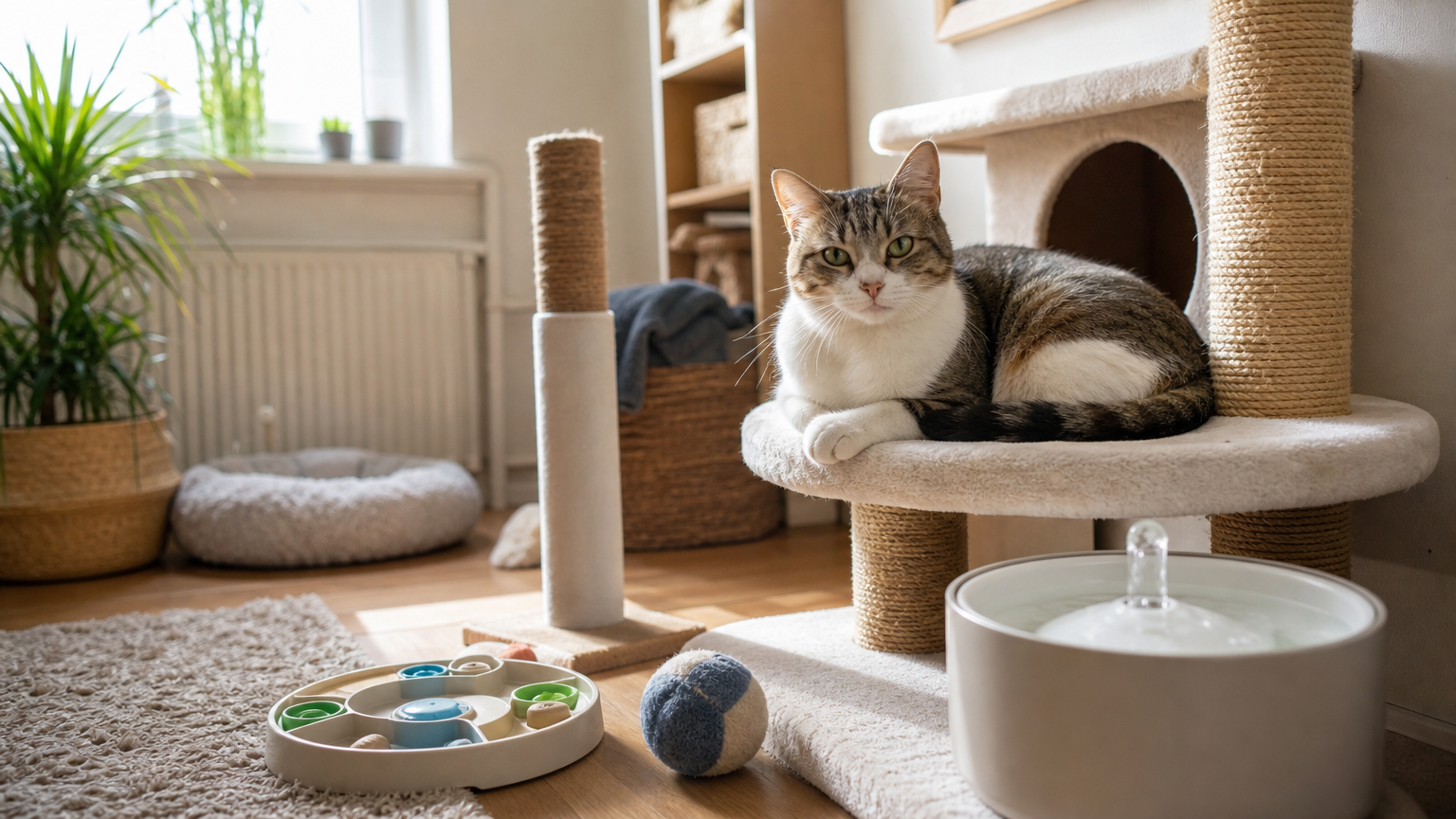
1. Vertical Space: Cat Trees & Climbing Furniture
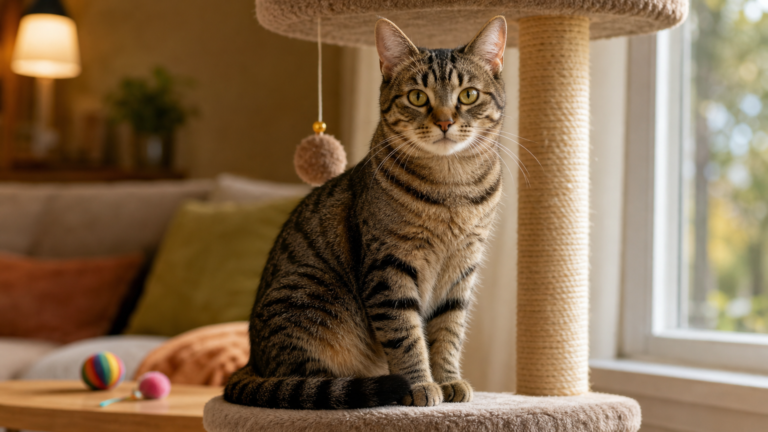
Cats feel safest when they’re high up. A tall cat tree gives your cat a private “territory” above the chaos — away from kids, dogs, or other cats. Climbing also burns nervous energy and builds confidence. A good cat tree isn’t a luxury; for an anxious cat, it’s a security system.
2. Scratching Posts: Let Them Scratch (the Right Thing)
Scratching is how cats mark territory, stretch muscles, and shed stress. When there’s no proper scratching surface, they use your sofa — and then get scolded, which adds more stress. A sturdy sisal scratching post gives your cat a legal, satisfying outlet. Place one near their favorite sleeping spot and watch the sofa survive.
3. Interactive Toys: Bring the Hunt Home
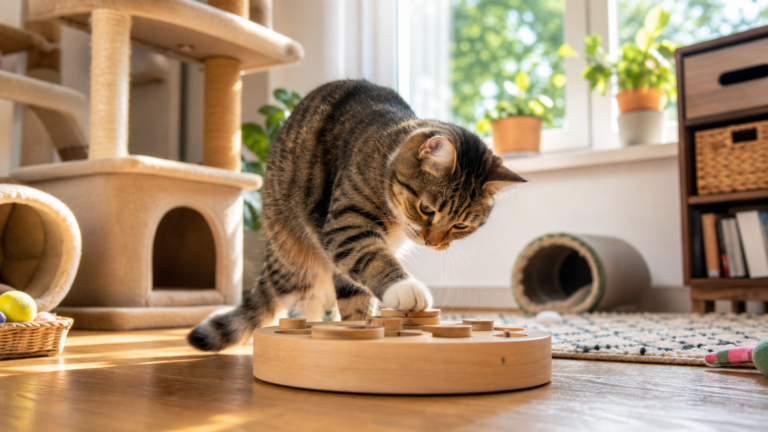
A bored cat is a stressed cat. Interactive toys — feather wands, puzzle feeders, and treat-dispensing balls — tap into your cat’s hunting instinct and give them a “win.” Just 10–15 minutes of play a day can dramatically reduce anxiety, especially for indoor cats.
4. Water Fountains: Hydration That Calms
Here’s a connection most owners miss: stress is a leading trigger for urinary issues in cats (like cystitis), and chronic dehydration makes it worse. Cats naturally prefer moving water — it triggers their instinct that flowing water is fresh and safe. A cat water fountain encourages drinking, which protects the urinary tract and helps your cat stay calm and healthy.
How to Start: Small Steps, Big Change
You don’t need to redesign your home overnight. Start with one or two changes and build from there:
- Add one vertical space (a cat tree) in the room where your cat spends the most time
- Place a scratching post near their favorite resting spot
- Try 10 minutes of interactive play at the same time every day
- Offer fresh, moving water with a fountain
Then watch. Within a week or two, you’ll often see the hiding decrease, the yowling soften, and the litter box accidents stop.
The Bottom Line
Stress in cats isn’t a character flaw — it’s a cry for help. And the best part? You can answer it. With the right enrichment, your cat can climb, scratch, hunt, and feel safe again — in their own home, on their own terms.
Your cat doesn’t need to be “fixed.” They need an environment that lets them be a cat.


[…] See, you might also enjoy reading: 5 Signs Your Cat Is Stressed (And How Enrichment Can Help) […]