Best Flea Treatment for Dogs: A Veterinarian’s Complete Guide to Flea Prevention and Control
As a veterinarian, I compare the best flea treatments for dogs — oral chews, topical solutions, and collars — and explain how to choose the safest, most effective option for your dog.
As a veterinarian, there’s one question I hear constantly: “What’s the best flea treatment for my dog?”
And my answer is always the same: the best treatment is the one your dog actually receives, consistently, and that is safe for their specific health profile.
Fleas are more than a nuisance. They cause intense itching, allergic reactions, anemia (especially in puppies), and transmit tapeworms. A single flea can lay up to 50 eggs per day, and an untreated infestation can spread through your entire home within weeks.
The good news? Modern flea treatments are incredibly effective — when chosen correctly and used consistently. In this guide, I’ll break down the different types of treatments, compare the top options, and help you choose what’s right for your dog.
🟢 Understanding the Flea Life Cycle
To choose the right treatment, you need to understand your enemy. Fleas have four life stages:

🔑 Key insight: Adult fleas on your dog represent only 5% of the total infestation. The other 95% (eggs, larvae, pupae) live in your environment. This is why treating only your dog — without treating your home — often fails.
🟡 Types of Flea Treatments
There are three main categories of flea treatments, each with pros and cons:
1. Oral Medications (Chews and Tablets)
These are the most popular and, in my opinion, the most effective option for most dogs.
How they work: Your dog swallows the medication, which enters the bloodstream. When a flea bites, it ingests the medication and dies.
Pros:
- Highly effective (kills fleas within hours)
- No residue on fur or skin
- Waterproof — no concern after swimming or bathing
- Many also prevent heartworm and intestinal parasites
- No risk of the dog licking off the treatment
Cons:
- Requires a prescription (most effective ones)
- Some dogs dislike the taste (though most are flavored)
- Can’t be used in dogs with a history of seizures (some products)
2. Topical Solutions (Spot-On)
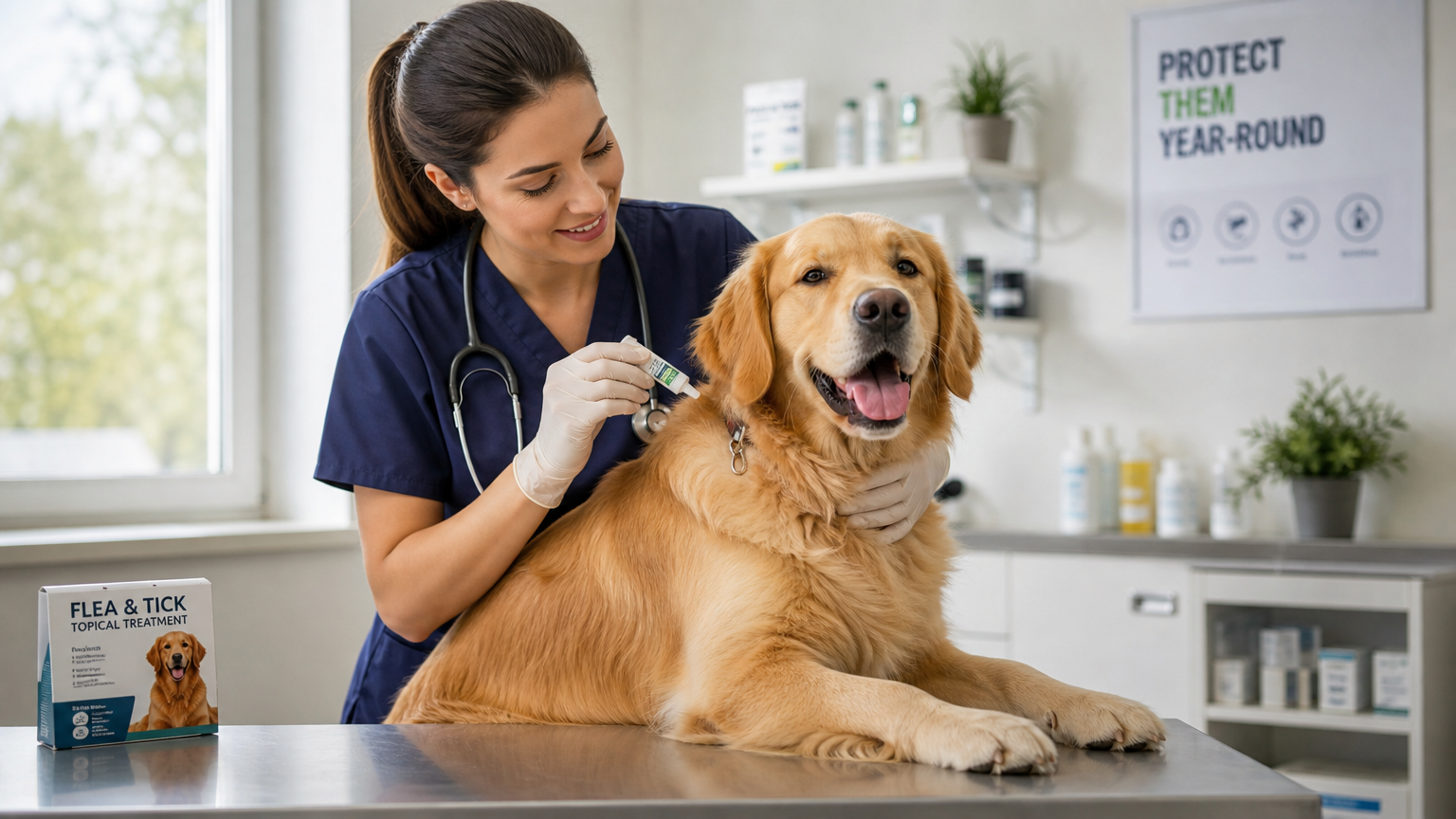
Liquid applied directly to the skin between the shoulder blades.
How they work: The solution spreads through the skin’s oil glands, killing fleas on contact.
Pros:
- Easy to apply monthly
- Some are available over-the-counter
- Effective against fleas, ticks, and mosquitoes (depending on product)
Cons:
- Can’t bathe or swim for 24–48 hours after application
- Some dogs dislike the sensation
- Risk of the dog licking the application site (rare but possible)
- Less effective in dogs with thick or oily coats
3. Flea Collars
A collar that releases active ingredients over several months.
How they work: The collar distributes medication through the skin and fur, providing continuous protection.
Pros:
- Long-lasting (some last 8 months)
- Set-and-forget — no monthly application
- Good option for owners who forget monthly treatments
Cons:
- Some dogs dislike wearing collars
- Can cause skin irritation in sensitive dogs
- Less effective than oral or topical in heavy infestations
- Some have a strong odor
🔴 Top Flea Treatments Compared (2026)
Based on my experience as a veterinarian and current clinical evidence, here are the most effective options:
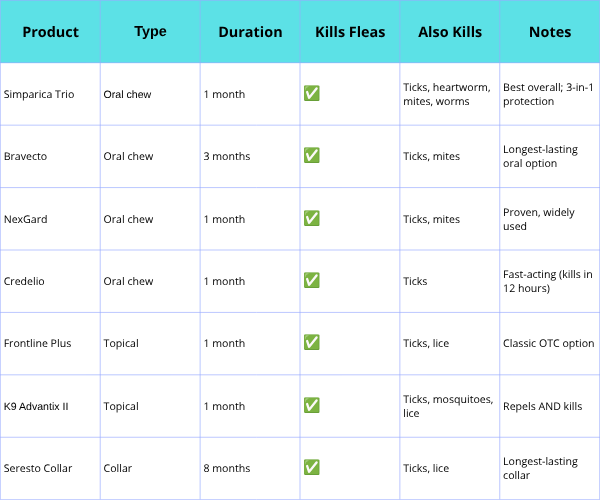
👉 My recommendation as a veterinarian: For most dogs, Simparica Trio or Bravecto are the best choices. They’re highly effective, easy to administer, and provide broad parasite protection.
🟠 How to Choose the Right Treatment for Your Dog
Not every treatment fits every dog. Consider these factors:
1. Your Dog’s Health History
- Dogs with a history of seizures: Avoid isoxazoline-class drugs (Simparica, Bravecto, NexGard, Credelio). Discuss alternatives with your vet.
- Pregnant or nursing dogs: Only use products specifically approved for this stage.
- Dogs on other medications: Some interactions are possible. Always tell your vet what else your dog takes.
- Young puppies: Most products have minimum age and weight requirements (usually 8 weeks and 2 lbs).
2. Your Dog’s Lifestyle
- Swims or bathes frequently: Choose oral medication (topicals wash off)
- Spends time in wooded or grassy areas: Choose a product that also kills ticks
- Has a thick or double coat: Oral medication may be more reliable than topicals
- Is a picky eater: Some dogs refuse chews; you may need to hide them in food
3. Your Household Situation
- Multiple pets: Treat ALL dogs and cats in the home simultaneously, or fleas will keep jumping between them
- Small children: Consider oral medications to avoid any residue on the dog’s fur
- Budget: Collars are cheapest long-term; oral chews are most expensive but most effective
🟡 Treating an Active Flea Infestation
If your dog already has fleas, prevention alone isn’t enough. Here’s a complete treatment plan:
Step 1: Treat Your Dog Immediately
- Give a fast-acting oral medication (like Capstar or Comfortis) to kill adult fleas within hours
- Follow with a long-term preventive (monthly chew or topical) to break the cycle
Step 2: Treat Your Home
- Vacuum thoroughly — carpets, rugs, furniture, baseboards, under beds. Vacuum daily for 2 weeks
- Wash all bedding — dog beds, your bedding, blankets in hot water
- Use an environmental spray — a flea spray or fogger specifically for homes
- Repeat — the pupae can survive for months; re-treat your home in 2–3 weeks
Step 3: Treat Your Yard
- Use an outdoor flea spray or granules
- Focus on shaded areas, under decks, and where your dog spends time
- Mow the lawn regularly to reduce flea habitat
Step 4: Continue Prevention
- Keep your dog on monthly prevention year-round (fleas survive indoors even in winter)
- Vacuum regularly to remove eggs and larvae
- Wash dog bedding weekly
🔵 When to See Your Veterinarian
Schedule a checkup if:
- Your dog has severe itching, hair loss, or skin infections from flea bites
- Your dog is lethargic, pale, or weak (possible anemia from blood loss)
- You see tapeworm segments (small rice-like pieces) in your dog’s stool
- Your dog has a reaction to a flea treatment (vomiting, tremors, excessive drooling)
- You’re unsure which treatment is safe for your dog’s specific health profile
❓ Frequently Asked Questions
Do I need flea prevention in winter? Yes. Fleas survive indoors year-round, and central heating creates ideal conditions. Year-round prevention is recommended.
Can I use dog flea treatment on my cat? Never. Many dog flea products contain permethrin, which is highly toxic to cats. Always use species-specific products.
Why do I still see fleas after treatment? It takes 2–3 months of consistent treatment to break the flea life cycle. New fleas hatch from pupae in your environment for weeks after you start treatment. Be patient and treat your home too.
Are natural flea remedies effective? Essential oils, garlic, and other home remedies are not reliably effective and some are toxic to dogs. Stick to veterinarian-approved products.
My dog had a seizure after flea medication. What should I do? Stop the medication immediately and contact your veterinarian. Note the product name and report it. For future prevention, discuss non-isoxazoline options with your vet.
Final Thoughts
As a veterinarian, I can’t overstate the importance of consistent flea prevention. It’s not just about comfort — it’s about your dog’s health. Fleas cause allergies, transmit diseases, and in severe cases, can be life-threatening.
Choose a treatment that fits your dog’s health profile and your lifestyle. Give it consistently, every month, year-round. And if you’re ever unsure, your veterinarian is your best resource.
A flea-free dog is a happy, healthy dog.