Signs of Allergies in Dogs: A Veterinarian’s Complete Guide to Recognizing and Treating Canine Allergies
As a veterinarian, I explain how to recognize the signs of allergies in dogs — from itchy skin and ear infections to digestive issues — and how to identify the cause and treat it.
As a veterinarian, allergies are one of the most common reasons dogs come through my clinic door. And here’s what surprises most owners: allergies in dogs rarely look like allergies in humans.
When you think of allergies, you probably picture sneezing, watery eyes, and a runny nose. But dogs experience allergies very differently. Their primary symptom is itchy skin — and the scratching, licking, and chewing that follows.
The challenge? Allergies are chronic and progressive. They don’t go away on their own, and they tend to get worse over time without proper management. The good news? With early recognition and the right treatment plan, most dogs with allergies live comfortable, happy lives.
In this guide, I’ll help you recognize the signs of allergies in your dog, understand the different types, and know when to seek veterinary help.
🟢 The Most Common Signs of Allergies in Dogs
Allergies in dogs primarily affect the skin, ears, and digestive system. Here are the signs I see most often:

🔑 Key insight: A dog that scratches occasionally isn’t necessarily allergic. But if the scratching is persistent, intense, or causing skin damage, allergies are a likely culprit.
🟡 The Three Main Types of Allergies in Dogs
Understanding the type of allergy is essential for proper treatment. Here are the three most common:
1. Flea Allergy Dermatitis (FAD)
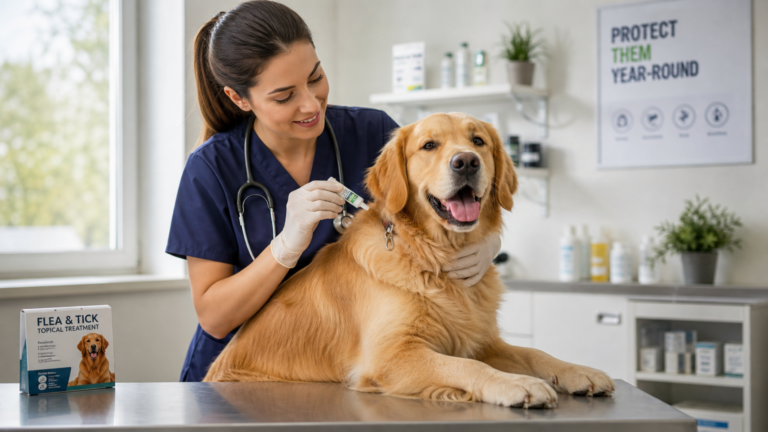
The most common allergy in dogs. It’s an allergic reaction to flea saliva — not the fleas themselves.
Key facts:
- A single flea bite can cause intense itching for days
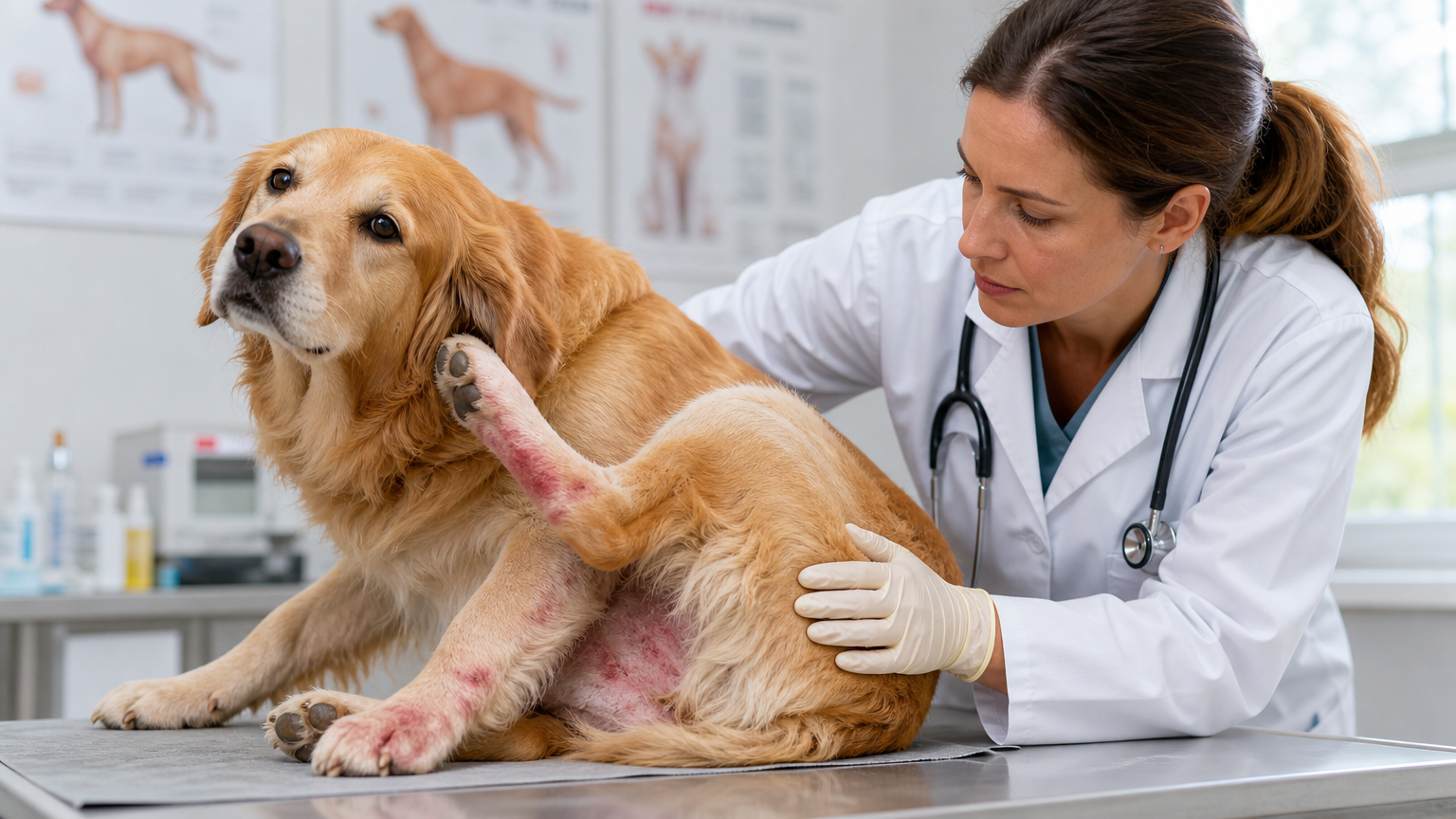
- The most affected areas: base of the tail, lower back, inner thighs, belly
- Often worse in warmer months, but fleas survive indoors year-round
- Dogs with FAD may have very few visible fleas (they scratch them off)
2. Environmental Allergies (Atopic Dermatitis)
An allergic reaction to airborne or contact allergens — pollen, dust mites, mold, grass, or household chemicals.
Key facts:
- Usually develops between 6 months and 3 years of age
- Can be seasonal (pollen) or year-round (dust mites, mold)
- Most affected areas: paws, face, ears, armpits, groin
- Often leads to secondary skin and ear infections
- Genetic predisposition in breeds like Golden Retrievers, Labradors, French Bulldogs, and West Highland White Terriers
3. Food Allergies
An immune reaction to a specific ingredient — most commonly proteins (chicken, beef, dairy, eggs) or carbohydrates (wheat, corn, soy).
Key facts:
- Can develop at any age, even after years on the same food
- Symptoms overlap with environmental allergies (itching, ear infections)
- Also causes digestive issues: vomiting, diarrhea, gas
- Diagnosis requires a strict elimination diet trial (8–12 weeks)
🔴 How to Tell the Difference Between Allergy Types
This is where it gets tricky — and where many owners get frustrated. Here’s a quick guide:

👉 Important: Many dogs have multiple allergies simultaneously. A dog can be allergic to fleas, pollen, AND chicken. This is why veterinary diagnosis is so important.
🟠 When to See Your Veterinarian
As a veterinarian, I recommend scheduling an appointment if:
- Your dog has been scratching intensely for more than a few days
- You notice red, raw, or infected skin (hot spots)
- Your dog has recurring ear infections (more than 1–2 per year)
- Your dog is losing hair or has bald patches
- Your dog has digestive issues that persist beyond 24 hours
- The itching is disrupting sleep or daily life
- You’ve tried over-the-counter remedies with no improvement
🟡 How Veterinarians Diagnose Allergies
Diagnosis is a step-by-step process, not a single test:
Step 1: Rule Out Other Causes
Your vet will first rule out parasites (fleas, mites), skin infections, and other conditions that mimic allergies.
Step 2: Flea Control Trial
A strict flea prevention protocol for 4–8 weeks to rule out flea allergy.
Step 3: Food Elimination Trial
An 8–12 week trial on a novel protein (a protein your dog has never eaten) or hydrolyzed protein diet. If symptoms improve, food allergy is confirmed.
Step 4: Allergy Testing (If Needed)
If environmental allergy is suspected, your vet may recommend:
- Intradermal skin testing — Small amounts of allergens injected into the skin
- Blood allergy testing — Measures antibody levels to specific allergens
Step 5: Symptom Management
Regardless of the cause, treatment focuses on:
- Controlling itching (medications, medicated baths)
- Treating secondary infections
- Avoiding triggers when possible
🔵 Treatment Options for Dog Allergies
1. Avoidance (Best But Not Always Possible)
- Flea allergy: Strict year-round flea prevention
- Food allergy: Strict avoidance of the offending ingredient
- Environmental allergy: Reduce exposure (wipe paws after walks, wash bedding, use air purifiers)
2. Medications

3. Immunotherapy (Allergy Shots or Drops)
For environmental allergies, immunotherapy involves exposing the dog to gradually increasing amounts of the allergen to build tolerance.
Pros: Long-term, addresses the root cause Cons: Takes 6–12 months to see full effect; requires commitment
4. Medicated Baths and Topicals
- Hypoallergenic shampoos — Soothe and moisturize irritated skin
- Medicated shampoos — Treat secondary bacterial or fungal infections
- Topical sprays — Provide localized relief for hot spots
🟣 Home Care Tips for Allergic Dogs
While your dog is under veterinary care, these home strategies help:
- Wipe paws after walks to remove pollen and allergens
- Wash bedding weekly in hot water
- Vacuum regularly to reduce dust mites
- Use an air purifier with HEPA filter
- Bathe with hypoallergenic shampoo as directed by your vet
- Avoid known triggers — certain foods, treats, or environments
- Keep a symptom diary — track when symptoms flare to identify patterns
❓ Frequently Asked Questions
Can I give my dog Benadryl for allergies? Yes, but only with your veterinarian’s guidance. The correct dose depends on your dog’s weight (typically 1mg per pound). Not all dogs respond to antihistamines, and some have side effects. Always confirm with your vet first.
Are allergies in dogs curable? Not usually — they’re a chronic condition. But they are highly manageable. Most dogs with proper treatment live comfortable, happy lives.
Why is my dog suddenly allergic to food they’ve eaten for years? Food allergies can develop at any time, even after years of eating the same food. The immune system can become sensitized to a protein over time.
Do allergy shots work for dogs? Yes, for environmental allergies, immunotherapy is the most effective long-term treatment. About 60–80% of dogs improve significantly. It takes time but addresses the root cause.
Can allergies cause behavioral changes in dogs? Yes. Chronic itching is exhausting and uncomfortable. Allergic dogs may become irritable, restless, or less tolerant. Treating the allergy often improves behavior.
Final Thoughts
As a veterinarian, I tell my clients: allergies are a marathon, not a sprint. They require patience, consistency, and a good partnership with your veterinarian.
The most important step is recognizing the signs early. The sooner you seek help, the sooner your dog gets relief — and the less damage chronic scratching causes to their skin and quality of life.
If your dog is scratching, licking, or chewing more than normal, don’t wait. Schedule that appointment. Your dog will thank you.