Best Pet Camera 2026: A Veterinarian’s Complete Guide to Watching Your Pet
As a veterinarian, I help you choose the best pet camera of 2026 — comparing video quality, two-way audio, treat dispensers, and the features that keep you connected to your pet.
As a veterinarian, I know one of the hardest parts of pet ownership is being away from your furry friend. Whether you’re at work, traveling, or just in another room, you worry: Is my dog okay? Is my cat getting into trouble?
That’s exactly what a pet camera is designed to solve. It’s not just a security camera — the best pet cameras let you watch, talk to, and even play with your pet from anywhere in the world.
But here’s the challenge: the market is flooded with options, from budget $30 cameras to premium $300 models with treat dispensers and AI features. Choosing the wrong one can mean poor video quality, frustrating apps, or paying for features you’ll never use.
In this guide, I’ll help you understand what matters in a pet camera, compare the best options of 2026, and choose the right one for your pet and lifestyle.
🟢 Why You Need a Pet Camera
From a veterinary and pet-parent perspective, pet cameras solve several real problems:

🔑 Key insight: A pet camera isn’t just a gadget — it’s a tool for peace of mind and early problem detection. Catching a health or behavior issue early can make a big difference.
🟡 Types of Pet Cameras
1. Basic Indoor Cameras ($25–$60)
- HD video, two-way audio
- No treat dispenser or special pet features
- Best for: Budget buyers, simple monitoring
2. Pan & Tilt Cameras ($40–$100)
- Motorized camera that rotates to follow your pet
- Wider coverage of the room
- Best for: Monitoring a large area
3. Pet-Specific Cameras With Treat Dispenser ($100–$250)
- Built-in treat launcher
- Two-way audio + video
- Bark/activity alerts
- Best for: Interactive play, separation anxiety
4. AI-Powered Pet Cameras ($150–$300)
- Animal detection (vs. people)
- Activity and health tracking
- Bark alerts, sleep monitoring
- Best for: Advanced monitoring, health insights
🔴 The Best Pet Cameras of 2026
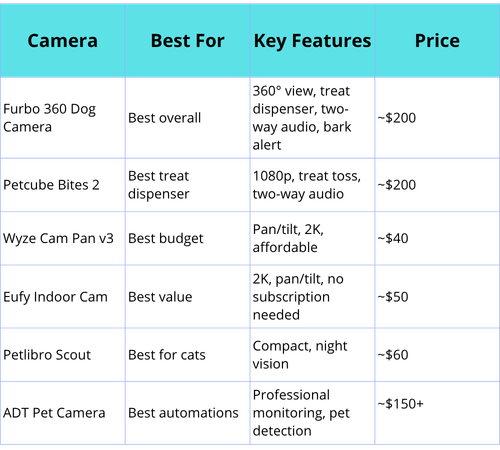
Based on testing from Wirecutter, PCMag, CNN, and SafeWise, here are the top-rated options:
🟠 What to Look For in a Pet Camera
1. Video Quality
- Look for 1080p (Full HD) minimum; 2K is better
- Night vision is essential for monitoring at night
- Good field of view (wide angle or pan/tilt)
2. Two-Way Audio
- Hear your pet and talk to them from the app
- Look for clear audio both ways
- Some have voice recording (record your voice to call your pet)
3. Treat Dispenser (Optional But Fun)
- Toss treats to reward or calm your pet remotely
- Look for adjustable treat size and reliable launching
- Great for separation anxiety and positive reinforcement
4. Alerts and Notifications
- Bark alerts — notified when your pet barks
- Motion alerts — notified when there’s movement
- AI pet detection — distinguishes pets from people
5. App Quality
- Easy to use, reliable live streaming
- Multi-user support (family members can access)
- Cloud storage options for recordings
6. Subscription Requirements
- Some cameras require a subscription for cloud storage and AI features
- Check the total cost (camera + subscription) before buying
- Some offer local storage (SD card) to avoid subscriptions
🟡 Treat Dispensers: Worth the Extra Cost?
As a veterinarian, I see both sides of the treat dispenser debate:
Pros
- Calms separation anxiety — a treat can reassure a stressed pet
- Positive reinforcement — reward good behavior remotely
- Interactive play — keeps pets entertained
Cons
- Adds cost — treat dispensers are the most expensive feature
- Reliability issues — some jam or misfire
- Not essential — a camera with audio alone covers most needs
👉 My take: A treat dispenser is a nice-to-have, not a must-have. If you have a pet with separation anxiety or you travel a lot, it’s worth it. Otherwise, a good camera with two-way audio does the job.
🔵 How to Choose the Right Pet Camera (Step by Step)
- Set your budget —
$30–$300depending on features - Decide your priorities — just monitoring, or interactive play?
- Consider your pet — dogs love treat dispensers; cats may prefer pan/tilt
- Check the app — read reviews; the app matters as much as the camera
- Factor in subscriptions — check the total cost over time
- Think about placement — where will you mount it?
- Consider multiple pets — you may want more than one camera
🟣 Tips From a Veterinarian
1. Use It to Monitor Health
A pet camera can help you spot early signs of illness — limping, lethargy, excessive scratching, or changes in behavior — while you’re away.
2. Watch for Separation Anxiety
If your pet shows signs of distress when you leave (excessive barking, destructive behavior, pacing), a camera helps you detect and address it early.
3. Don’t Rely on It Alone
A pet camera is a complement, not a replacement, for proper care, exercise, and veterinary checkups.
4. Consider Privacy
Pet cameras are connected devices. Use strong passwords and keep the firmware updated to protect your privacy.
5. Test the Treat Dispenser
If you buy a model with a treat dispenser, test it with different treat sizes to find what works — and avoid jams.
❓ Frequently Asked Questions
What’s the best pet camera overall? Furbo 360 Dog Camera is frequently rated best overall for its 360° view, treat dispenser, and two-way audio. For budget buyers, Wyze Cam Pan v3 is an excellent value.
Do pet cameras require a subscription? Some do — for cloud storage and AI features. Others offer local storage (SD card) with no subscription. Check the total cost before buying.
Can a pet camera help with separation anxiety? Yes. Two-way audio and treat dispensers let you reassure and reward your pet remotely, which can help reduce separation anxiety.
What’s the difference between a pet camera and a security camera? Pet cameras have pet-specific features — treat dispensers, bark alerts, AI pet detection, and two-way audio designed for interacting with pets. Security cameras are more basic.
How many pet cameras do I need? It depends on your home and pets. One camera covers a single room. For multiple rooms or pets, you may want two or more.
Final Thoughts
As a veterinarian, I believe a pet camera is one of the most valuable investments for pet owners. It gives you peace of mind, helps you detect problems early, and lets you stay connected to your furry friend — no matter where you are.
The best camera for you depends on your budget, your pet’s needs, and the features you’ll actually use. Start with the essentials: good video quality, two-way audio, and a reliable app. Add a treat dispenser if you want interactive play.
Your pet may not understand the camera — but they’ll love hearing your voice and getting treats from you, even from far away.