GPS Tracker for Dogs: A Veterinarian’s Complete Guide to Pet Tracking (2026)
As a veterinarian, I help you choose the best GPS tracker for your dog — comparing real-time tracking, battery life, subscription costs, and the features that actually keep your pet safe.
As a veterinarian, I’ve seen the panic in an owner’s eyes when their dog slips out the door or bolts after a squirrel. Every second counts — and that’s exactly why a GPS tracker can be a lifesaver.
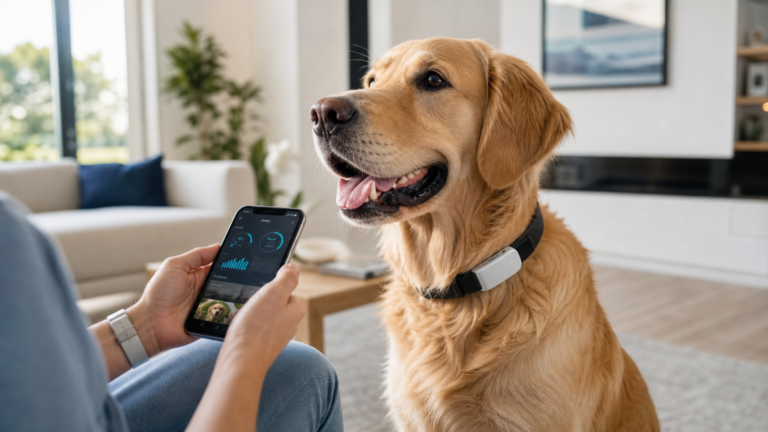
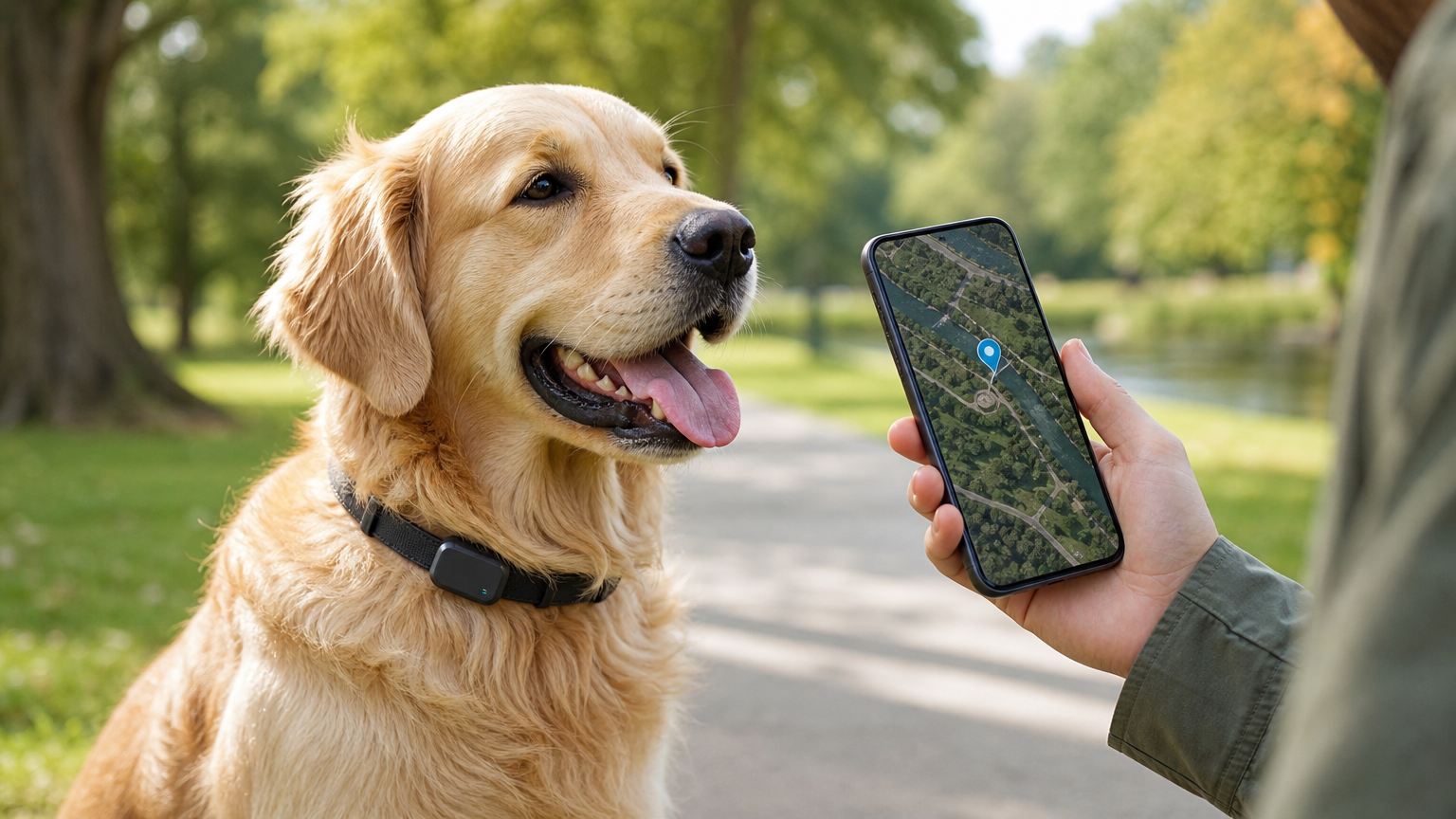
A GPS tracker attaches to your dog’s collar and lets you see their location in real time on your smartphone. It’s not just for escape artists — it’s peace of mind for every dog owner, from hikers to city dwellers.
But here’s the challenge: the market is full of options, from $30 Bluetooth tags to $300 GPS collars with subscriptions. And there’s a critical distinction most owners don’t understand: not all “trackers” are GPS trackers.
In this guide, I’ll explain how dog GPS trackers work, compare the best options of 2026, and help you choose the right one for your dog and lifestyle.
🟢 GPS Tracker vs. Bluetooth Tracker: Know the Difference
This is the most important concept to understand:
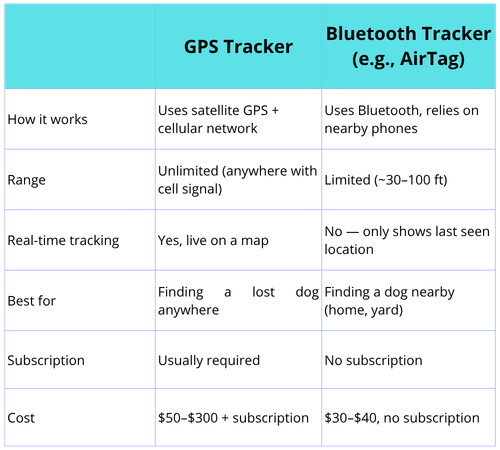
🔑 Key insight: An AirTag is not a GPS tracker. It only works when your dog is near other iPhones. For true peace of mind — finding your dog anywhere — you need a real GPS tracker.
🟡 How Dog GPS Trackers Work
A GPS tracker combines three technologies:
- GPS satellite — determines your dog’s location
- Cellular network — sends that location to your phone (requires a SIM/subscription)
- Smartphone app — displays the location on a map, sets alerts
Key Features to Understand

🔴 The Best GPS Trackers for Dogs of 2026
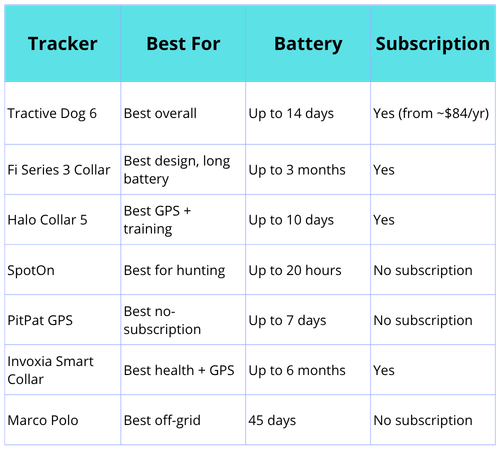
Based on testing from Wirecutter, PCMag, and dog trainer reviews, here are the top options:
🟠 The Subscription Question (Important)
Most GPS trackers require a monthly or yearly subscription — this covers the cellular data that sends your dog’s location to your phone.
Subscription-Based Trackers
- Tractive: from ~
$84/year (Basic) or$168/year (Premium with health) - Fi: ~
$99/year - Halo: ~
$120/year
No-Subscription Options
- PitPat GPS:
$199upfront, no subscription - SpotOn:
$500+ upfront, no subscription (uses radio, not cellular) - Marco Polo:
$275upfront, no subscription (off-grid radio)
👉 The tradeoff: Subscription trackers are cheaper upfront but cost more over time. No-subscription trackers cost more upfront but save money long-term. Choose based on your budget and how long you’ll use it.
🟡 What to Look For in a Dog GPS Tracker
1. Real-Time Tracking Accuracy
The whole point is finding your dog. Look for:
- Live mode (updates every few seconds)
- Good reviews for accuracy in your area
- 4G/LTE connectivity (better than 3G)
2. Battery Life
- Daily charging is a hassle — look for 7+ days minimum
- Some trackers last weeks to months (Fi, Invoxia)
- Consider how often you’ll remember to charge it
3. Geofencing and Escape Alerts
- Set a safe zone (your yard, home)
- Get instant alerts if your dog leaves the zone
- This is the feature that actually prevents escapes
4. Size and Weight
- Should be light enough for your dog’s size
- Small dogs need lighter trackers
- Check the minimum dog weight recommendation
5. Durability and Waterproofing
- Look for IP67/IPX7 waterproof rating
- Should withstand rain, mud, and rough play
- Rugged design for active dogs
6. Subscription Cost
- Factor the total cost over 2–3 years
- Compare subscription vs. no-subscription options
- Check if the subscription is required or optional
🔵 GPS Tracker vs. Microchip: Both Matter
A common misconception: “My dog has a microchip, so I don’t need a tracker.”
These serve different purposes:
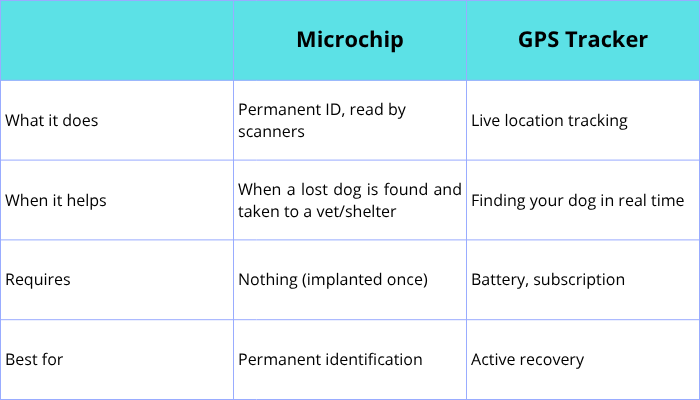
🔑 Key insight: Your dog should have both. The microchip is permanent ID if your dog is found; the GPS tracker helps you find them before that happens.
🟣 Tips From a Veterinarian
1. Get Your Dog Used to the Tracker
Introduce the tracker gradually — let your dog sniff it, then wear it for short periods. Reward calm behavior.
2. Test the Geofence
Set up your safe zone and test the escape alert before you actually need it. Make sure it works in your area.
3. Check the Battery Regularly
A dead tracker is useless. Set a reminder to charge it — some apps send low-battery alerts.
4. Keep the Microchip Updated
Even with a GPS tracker, keep your dog’s microchip registration current (address, phone number).
5. Consider Your Dog’s Size
A heavy tracker on a small dog is uncomfortable. Choose a tracker appropriate for your dog’s weight.
❓ Frequently Asked Questions
Is an AirTag a good GPS tracker for dogs? No. An AirTag is a Bluetooth tracker — it only works when your dog is near other iPhones. It can’t provide real-time GPS tracking or work in remote areas. For true tracking, you need a GPS tracker.
Do I need a subscription for a dog GPS tracker? Most GPS trackers require a subscription to cover cellular data. Some (PitPat, SpotOn, Marco Polo) offer no-subscription options with a higher upfront cost.
How long does a dog GPS tracker battery last? It varies widely — from 1 day (SpotOn) to 3 months (Fi) to 6 months (Invoxia). Most real-time trackers last 7–14 days.
Can a GPS tracker work without cell service? Some off-grid trackers (SpotOn, Marco Polo) use radio signals instead of cellular, working in remote areas. Most standard trackers need cell coverage.
What’s the best GPS tracker for a small dog? Look for a lightweight tracker (under 40g) with a low minimum weight recommendation. Tractive Mini and Fi are popular for smaller dogs.
Final Thoughts
As a veterinarian, I believe every dog owner should consider a GPS tracker. Whether your dog is an escape artist, a hiker’s companion, or a city dweller, the ability to find them in seconds — not hours — is invaluable.
The key is choosing the right one: real GPS (not Bluetooth), good battery life, geofencing alerts, and a subscription cost that fits your budget.
Your dog’s safety is worth it.