
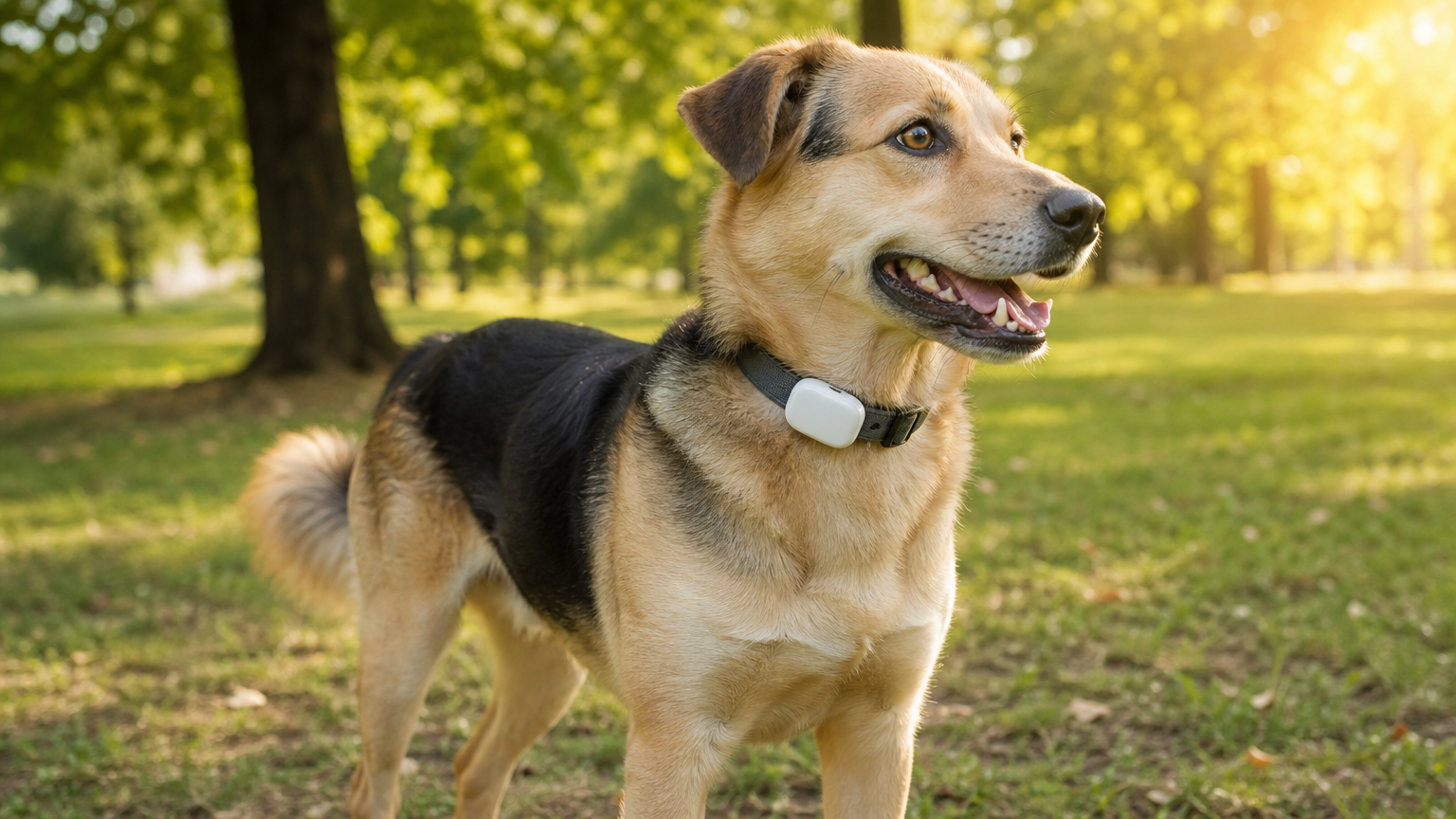
GPS Tracker or AirTag: Which One Saves Your Dog When It Runs Away?
Your dog just bolted, and your heart is in your throat. In that moment, only one question matters: how will you find him as fast as possible? That’s when owners face a decision many only make after a scare — choosing between a GPS tracker for dogs and an AirTag.
Both seem like simple solutions, but they work in completely different ways. And that difference can mean minutes or hours of searching — or, sadly, never finding your dog at all.
In this article, you’ll understand how each technology works, what the real limitations are, and which one to choose for your situation.
AirTag: What It Is (and What It Isn’t)
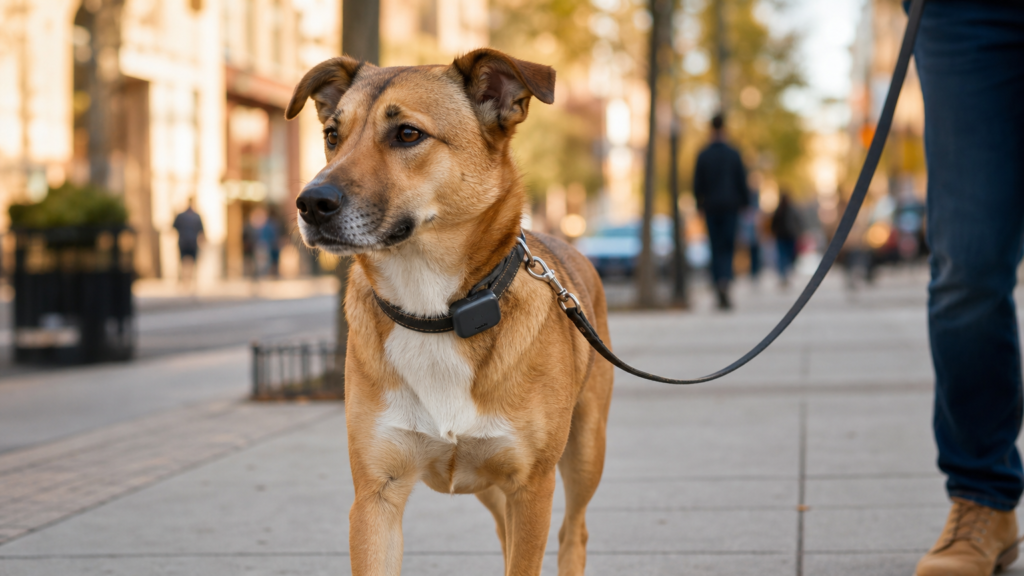
The AirTag is an item finder made by Apple. The company itself has made it clear that it was designed to track objects — not pets or people. And that’s not a minor detail: it’s the core of the problem.
Here’s what you need to understand: the AirTag has no GPS and no cellular connection of its own. It works through Bluetooth and the Find My network. In other words, to show your dog’s location, it depends on a nearby iPhone to “lend” its connection.
This creates serious limitations:
- Works well in dense cities, where many iPhones are nearby
- Performs poorly in open, rural, or wooded areas — exactly where most dogs go missing
- Doesn’t transmit real-time location — data arrives with a delay
- Tests showed short range — a promised range of up to 25 meters that, in practice, dropped to around 6 meters in some real cases
The second-generation AirTag (2026) brought meaningful improvements, like the ultra-wideband chip (the same as the iPhone 17 line), a 50% longer range, and use with Apple Watch Series 9 or later. But those upgrades are about finding a nearby object — they don’t change the fact that it depends on nearby phones to work out in the open.
See, you might also enjoy reading: Indoor Cat Enrichment: 8 Ideas That Actually Work
GPS Tracker for Dogs: How It Actually Works
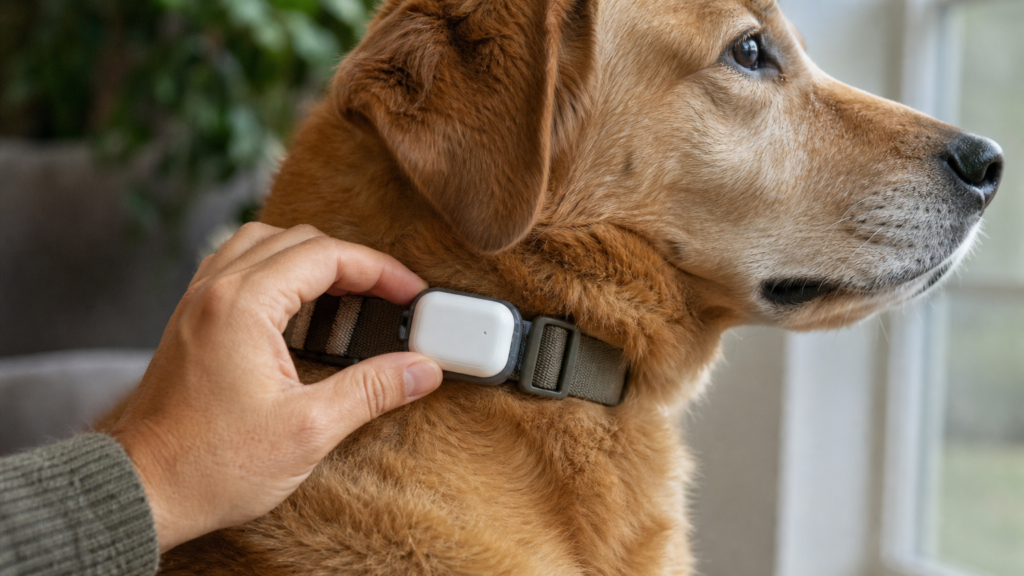
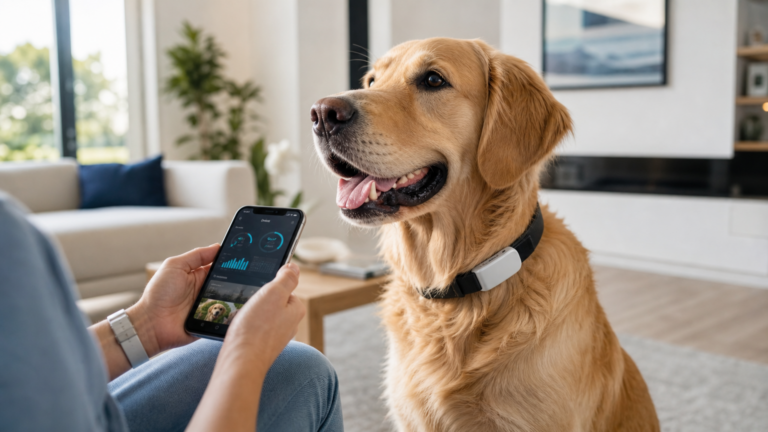
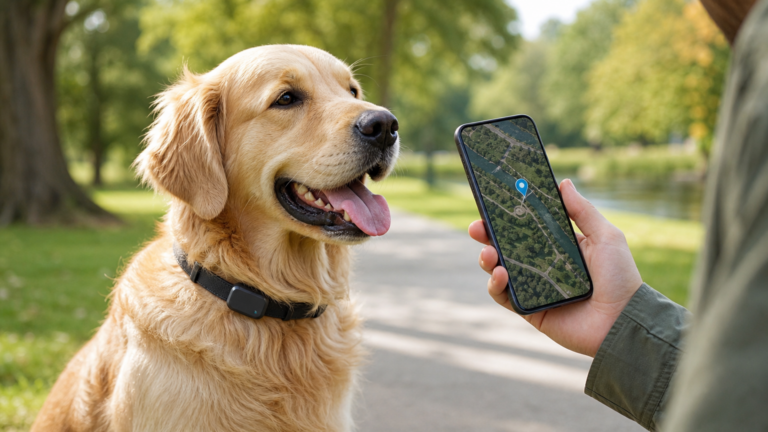
A GPS tracker for dogs works the opposite way: it’s a dedicated device with its own GPS and 4G/LTE cellular connection. Instead of depending on a nearby phone, it connects to the mobile network — like your own phone — and sends its location in real time.
This enables features that make all the difference when a dog runs away:
- Live tracking, from anywhere with a cell signal
- Geofencing (virtual fence): you set a safe area and get an alert if the dog leaves it
- Escape alerts and automatic notifications
- Location history, useful for spotting escape routes
- Activity and health monitoring, on some models
- Works without depending on a nearby iPhone
A solid choice in this category is the Petcube GPS Tracker, a lightweight device designed for dogs that combines real-time location, a virtual fence, and escape alerts — without needing any Apple device nearby.
The catch is the cost: most GPS trackers require a monthly or annual subscription to use the cellular network (that’s what the internal SIM card is for). Models like the Tractive DOG 6 weigh around 35 g and have a battery lasting up to two weeks — a good reference, since small dogs need lightweight devices.
GPS Tracker or AirTag: A Direct Comparison
To keep it simple, here’s the head-to-head:
Technology
- AirTag: Bluetooth + Find My network (depends on nearby iPhones)
- GPS tracker for dogs: GPS + its own cellular network (4G/LTE)
Where it performs best
- AirTag: dense cities, crowded environments
- GPS tracker for dogs: anywhere with a cell signal, urban or rural
Real-time location
- AirTag: no — updates depend on third parties, with delay
- GPS tracker for dogs: yes, live
Open areas / rural zones
- AirTag: weak to no performance
- GPS tracker for dogs: consistent performance
Cost
- AirTag: low, one-time price
- GPS tracker for dogs: device + monthly/annual subscription
Extra features
- AirTag: no pet-specific features
- GPS tracker for dogs: virtual fence, history, alerts, health monitoring
So, Which One Saves Your Dog When It Runs Away?
The honest answer is: for the scenario of a dog on the run, the GPS tracker for dogs is the right tool. The reason is simple and technical: most dogs go missing outdoors, far from concentrations of iPhones — exactly where the AirTag performs worst.
Industry analysts and experts are blunt on this point: AirTags are great for luggage and keys, but aren’t recommended for pets, because dogs move faster than the AirTag’s update rate can keep up with. When you need the location most, that’s exactly when it may stop updating.
That said, the AirTag can play a possible role: as a secondary backup in a busy urban environment, or for finding a dog that bolted inside your own building or yard. But it doesn’t replace a GPS tracker in a real escape situation.
Common Mistakes When Choosing a Tracker for Your Dog
- Assuming every tag is a GPS tracker — AirTag, Tile, and similar devices are Bluetooth finders, not GPS
- Forgetting the subscription — calculate the annual cost, not just the device price
- Ignoring weight — heavy devices bother small dogs
- Not testing first — simulate use and check accuracy in your area
- Relying on tech alone — an ID collar and microchip remain essential
See, you might also enjoy reading: Separation Anxiety in Dogs: A Practical 7-Step Plan
Practical Tips for Owners of a Dog That Runs Away
Beyond the right device, a few habits greatly reduce risk:
- A microchip with updated info registered to your details.
- A collar with an ID tag — the fastest way for someone to return your dog.
- A virtual fence configured on the tracker, with instant alerts.
- Recall training — the single most effective prevention.
- A safe home environment — gates, screens, and a walking routine help prevent escapes.
Conclusion: The Choice That Matters in a Moment of Panic
When it comes to your dog’s safety, the decision between a GPS tracker for dogs and an AirTag isn’t a matter of preference — it’s a matter of which technology actually works when your dog runs off.
If you want real-time location, escape alerts, and coverage outside cities, the GPS tracker for dogs is the right investment. The AirTag can serve as support, but not as your main line of defense.
Start today: check that your dog’s microchip is up to date and look into a GPS tracker based on his size and the area where you live — a reliable option like the Petcube GPS Tracker is a great place to start. It’s the kind of decision you don’t want to get wrong in a moment of panic.


[…] See, you might also enjoy reading: GPS Tracker or AirTag: Which One Saves Your Dog When It Runs Away? […]
[…] See, you might also enjoy reading: GPS Tracker or AirTag: Which One Saves Your Dog When It Runs Away? […]