Human Foods Dogs Can Eat: A Veterinarian’s Complete Safe Foods Guide
As a veterinarian, I explain which human foods are safe for dogs — fruits, vegetables, proteins, and dairy — plus the toxic foods you must never share.
As a veterinarian, one of the most common questions I hear is: “Can my dog eat this?”
And the honest answer is: it depends. Some human foods are perfectly safe and even healthy for dogs. Others are toxic — even deadly — in surprisingly small amounts.
The challenge? The line between “safe” and “dangerous” isn’t always obvious. A food that’s fine for you can be lethal for your dog. And the rules change depending on how the food is prepared.
In this guide, I’ll give you a clear, evidence-based list of the human foods dogs can eat safely, how to prepare them, and — just as importantly — the foods you must never share.
🟢 Safe Proteins for Dogs
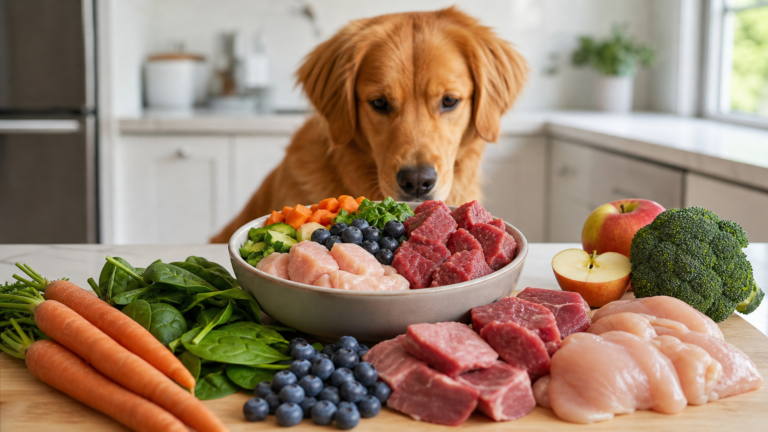
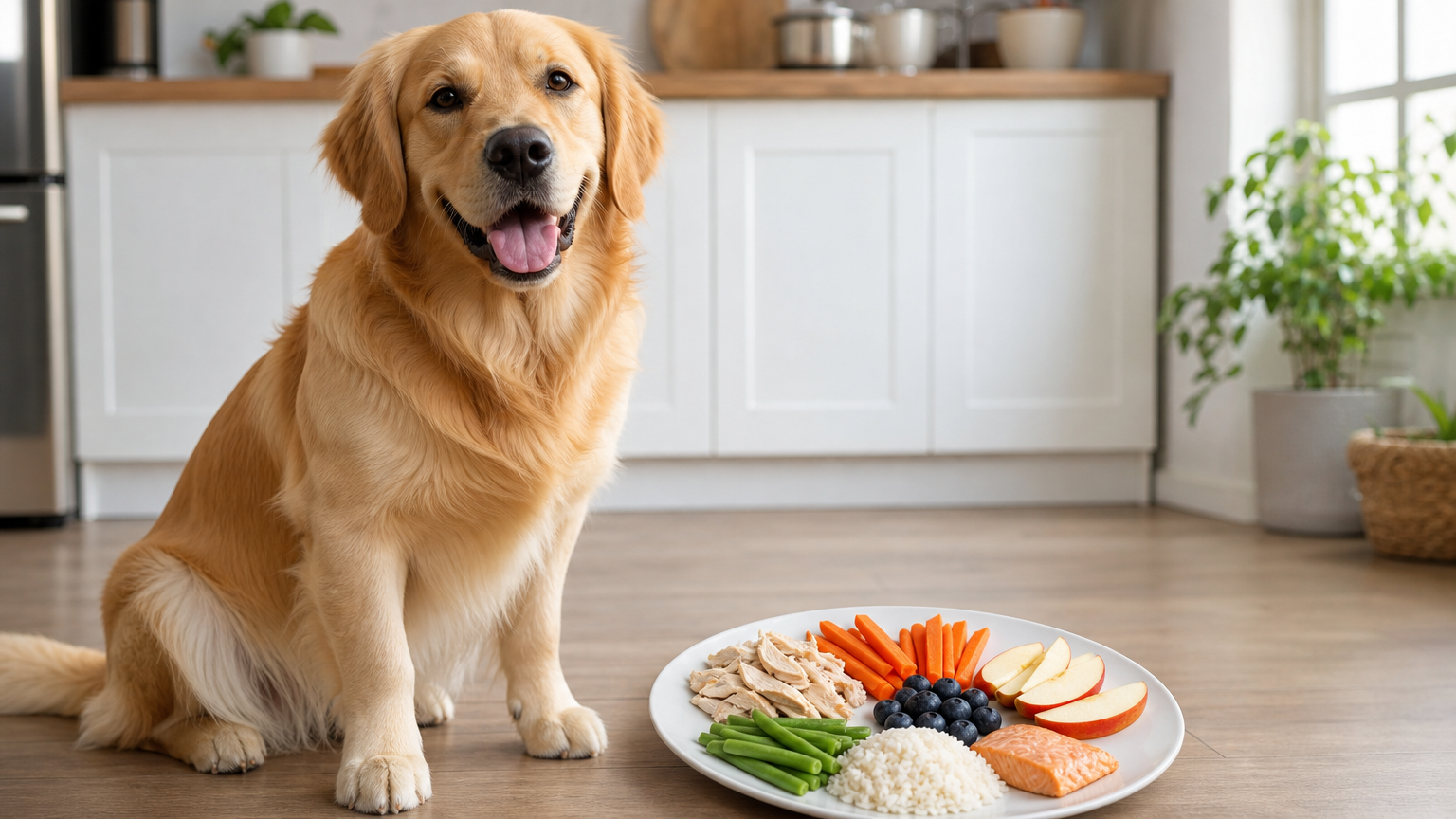
These are excellent, nutrient-dense options when prepared correctly:
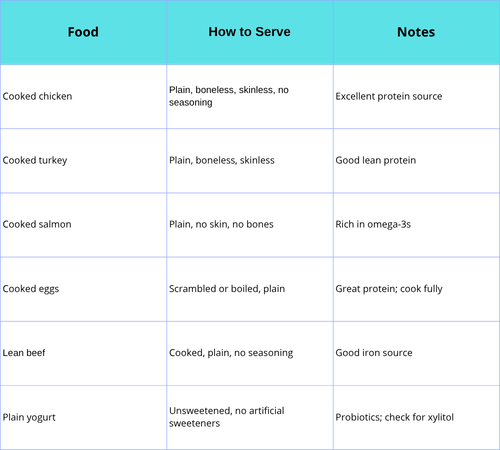
🔑 Key rules for proteins:
- Always fully cooked — no raw meat (bacteria risk)
- No bones — choking and intestinal damage risk
- No seasoning — especially no garlic, onion, or salt
- Plain — no sauces, marinades, or oils
🟡 Safe Fruits for Dogs
Fruits are great low-calorie treats — but preparation matters:
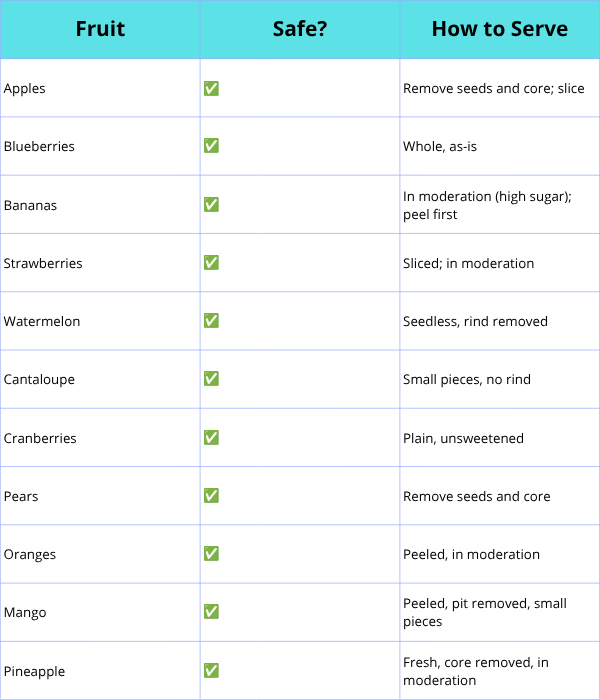
⚠️ Always remove: seeds, pits, cores, and rinds — these can cause choking or contain trace toxins.
🟠 Safe Vegetables for Dogs
Vegetables are excellent, low-calorie, high-fiber treats:
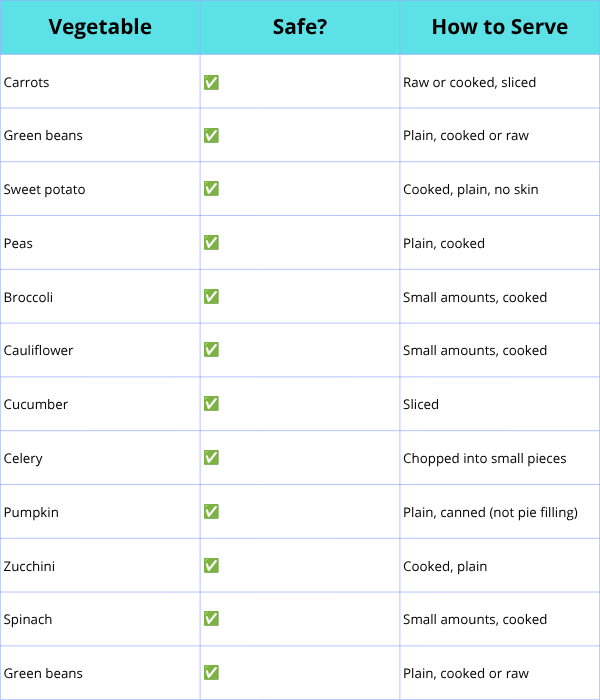
🔑 Key rules for vegetables:
- Cook plain — no butter, salt, or seasoning
- Chop into small pieces — prevent choking
- Introduce slowly — sudden fiber can cause digestive upset
🟢 Safe Grains and Other Foods
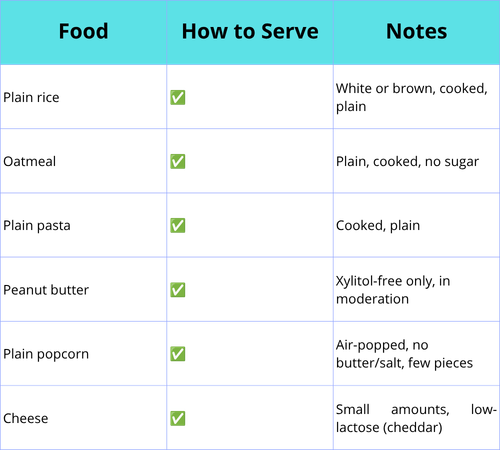
⚠️ Critical peanut butter warning: Many brands contain xylitol, a sweetener that is highly toxic to dogs — even a small amount can be fatal. Always check the label.
🔴 Foods That Are TOXIC to Dogs (Never Feed)
This is the most important section. These foods can cause serious illness or death:
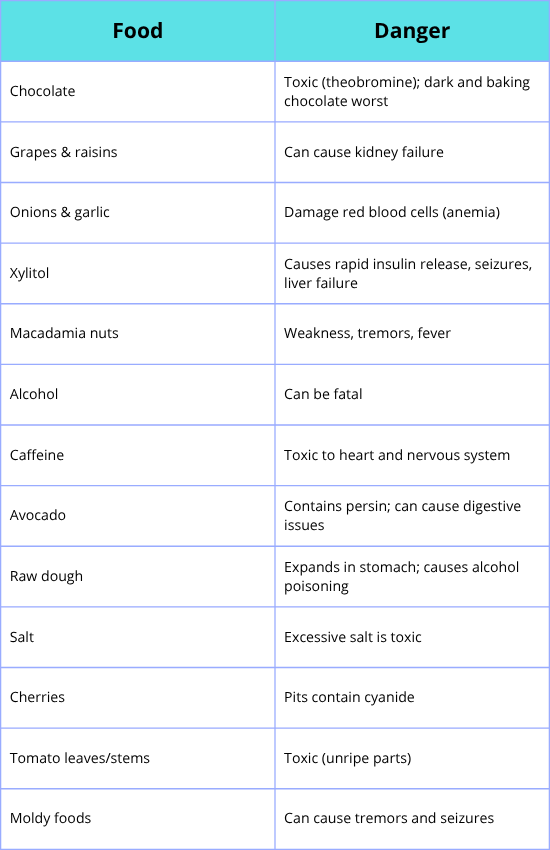
🔑 Key insight: Some of these foods are toxic in very small amounts — especially xylitol, chocolate, and grapes. If your dog eats any of these, contact your veterinarian or poison control immediately.
Even with safe foods, follow these rules:
1. The 10% Rule
Treats — including human food — should make up no more than 10% of your dog’s daily calories. The other 90% should come from complete, balanced dog food.
2. Introduce One Food at a Time
Give one new food, wait 24–48 hours, and watch for digestive upset or allergic reactions before trying another.
3. Start Small
Even safe foods can cause digestive upset if given in large amounts. Start with a small piece.
4. Know Your Dog
Some dogs have food allergies or sensitivities. What’s safe for one dog may not be for another.
5. When in Doubt, Don’t
If you’re unsure whether a food is safe, don’t feed it. The risk isn’t worth it.
🔵 What to Do If Your Dog Eats Something Toxic
Step 1: Stay Calm
Panic doesn’t help. Assess what and how much your dog ate.
Step 2: Call Your Veterinarian or Poison Control
- ASPCA Poison Control: (888) 426-4435
- Pet Poison Helpline: (855) 764-7661
Have the food name, amount, and time of ingestion ready.
Step 3: Don’t Induce Vomiting Unless Instructed
Some toxins cause more damage coming back up. Only induce vomiting if your veterinarian tells you to.
Step 4: Watch for Symptoms
Signs of toxicity include:
- Vomiting or diarrhea
- Lethargy or weakness
- Tremors or seizures
- Excessive drooling
- Difficulty breathing
- Loss of coordination
❓ Frequently Asked Questions
Can dogs eat cheese? Yes, in small amounts. Low-lactose cheeses (cheddar, mozzarella) are best. Avoid blue cheese and any cheese with added seasonings.
Is peanut butter safe for dogs? Yes, but only xylitol-free peanut butter. Check the label carefully — xylitol is deadly to dogs. Give in moderation.
Can dogs eat bread? Plain bread is generally safe in small amounts, but it has little nutritional value. Avoid bread with raisins, garlic, or onion.
Can dogs eat eggs? Yes, fully cooked eggs are a great protein source. Never feed raw eggs (salmonella risk).
What’s the most dangerous food for dogs? Xylitol is arguably the most dangerous because it’s hidden in many products (gum, peanut butter, baked goods) and is toxic in very small amounts. Chocolate and grapes are also highly dangerous.
Final Thoughts
As a veterinarian, my advice is simple: when in doubt, don’t share. The safest choice is always a complete, balanced dog food with occasional vet-approved treats.
But when you do share, share smart — plain, cooked, unseasoned, in small amounts, and only from the safe list. Your dog will love you for it, and you’ll both stay safe.