Raw Diet for Dogs: Pros and Cons — A Veterinarian’s Evidence-Based Guide
As a veterinarian, I examine the raw diet for dogs honestly — the claimed benefits, the real risks, and what the scientific evidence actually says before you make the switch.
As a veterinarian, raw feeding is one of the most passionate topics in pet nutrition — and one of the most polarizing. Ask five dog owners about raw diets and you’ll get five strong opinions. Ask five veterinarians and you might get five different answers too.
The raw diet movement — sometimes called BARF (Biologically Appropriate Raw Food) — claims that dogs thrive on the raw meat, bones, and organs their wild ancestors ate. Proponents report shinier coats, cleaner teeth, higher energy, and better digestion.
But here’s what I know from the other side of the exam table: raw diets also come with real, documented risks — bacterial contamination, nutritional imbalances, and dangers that extend beyond your dog to your family.
In this guide, I’ll give you an honest, evidence-based look at the pros and cons of raw diets, so you can make an informed decision with your veterinarian.
🟢 What Is a Raw Diet?
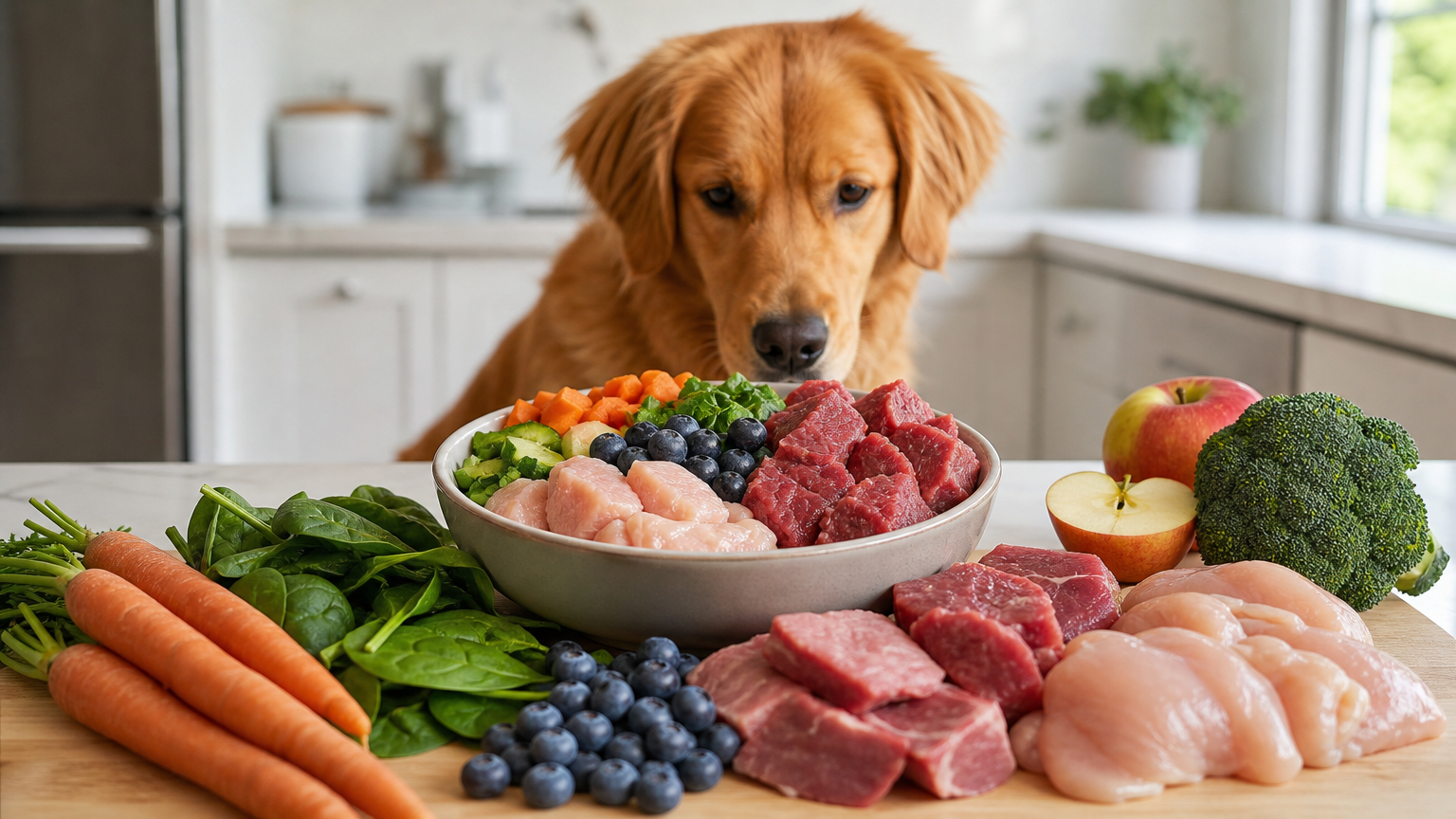
A raw diet consists of uncooked animal products. There are two main types:

The typical formula (BARF model) aims for:
- 70% raw meaty bones
- 20% raw meat
- 10% organs and vegetables
🔑 Key insight: There is no single “raw diet.” Formulations vary enormously — and that variation is where both the benefits and the risks live.
🟡 The Claimed Pros of Raw Diets
These are the benefits raw feeding advocates report. I’ll be honest about which have evidence behind them:
1. Shinier Coat and Healthier Skin
Many owners report visible improvements in coat quality and skin health. Some studies on raw-fed dogs show beneficial effects on metabolic health and lipid metabolism compared to dry diets.
Evidence: Moderate. Some studies support improved coat and metabolic markers; more research is needed.
2. Better Dental Health
The theory: chewing raw meaty bones cleans teeth naturally.
Evidence: Mixed. While chewing does scrape teeth, raw bones carry their own risks — including broken teeth, which I see regularly in my clinic. (More on that below.)
3. Higher Energy Levels
Owners frequently report their dogs are more energetic and “alive” on raw diets.
Evidence: Anecdotal. No robust studies confirm this claim.
4. Smaller, Firmer Stools
Raw diets are highly digestible, producing less waste volume.
Evidence: Supported by at least one study (Sandri et al., 2019) showing better stool quality in raw-fed dogs compared to dry-fed dogs.
5. More “Natural” Nutrition
Raw diets avoid the processing, fillers, and preservatives found in kibble.
Evidence: This is a philosophical preference, not a proven health benefit. “Natural” doesn’t automatically mean healthier.
🔴 The Real Cons of Raw Diets
Now the part I can’t skip as a veterinarian — the documented risks:
1. Bacterial Contamination
This is the biggest concern, and it’s backed by strong evidence.
What the research says:
- The FDA screened over 1,000 pet food samples and found raw pet food was more likely to contain bacteria causing foodborne illness than other pet foods
- Surveys in Europe and North America consistently find Salmonella and E. coli in raw diets
- The CDC has documented cases of humans — including children — becoming infected with Salmonella after contact with raw-fed pets
Who’s at risk:
- Your dog (infection, especially puppies and seniors)
- You and your family (handling the food, contact with your dog’s saliva and feces)
- Immunocompromised household members
- Young children and elderly people in the home
2. Nutritional Imbalance
A raw diet is only as good as its formulation — and most homemade raw diets are not nutritionally complete.
The evidence: Studies of homemade raw diets consistently show:
- Calcium and phosphorus imbalances (especially with meat-only diets)
- Vitamin and mineral deficiencies (zinc, copper, vitamin D, vitamin E)
- Excessive fat or protein
These imbalances can cause serious health problems over time — bone deformities in puppies, heart problems, and organ damage.
3. Broken Teeth and Bone Injuries
Raw bones are hard. Really hard.
What I see in practice: Broken teeth are one of the most common dental injuries in raw-fed dogs. Bones can also cause:
- Choking
- Intestinal blockages
- Perforations of the digestive tract (life-threatening emergencies)
4. Harmful Bacteria in the Home
Preparing raw food spreads bacteria to your kitchen — cutting boards, countertops, utensils, and hands. Unless you are extremely diligent with sanitation, the risk of cross-contamination is real.
5. Higher Cost and Preparation Time
Quality raw diets are expensive and require significant time for sourcing, preparing, portioning, and storing.
🟠 What the Major Veterinary Organizations Say
This matters. When every major veterinary body takes the same position, owners should pay attention:

🔑 Key insight: The veterinary community isn’t “afraid of raw.” They’re responding to documented cases of illness, injury, and nutritional disease — not opinions.
🟡 Can a Raw Diet Be Done Safely?
If you’re still considering raw feeding after reading this, I respect that — it’s your dog, and you have the right to make an informed choice. If you do proceed, here’s how to minimize risk:
1. Work With a Veterinary Nutritionist
A board-certified veterinary nutritionist can formulate a complete and balanced raw diet for your specific dog — accounting for age, breed, size, and health status.
2. Choose Commercial Raw With Caution
If using commercial raw, choose brands that:
- Follow AAFCO nutritional guidelines
- Use HACCP food safety protocols
- Undergo third-party testing for pathogens
- Have transparent sourcing
3. Practice Strict Food Safety
- Treat raw pet food like raw chicken: sanitize everything it touches
- Wash hands thoroughly after handling
- Use separate utensils and cutting boards
- Store raw food frozen and thaw safely
- Never let children touch raw food or kiss your dog’s face after eating
4. Avoid Raw Bones
Especially weight-bearing bones (from large animals) and any bone that doesn’t bend. If your dog needs dental chews, use safer alternatives — rubber chews, dental diets, or VOHC-accepted products.
5. Regular Veterinary Monitoring
Raw-fed dogs need annual exams with blood work to catch nutritional deficiencies early — including serum biochemistry, hematology, and urinalysis.
🔵 Who Should Absolutely NOT Be on a Raw Diet
As a veterinarian, I recommend against raw diets for:
- Puppies (rapid growth = high risk of bone deformities from imbalance)
- Senior dogs with kidney or liver disease
- Immunocompromised dogs (on chemotherapy, chronic illness)
- Households with young children, elderly people, or immunocompromised humans
- Pregnant or nursing dogs
If any of these apply to you, the risks clearly outweigh the benefits.
❓ Frequently Asked Questions
Is a raw diet more natural for dogs? Dogs evolved from wolves, but they’ve been domesticated for thousands of years — and their digestive systems have adapted to cooked food. “Natural” doesn’t automatically mean “better” or “safer.”
Do raw-fed dogs have better dental health? Chewing raw bones can scrape teeth, but the risk of broken teeth, choking, and intestinal damage is significant. Safer dental options exist.
Can puppies eat raw food? It’s strongly discouraged. Puppies have very specific calcium-to-phosphorus needs for healthy bone growth, and most homemade raw diets don’t meet them. Imbalances can cause permanent bone deformities.
How common is bacterial contamination in raw pet food? Very common. The FDA found raw pet food was more likely to contain illness-causing bacteria than other pet foods, and multiple surveys consistently find Salmonella and E. coli in raw diets.
What do most veterinarians feed their own dogs? Most veterinarians feed complete and balanced commercial diets — kibble, canned, or gently cooked. Some feed raw, but they work with nutritionists and follow strict protocols.
Final Thoughts
As a veterinarian, my job isn’t to judge your choices — it’s to give you honest information so you can make the best decision for your dog and your family.
Here’s my bottom line: the claimed benefits of raw diets are largely anecdotal, while the documented risks are real. Shiny coats and firm stools are nice — but Salmonella, broken teeth, and nutritional deficiencies are not.
If you’re considering raw feeding, do it with your eyes open. Work with a veterinary nutritionist. Choose commercial raw carefully. Practice strict food safety. And if anyone in your home is immunocompromised, reconsider entirely.
The safest choice for most dogs remains a complete and balanced commercial diet — approved by your veterinarian.