A Complete Guide to Rabbit Nutrition for Beginners
Why Rabbit Nutrition Matters
Rabbits are one of the most popular small pets in the U.S. — and also one of the most misunderstood when it comes to diet. Many owners unknowingly feed their rabbits the wrong foods, leading to obesity, dental disease, and digestive problems like GI stasis, which can be life-threatening.
The good news? A healthy rabbit diet is simple once you understand the basics. In this guide, I’ll walk you through everything a beginner needs to know: the daily proportions, the best foods, what to avoid, and how to keep your rabbit’s digestive system running smoothly.
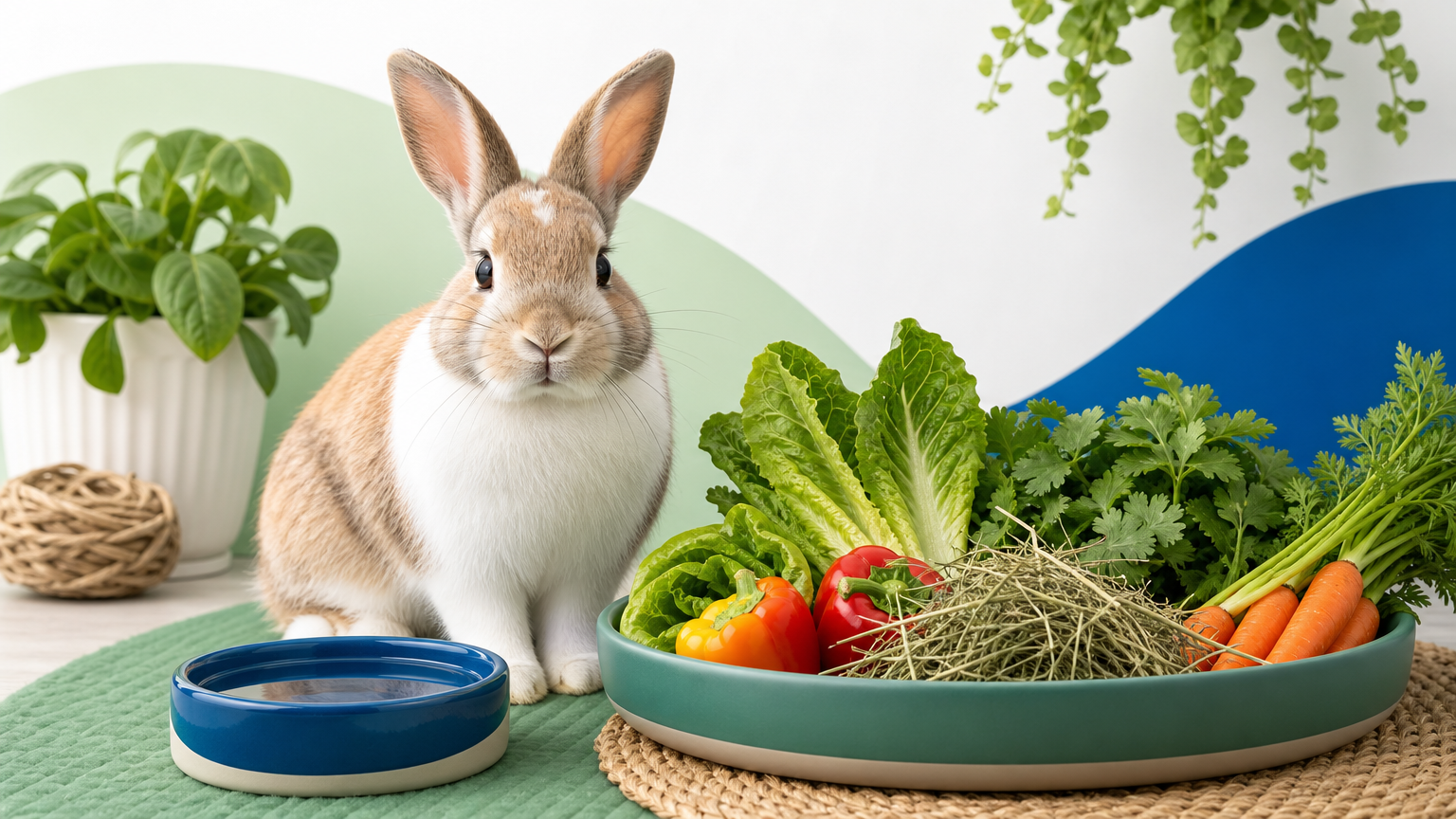
Key takeaway: A rabbit’s diet is about 80% hay, 10-15% fresh vegetables, and 5% pellets — with unlimited fresh water always available.
The 4 Pillars of a Healthy Rabbit Diet
A balanced rabbit diet rests on four foundations. Let’s break each one down.
1. Hay — The Most Important Food (80%)
Hay is the cornerstone of a rabbit’s diet. It provides the fiber needed for healthy digestion and helps wear down their continuously growing teeth.
- Timothy hay is the best everyday choice for adult rabbits
- Orchard grass and meadow hay are good alternatives
- Alfalfa hay should be reserved for young rabbits (under 7 months) and pregnant/nursing females — it’s too rich in calcium and protein for adults
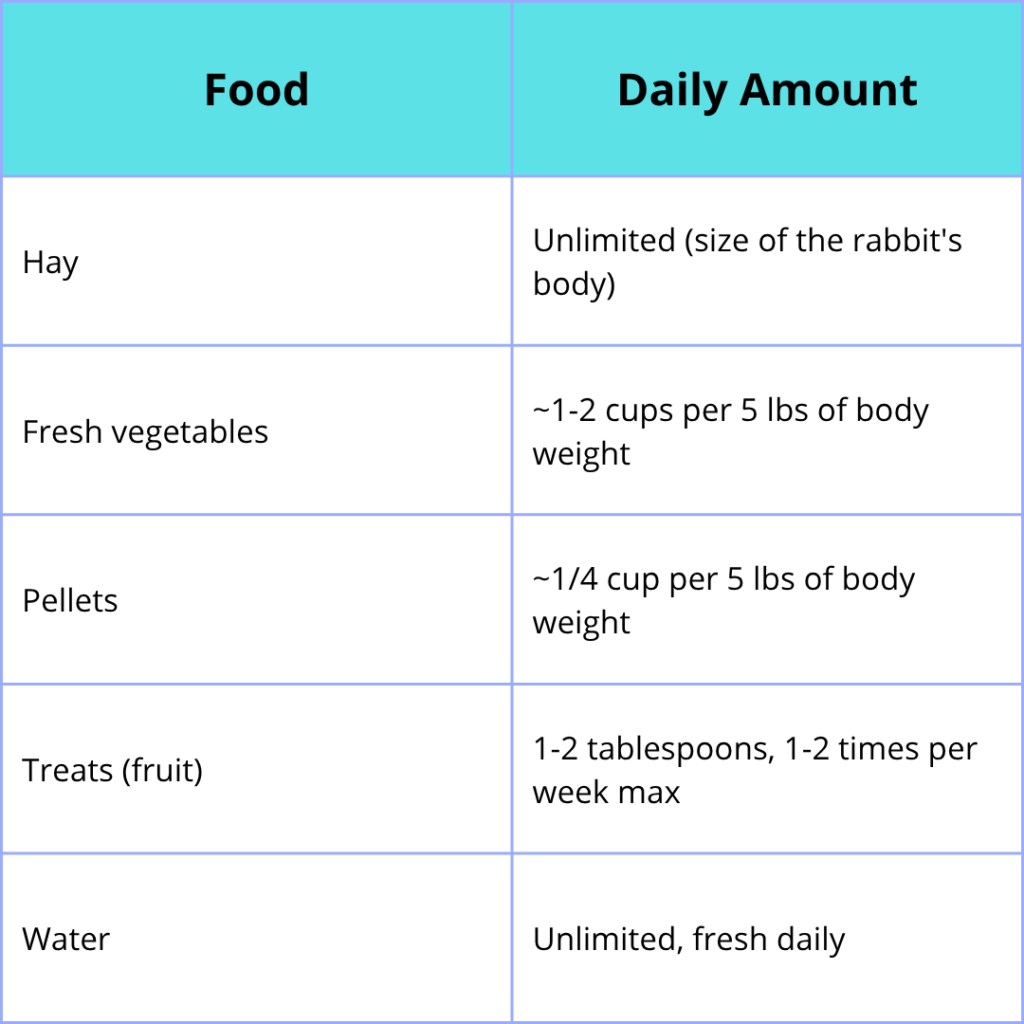
Rule of thumb: Your rabbit should have a pile of hay roughly the size of their body available at all times.
2. Fresh Vegetables (10-15%)
Fresh vegetables add variety, hydration, and important vitamins. Introduce them gradually — one new vegetable at a time — to avoid digestive upset.
Safe daily vegetables:
- Romaine lettuce (not iceberg)
- Cilantro, parsley, basil
- Carrot tops (not the carrot itself daily)
- Bell peppers
- Dark leafy greens (kale, spinach — in moderation)
Vegetables to limit or avoid:
- Iceberg lettuce (low nutritional value)
- High-sugar vegetables like carrots and fruit (treats only)
- Anything from the onion family (toxic)
3. Pellets (5%)
Pellets are a supplement, not the main meal. Choose a high-quality, timothy-based pellet with no added seeds, nuts, or colorful pieces.
- Adult rabbits: about 1/4 cup per 5 lbs of body weight per day
- Young rabbits: can have more, but transition to adult portions by 7 months
4. Fresh Water (Always)
Rabbits need unlimited, fresh, clean water at all times. Use a heavy ceramic bowl (easier to drink from than a bottle and less likely to tip over) and change it daily.
Foods to NEVER Feed Your Rabbit
Some common foods are dangerous or toxic to rabbits. Avoid these completely:
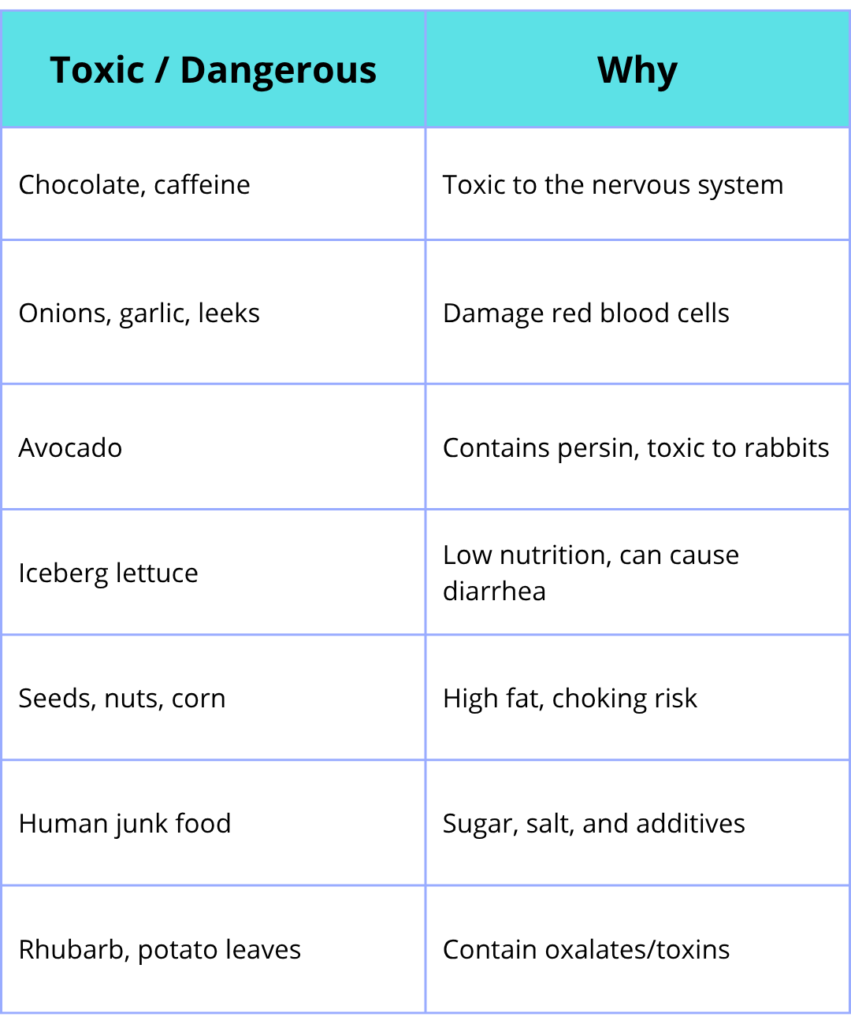
⚠️ Important: Always check with a veterinarian before introducing any new food. Some plants are safe for humans but toxic to rabbits.
How Much Should a Rabbit Eat Daily?
Here’s a simple daily feeding guide for an adult rabbit (over 7 months):
Common Mistakes Beginners Make
- Feeding too many pellets — this leads to obesity and reduces hay intake
- Giving too much fruit — sugar causes weight gain and digestive issues
- Switching foods too fast — always transition gradually over 7-10 days
- Not enough hay — the #1 cause of dental and digestive problems
- Feeding only rabbit “muesli” mixes — these encourage selective eating and are nutritionally unbalanced
Signs Your Rabbit Is Eating Well
A healthy rabbit on a proper diet will show:
- Normal, round fecal pellets (not soft or runny)
- Steady weight (not gaining or losing rapidly)
- Good appetite and active eating throughout the day
- Healthy teeth (no drooling, no difficulty eating)
- Normal energy levels
🚨 Red flag: If your rabbit stops eating or stops producing droppings for more than 12 hours, this is a medical emergency (GI stasis). Contact a veterinarian immediately.
Summary
- Hay (80%) is the foundation — unlimited timothy hay for adults
- Vegetables (10-15%) add variety — introduce gradually
- Pellets (5%) are a supplement, not the main meal
- Fresh water must always be available
- Avoid toxic foods like chocolate, onion, avocado, and iceberg lettuce
- Watch for red flags — a rabbit that stops eating needs urgent vet care
FAQ
Can rabbits eat carrots every day? Carrots are high in sugar. Offer them as an occasional treat (a few small pieces, 1-2 times per week), not as a daily vegetable.
How much hay does my rabbit need? A pile roughly the size of your rabbit’s body, refreshed daily. They should be able to munch on hay throughout the day.
When can my rabbit start eating adult food? Transition from alfalfa to timothy hay and reduce pellets gradually around 7 months of age.
Is it okay to feed my rabbit only pellets? No. Pellets alone don’t provide enough fiber and can cause obesity and dental disease. Hay must always be the main food.
This guide is for educational purposes and is not a substitute for professional veterinary advice. Always consult your veterinarian for specific recommendations for your rabbit.