How Much to Feed a Puppy: A Veterinarian’s Complete Feeding Guide
As a veterinarian, I explain how much to feed a puppy — feeding charts by age and weight, meal frequency, and the mistakes that affect your puppy’s growth forever.
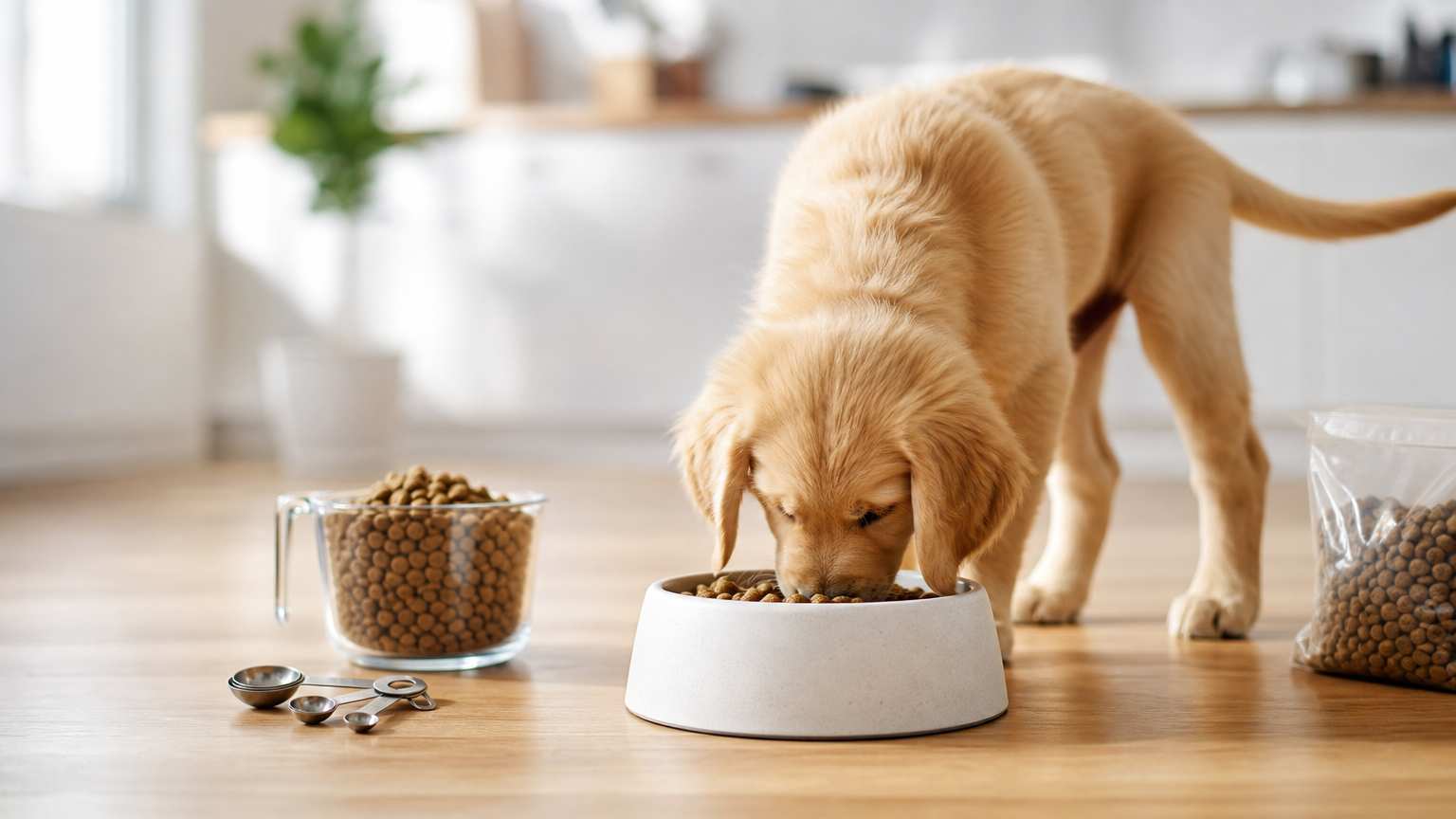
As a veterinarian, I see a question from almost every new puppy owner: “How much should I feed my puppy?”
And it’s one of the most important questions you’ll ask — because the first year of your puppy’s life sets the foundation for their lifelong health. Feed too little and your puppy misses critical growth milestones. Feed too much and you risk obesity, joint problems, and skeletal deformities — especially in large breeds.
Here’s the truth that surprises most owners: there is no single answer that works for every puppy. The right amount depends on your puppy’s age, current weight, expected adult size, breed, and activity level — and on the specific food you’re feeding.
In this guide, I’ll give you evidence-based feeding charts, explain how often to feed at each age, and show you how to adjust portions as your puppy grows.
🟢 Why Puppy Nutrition Matters So Much
Puppies grow at an astonishing rate. Depending on breed, puppies can grow up to 20 times faster than adult dogs. That growth requires:
- More calories per pound of body weight than adult dogs
- More protein for muscle and tissue development
- More calcium and phosphorus for bone growth (in precise ratios)
- DHA for brain and vision development
- Vitamins and minerals for immune system and organ development
🔑 Key insight: Feeding an adult dog food to a puppy — or feeding a large-breed puppy food to a small breed — can cause serious health problems. The food must match your puppy’s life stage and size category.
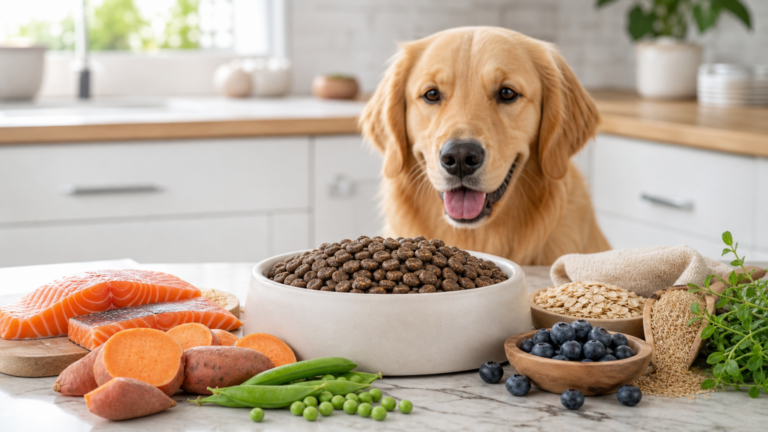
🟡 Choosing the Right Puppy Food
Before we talk about amounts, the food itself matters just as much.
What to Look For
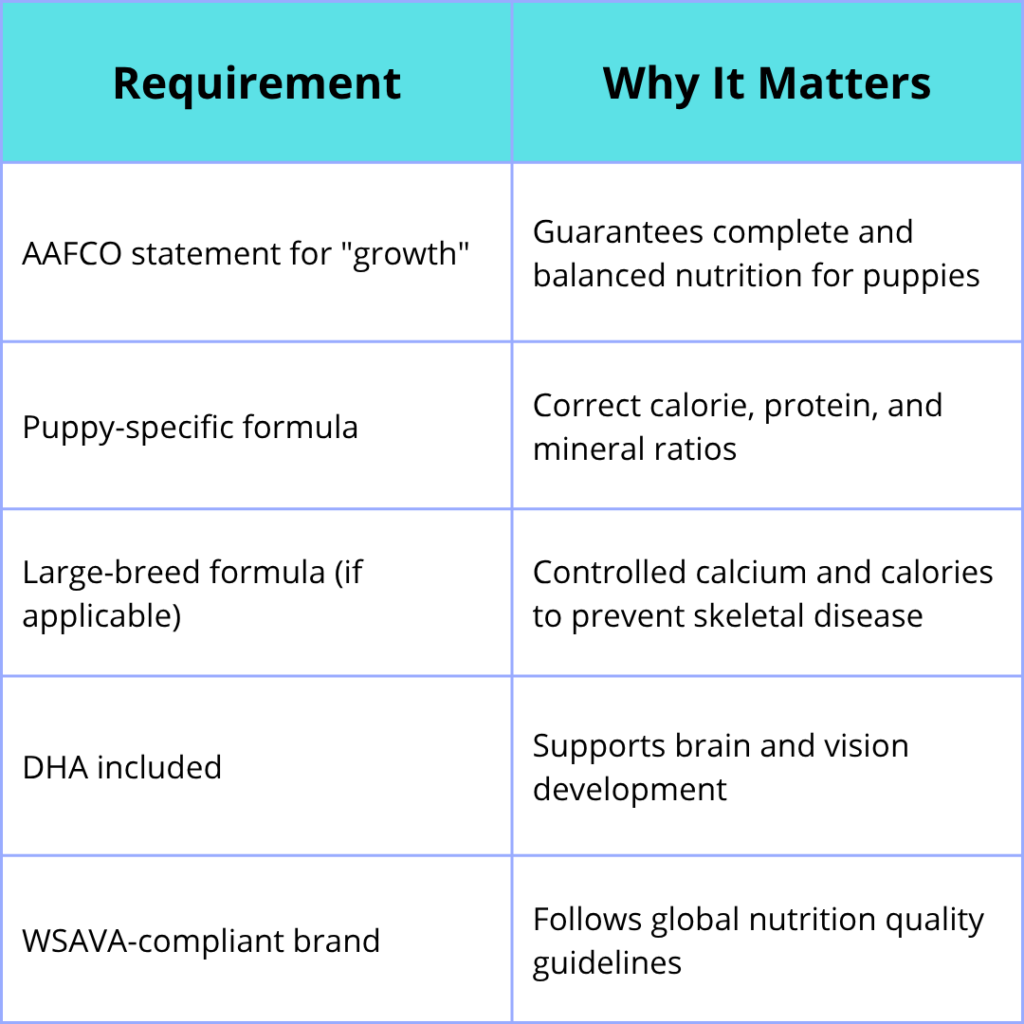
Recommended Brands (WSAVA-Compliant)
- Purina Pro Plan Puppy
- Royal Canin Puppy / Size Health Nutrition
- Hill’s Science Diet Puppy
- Eukanuba Puppy
- Iams Puppy
⚠️ Important: Always check the feeding guide on the bag — but treat it as a starting point, not gospel. Individual puppies vary.
🔴 Puppy Feeding Chart by Age and Weight
These are general guidelines based on standard puppy foods. Always adjust based on your puppy’s body condition and your veterinarian’s advice.
Small Breeds (Expected adult weight: up to 20 lbs / 9 kg)
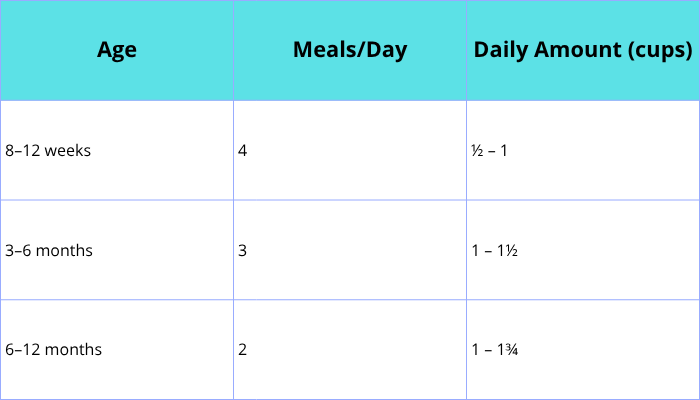
Medium Breeds (Expected adult weight: 20–50 lbs / 9–23 kg)
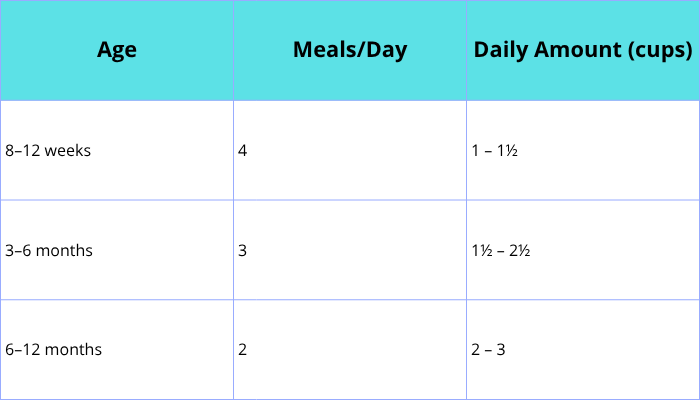
Large Breeds (Expected adult weight: 50–90 lbs / 23–41 kg)
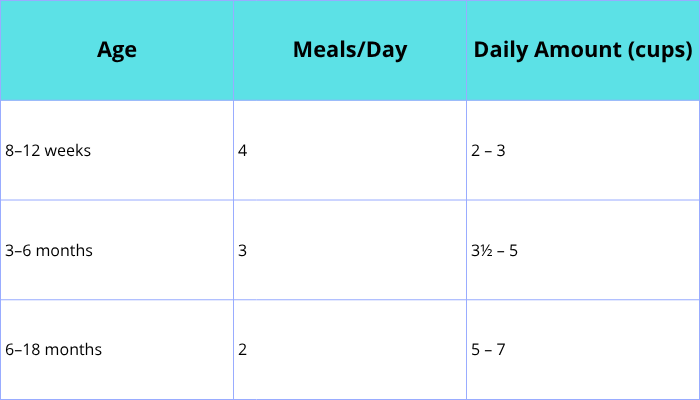
Giant Breeds (Expected adult weight: 90+ lbs / 41+ kg)
👉 These are estimates. The exact amount depends on the calorie density of the specific food. Always cross-check with the bag’s chart and your vet.
🟠 How Often to Feed: The Schedule
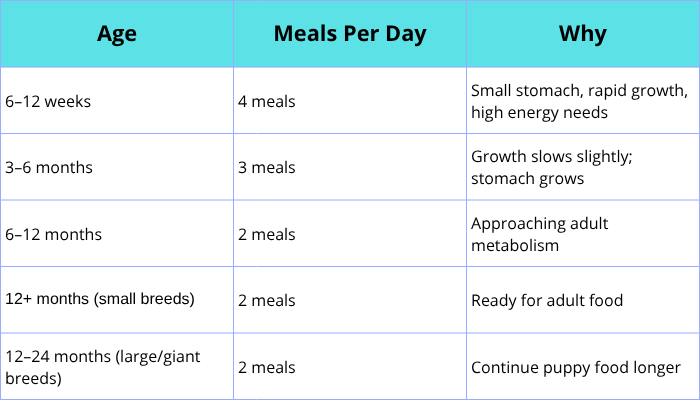
Meal frequency matters almost as much as amount:
🔑 Key insight: Large and giant breed puppies should stay on large-breed puppy food until 12–24 months (depending on breed) to control growth rate and prevent skeletal disease. Small breeds can switch to adult food around 12 months.
🟡 How to Adjust Portions (The Body Condition Method)
Charts are a starting point. The gold standard is body condition scoring. Here’s how to tell if your puppy is getting the right amount:
Check the Ribs
- Too thin: Ribs are easily felt and visible through the coat
- Ideal: Ribs are felt with light pressure but not visible
- Too heavy: Ribs are hard to feel under a fat layer
Check the Waist
- Ideal: A visible waist when viewed from above and an abdominal tuck when viewed from the side
- Too heavy: No waist; rounded belly
Adjust Accordingly
- Underweight: Increase by 10–15% per feeding and recheck in a week
- Overweight: Decrease by 10–15% and increase exercise
- Ideal: Maintain the current amount
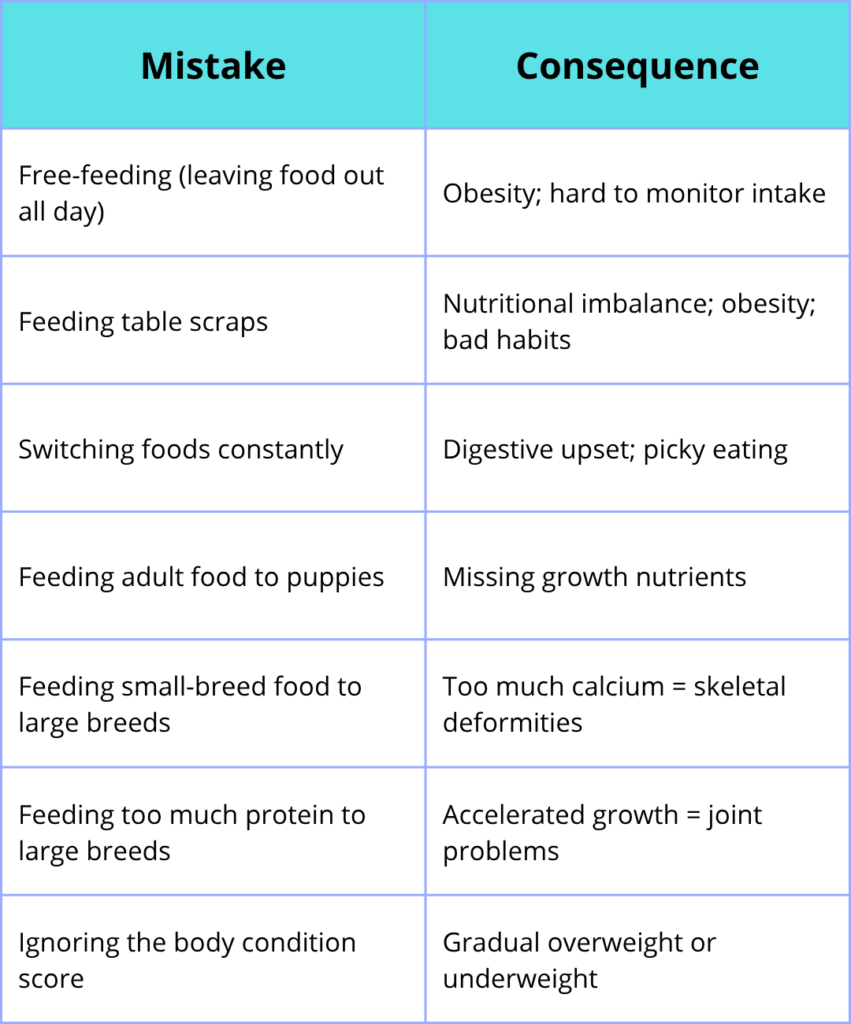
🔵 Feeding Mistakes That Affect Growth Forever
As a veterinarian, these are the mistakes I see most often:
Tabela 07
The Right Way to Switch Foods
When transitioning foods (or from one stage to another), do it gradually over 7–10 days:
- Days 1–3: 25% new food, 75% old food
- Days 4–6: 50% new, 50% old
- Days 7–9: 75% new, 25% old
- Day 10: 100% new food
🟣 Water and Treats
Water
- Fresh water should be available at all times
- Change it daily
- Puppies dehydrate faster than adults
Treats
Treats should make up no more than 10% of your puppy’s daily calories. Over-treating is one of the sneakiest ways puppies gain excess weight.
Better training treats:
- Small pieces of their own kibble (counted toward their daily amount)
- Tiny training treats (3–5 calories each)
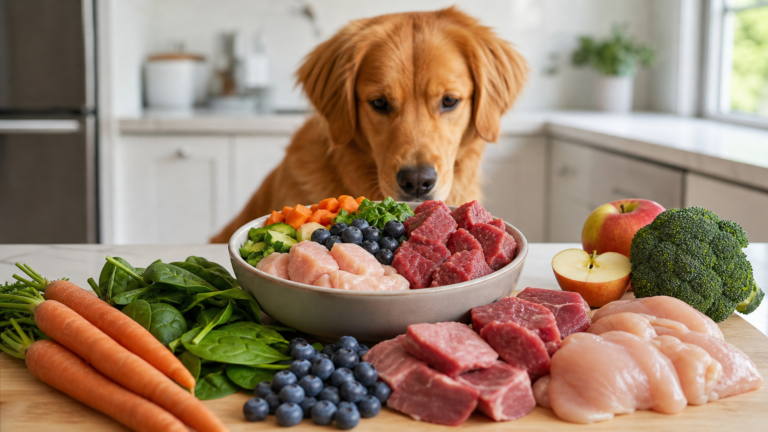
- Small pieces of cooked chicken, carrot, or apple (safe ones only)
❓ Frequently Asked Questions
How do I know if my puppy is eating enough? Check body condition (ribs and waist), monitor weight weekly, and watch energy levels. A healthy puppy gains weight steadily, has firm stools, and is active and playful.
When can my puppy switch to adult food? Small breeds: around 12 months. Medium breeds: 12–18 months. Large and giant breeds: 18–24 months. Check with your veterinarian for breed-specific advice.
Should I feed my puppy 3 or 4 times a day? Under 12 weeks: 4 meals. From 3–6 months: 3 meals. From 6 months: 2 meals. Consistent meal times also help with house training.
My puppy is always hungry. Should I feed more? Not necessarily. Puppies often act hungry even when fed correctly — it’s instinct, not need. Check body condition before increasing food. If your puppy is at a healthy weight, resist the begging.
Can I give my puppy human food as treats? Some foods are safe (plain chicken, carrots, apples, green beans), but many are toxic (chocolate, grapes, onions, xylitol). When in doubt, stick to commercial puppy treats or kibble.
Final Thoughts
As a veterinarian, I tell every new puppy owner the same thing: you can’t “fix” nutrition later. The feeding decisions you make in the first year shape your puppy’s bones, joints, weight, and health for life.
Feed a complete and balanced puppy food matched to your puppy’s size. Use the feeding chart as a starting point. Adjust based on body condition, not the puppy’s begging. And when in doubt, ask your veterinarian — we’re here to help.
A properly fed puppy grows into a healthy, happy adult dog.