How to Trim Dog Nails Safely: A Veterinarian’s Complete Guide
As a veterinarian, I explain how to trim your dog’s nails safely at home — from choosing the right clippers to avoiding the quick — plus what to do if you accidentally cut too short.
As a veterinarian, I hear it constantly: “I’m terrified of cutting my dog’s nails.”
And I understand why. The fear of hurting your dog — of cutting the “quick” and causing pain and bleeding — is completely understandable. But here’s the truth: nail trimming is one of the most important health tasks you can do for your dog, and with the right technique, it’s completely safe.
Overgrown nails cause real problems. They change how your dog walks, which puts stress on their joints and can lead to arthritis. They can curl into the paw pad, causing pain and infection. They make it painful for your dog to walk on hard surfaces. And they increase the risk of your dog slipping or injuring themselves.
In this guide, I’ll walk you through everything you need to know — from choosing the right tools to the step-by-step technique, and what to do if you accidentally cut too short.
🟢 Why Nail Trimming Matters — From a Veterinary Perspective
Many owners don’t realize how much overgrown nails affect their dog’s health:

🔑 Key insight: A dog’s nails should not touch the ground when standing. If you hear clicking on hard floors, the nails are too long.
🟡 Choosing the Right Tools
Nail Clippers
There are two main types:

Nail Grinder (Dremel)
A rotating grinding tool that files the nail down gradually.
Pros:
- No risk of cutting the quick (you grind slowly)
- Smoother finish, less sharp edges
- Great for dogs with thick, dark nails
Cons:
- Noisier — some dogs are scared of the sound
- Takes longer
- Requires desensitization
Styptic Powder (Essential!)
This stops bleeding instantly if you accidentally cut the quick. Never trim nails without it.
🔴 Understanding the Quick
The quick is the pink area inside the nail that contains blood vessels and nerves. Cutting it is painful and causes bleeding.
How to See the Quick
- Light-colored nails: The quick is visible as a pink area inside the nail
- Dark nails: The quick is harder to see. Look at the underside of the nail — the quick appears as a darker area where the nail becomes hollow
The Safe Cutting Zone
Cut only the tip of the nail — the part that curves down. When in doubt, cut less. You can always trim more, but you can’t undo a cut into the quick.
🟠 Step-by-Step: How to Trim Your Dog’s Nails Safely
Step 1: Get Your Dog Comfortable
- Start by handling your dog’s paws regularly — even when not trimming
- Touch, squeeze gently, and reward with treats
- Do this for several days before attempting a trim
Step 2: Prepare Your Supplies
- Nail clippers or grinder
- Styptic powder (within reach)
- Treats for rewards
- A helper (optional, for nervous dogs)
Step 3: Position Your Dog
- Have your dog stand or sit in a comfortable position
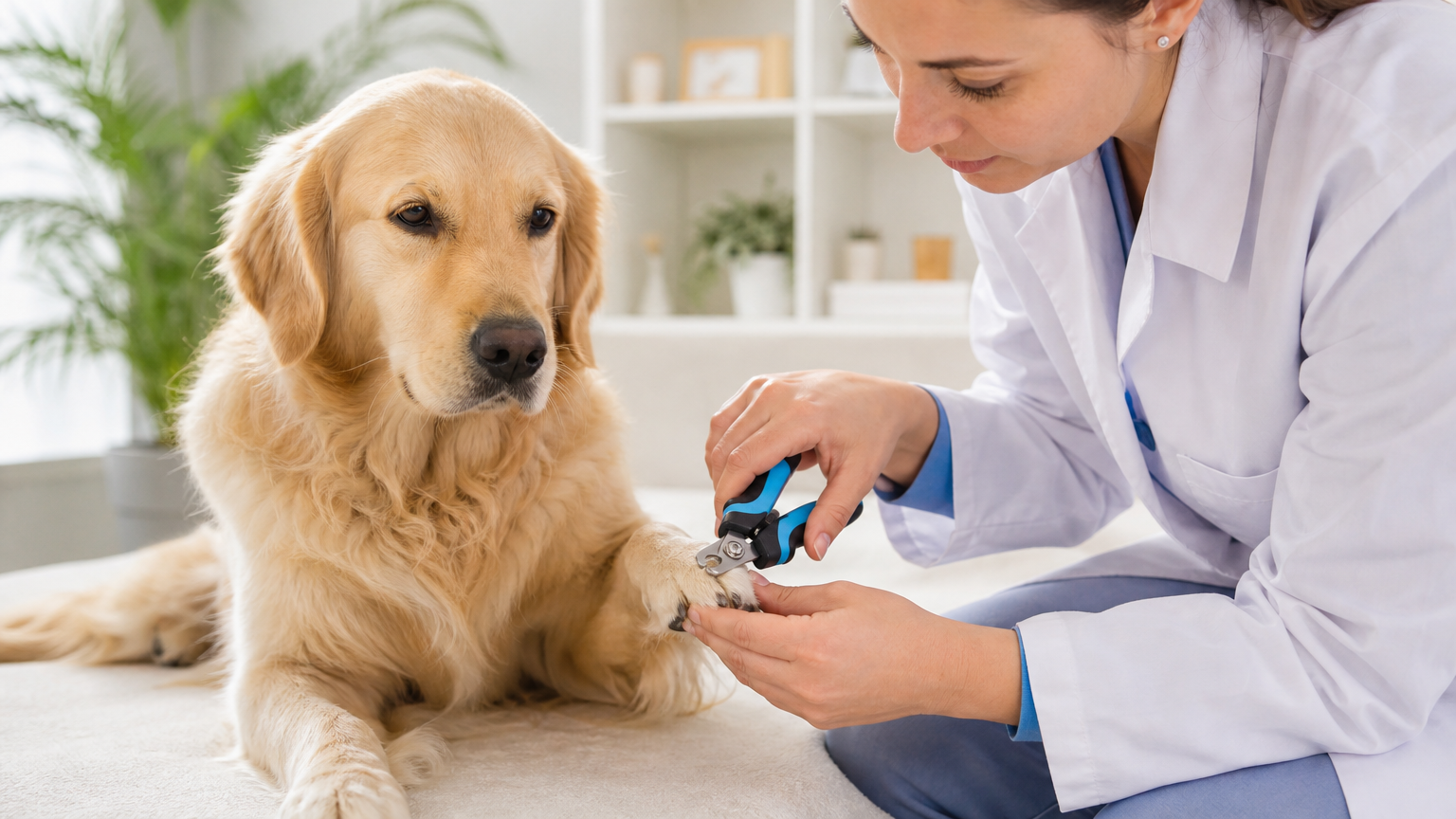
- Hold the paw firmly but gently
- If your dog is nervous, have a helper hold them or distract with treats
Step 4: Identify the Quick
- For light nails: look for the pink area
- For dark nails: cut small amounts at a time, checking the cut surface
Step 5: Make the Cut
- Hold the clippers at a 45-degree angle
- Cut quickly and decisively — hesitation causes crushing
- Cut only the tip of the nail
- Start with the front paws, then the back
Step 6: Reward Generously
- Give treats and praise after each paw
- End the session on a positive note
- If your dog gets stressed, stop and try again later
Step 7: File Sharp Edges (Optional)
- Use a nail file or grinder to smooth rough edges
- This prevents snagging and reduces scratching
🟡 What to Do If You Cut the Quick
It happens to everyone — even experienced owners. Don’t panic.
Immediate Steps
- Stay calm — your dog feeds off your energy
- Apply styptic powder — press it firmly on the bleeding nail for 30–60 seconds
- If no styptic powder — use cornstarch, flour, or a bar of soap pressed against the nail
- Keep your dog calm — prevent running or jumping for 30 minutes
- Monitor — bleeding should stop within a few minutes
When to Call Your Veterinarian
- Bleeding doesn’t stop after 10–15 minutes of pressure
- The nail is broken, cracked, or split
- Your dog is in significant pain or won’t put weight on the paw
- Signs of infection develop (redness, swelling, discharge)
🔵 How Often Should You Trim?
The frequency depends on your dog’s activity level:

👉 Rule of thumb: If you hear clicking on hard floors, it’s time to trim.
🟣 Tips for Nervous Dogs
Some dogs are terrified of nail trimming. Here’s how to help:
- Desensitize slowly — touch paws daily, reward calm behavior
- Use a nail grinder — quieter than clippers for some dogs (though the sound can scare others)
- Try the “scratch board” method — teach your dog to scratch a board with sandpaper to file nails naturally
- Use a helper — one person holds and distracts, the other trims
- Keep sessions short — one paw per session if needed
- Consider a professional — groomers and vet techs are experienced with difficult dogs
❓ Frequently Asked Questions
What if my dog’s nails are already too long? If the nails are severely overgrown, the quick may have grown long too. Don’t try to cut them all at once. Trim small amounts every 1–2 weeks — the quick will gradually recede as the nail shortens.
Can I use human nail clippers on my dog? No. Human nail clippers are too small and can crush or split dog nails. Use tools specifically designed for dogs.
My dog has black nails. How do I know where to cut? Cut small amounts at a time. After each cut, look at the cut surface — if you see a dark center (the quick), stop. Cut only the tip and check frequently.
Is it better to use clippers or a grinder? Both work. Clippers are faster; grinders are safer (no risk of cutting the quick) but noisier. Many owners use both — clippers for the main cut, grinder to smooth edges.
Can I take my dog to a groomer or vet for nail trims? Absolutely. If you’re uncomfortable or your dog is difficult, a professional groomer or vet tech can do it quickly and safely. It’s a reasonable investment in your dog’s comfort.
Final Thoughts
As a veterinarian, I want you to know that nail trimming is a learned skill — not an innate talent. It takes practice, patience, and a willingness to make mistakes (and learn from them).
Start slow. Handle your dog’s paws daily. Invest in good tools. Keep styptic powder nearby. And remember: it’s better to cut too little than too much.
Your dog’s joints, paws, and overall comfort depend on it. And with time, both you and your dog will get better at it.