Natural Remedies for Dog Anxiety: A Veterinarian’s Evidence-Based Guide
As a veterinarian, I explain which natural remedies for dog anxiety actually work — from pheromones and supplements to herbs and environmental changes — and which to avoid.
As a veterinarian, I understand why you want a natural approach. The idea of giving your anxious dog a prescription medication can feel heavy — and many owners prefer to try gentler options first.
The good news? There are natural remedies that genuinely work for mild to moderate anxiety. The bad news? The market is flooded with products that make big claims but have little evidence behind them. Some are harmless placebos. Others can actually be dangerous.
In this guide, I’ll walk you through the natural remedies with real scientific support, explain how they work, and help you avoid the ones that are a waste of money — or worse, harmful.
🟢 Understanding Dog Anxiety First
Before reaching for any remedy, it’s important to understand what you’re treating. Dog anxiety comes in different forms:
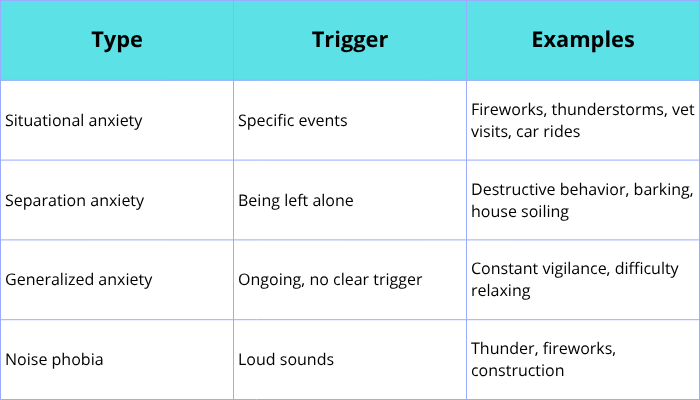
🔑 Key insight: Natural remedies work best for mild to moderate situational anxiety. For severe anxiety — especially separation anxiety or phobias — natural options alone are rarely enough. You’ll likely need a combination of natural remedies, behavior modification, and possibly medication.
🟡 Natural Remedies With Real Evidence
1. Dog-Appeasing Pheromones (DAP)
These are synthetic versions of the calming pheromones that mother dogs release to soothe their puppies.
How it works: The pheromone is detected by the dog’s nose and triggers a calming response.
Forms: Diffuser (plug-in), collar, or spray.
Evidence: Multiple studies show DAP reduces anxiety-related behaviors in dogs, especially during separation, travel, and hospitalization.
Best for: Separation anxiety, travel anxiety, new environments.
2. L-Theanine
An amino acid found naturally in green tea.
How it works: Promotes relaxation by increasing alpha brain waves and supporting GABA activity — without sedation.
Evidence: Well-studied for anxiety in humans; emerging evidence in dogs. Often combined with other calming ingredients.
Best for: Mild situational anxiety, noise sensitivity, general nervousness.
3. Melatonin
A hormone that regulates sleep-wake cycles.
How it works: Promotes calmness and sleepiness, especially helpful for noise phobias.
Evidence: Widely used by veterinarians for noise anxiety, especially fireworks and thunderstorms.
Best for: Noise phobias, sleep issues, mild anxiety.
⚠️ Important: Always use melatonin specifically formulated for dogs (no xylitol, no artificial sweeteners). Dose depends on weight — confirm with your vet.
4. Alpha-Casozepine (Zylkene)
A natural peptide derived from milk protein.
How it works: Binds to the same receptors as benzodiazepines (like Valium) but much more gently, promoting calm without sedation.
Evidence: Multiple studies show it reduces anxiety in dogs, especially during stressful events.
Best for: Situational anxiety, travel, boarding, changes in routine.
5. CBD (Cannabidiol)
Derived from hemp, CBD has become increasingly popular for pet anxiety.
How it works: Interacts with the endocannabinoid system to promote calmness.
Evidence: Mixed. Some studies show promise for pain and seizures; evidence for anxiety is still emerging and inconsistent.
Important considerations:
- Use pet-specific CBD (no THC — toxic to dogs)
- Look for third-party tested products
- Check dosing with your veterinarian
- CBD can interact with other medications
6. Chamomile and Valerian Root
Traditional calming herbs.
How it works: Chamomile has mild calming properties; valerian root acts as a gentle sedative.
Evidence: Limited but promising in dogs; more research needed.
Best for: Mild anxiety, as part of a combination supplement.
⚠️ Caution: These herbs can interact with other medications. Always check with your vet first.
🔴 Natural Remedies to Approach With Caution
Not everything “natural” is safe:

👉 Golden rule: “Natural” does not mean “safe.” Always check with your veterinarian before giving your dog any supplement or herb.
🟠 Environmental and Behavioral Remedies (Free and Effective)
Before spending money on supplements, try these evidence-based approaches:
1. Exercise (The Most Underrated Remedy)
A tired dog is a calm dog. 30–60 minutes of physical activity before a stressful event significantly reduces anxiety.
2. Mental Stimulation
Puzzle toys, training sessions, and nose work tire the brain — which is just as calming as physical exercise.
3. Calming Music and White Noise
Studies show classical music and dog-specific playlists reduce stress in dogs. White noise masks triggering sounds (thunder, fireworks, traffic).
4. Safe Space
Create a quiet, comfortable area where your dog can retreat — a crate with a blanket, a quiet room, or a bed in a corner. Let your dog choose to go there; never force them.
5. Anxiety Wraps and ThunderShirts
Gentle, constant pressure has a calming effect on many dogs (similar to swaddling a baby).
Evidence: Anecdotal support is strong; scientific evidence is limited but the mechanism is plausible.
6. Routine and Predictability
Dogs thrive on routine. Consistent feeding, walking, and sleeping times reduce overall stress levels.
7. Massage and Touch
Gentle massage lowers heart rate and promotes relaxation. Focus on the ears, neck, shoulders, and back.
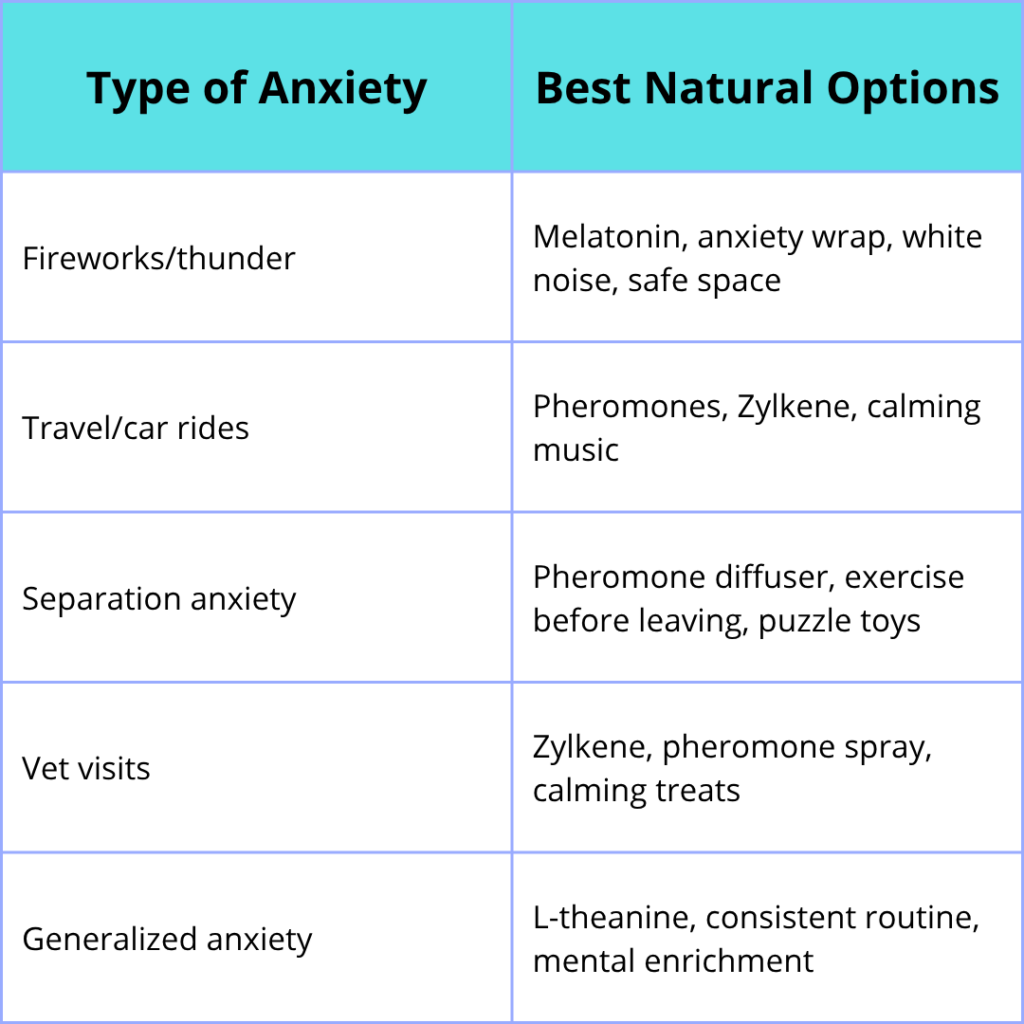
🟡 How to Choose the Right Natural Remedy
Here’s a practical guide based on the type of anxiety:
🔵 When Natural Remedies Aren’t Enough
As a veterinarian, I want to be honest: natural remedies have limits. Schedule a veterinary appointment if:
- Your dog’s anxiety is severe or worsening
- Your dog is destroying property or injuring themselves
- Your dog shows aggression when anxious
- Natural remedies haven’t helped after 4–6 weeks
- Your dog’s anxiety is disrupting their quality of life (not eating, not sleeping, constant distress)
In these cases, prescription medications — combined with behavior modification — are often the most effective path. This isn’t a failure. It’s responsible care.
❓ Frequently Asked Questions
How long do natural remedies take to work? It depends. Pheromones work within minutes to hours. Melatonin works within 30–60 minutes. L-theanine and Zylkene may take 30–45 days of consistent use for full effect. Herbal supplements vary widely.
Can I combine natural remedies? Yes, but carefully. Some combinations are safe and effective (pheromones + exercise + music). Others can interact dangerously. Always tell your veterinarian everything your dog is taking.
Is CBD safe for my dog? Only if it’s pet-specific, third-party tested, THC-free, and dosed correctly. Even then, evidence for anxiety is limited. Talk to your vet before starting.
Are calming treats effective? Some are — if they contain evidence-based ingredients (L-theanine, melatonin, alpha-casozepine) at appropriate doses. Many contain only trace amounts and are essentially placebos. Read labels carefully.
Can I use human supplements for my dog? Never without veterinary guidance. Human products may contain xylitol (toxic), artificial sweeteners, or doses that are dangerous for dogs.
Final Thoughts
As a veterinarian, my approach to natural remedies is balanced: use what works, avoid what doesn’t, and never let “natural” replace necessary medical care.
Start with the free stuff — exercise, routine, safe space, music. Add pheromones and evidence-based supplements for situational anxiety. And if your dog’s anxiety is severe or persistent, don’t hesitate to involve your veterinarian.
Anxiety is treatable. Your dog doesn’t have to suffer.