

Wellness Plan for Dogs: A Veterinarian’s Complete Guide to Preventive Care (2026)
As a veterinarian, I explain what a dog wellness plan is, what it covers, how much it costs, and whether it’s worth it — so you can keep your dog healthy year-round.
As a veterinarian, I see the same pattern every year: a dog comes in with a preventable problem — dental disease, heartworm, a tick-borne illness — and the owner says, “I wish I’d caught it earlier.”
That’s exactly what a wellness plan is designed to prevent.
A wellness plan (also called a preventive care plan) is a monthly subscription that bundles your dog’s routine, preventive veterinary care — checkups, vaccines, dental cleanings, and more — into one predictable payment.
But here’s what confuses most owners: a wellness plan is NOT the same as pet insurance. They serve different purposes, and ideally, you have both.
In this guide, I’ll explain what wellness plans cover, how much they cost, and how to decide if one is right for your dog.
🟢 Wellness Plan vs. Pet Insurance: What’s the Difference?
This is the #1 source of confusion, so let me make it crystal clear:
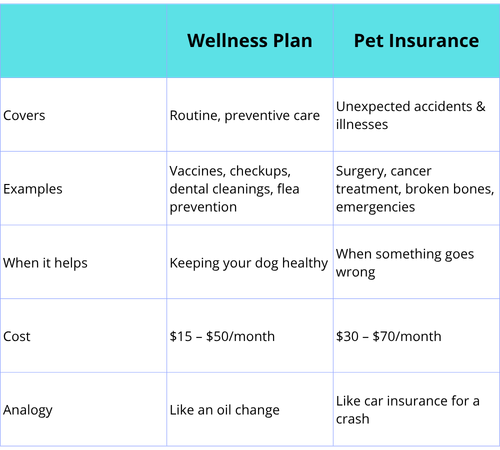
🔑 Key insight: A wellness plan is not a substitute for pet insurance. It’s a complement. Wellness covers the predictable; insurance covers the unpredictable. For complete protection, you want both.
🟡 What a Wellness Plan Typically Covers
Wellness plans bundle routine care into tiers. Here’s what’s commonly included:
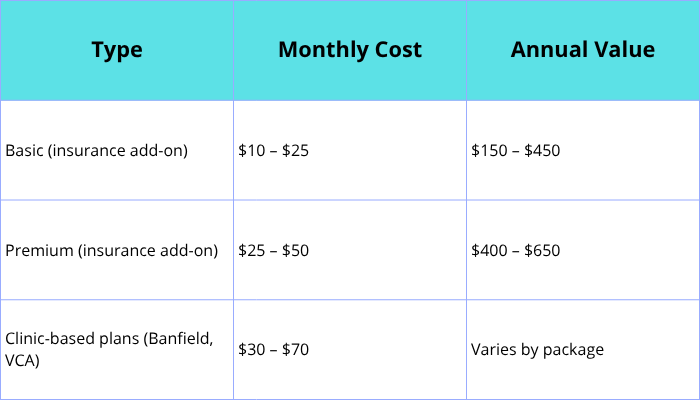
Basic Plans (usually $10–$25/month)
- Annual wellness exam
- Core vaccinations
- Heartworm test (dogs)
- Fecal exam (parasite check)
- Deworming
Everything in basic, plus:
- Dental cleaning (up to a set amount)
- Spay or neuter surgery (some plans)
- Blood tests
- Urinalysis
- Flea, tick, and heartworm prevention products
- Microchipping
Top-Tier Plans (veterinary clinic-based)
Plans like Banfield Optimum Wellness Plans and VCA CareClub offer:
- Unlimited exams (including urgent visits)
- Customized care packages by life stage (puppy, adult, senior)
- 20–30% savings on additional services
🔴 How Much Do Wellness Plans Cost?
Costs vary by provider and tier:
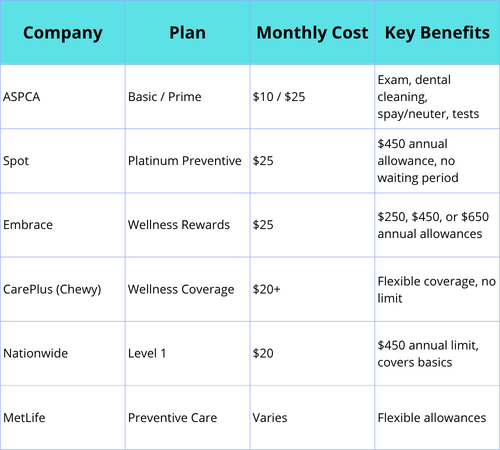
🟠 Wellness Plans From Pet Insurance Companies
Most major pet insurers offer wellness as an add-on to accident & illness coverage:
🟡 Clinic-Based Wellness Plans (Banfield, VCA, etc.)
These are different from insurance add-ons — they’re packages sold directly by veterinary clinics:
Pros
- Unlimited exams at any location in the network
- Built around your dog’s life stage (puppy, adult, senior)
- 20–30% discounts on additional services
- Easy to understand — one monthly fee, everything included
Cons
- Tied to one clinic network — can’t use elsewhere
- If you move or change vets, the plan may not transfer
- Some services require exams first (e.g., dental cleaning requires an exam fee)
- Not insurance — doesn’t cover accidents or illnesses
🔵 Is a Wellness Plan Worth It?
Here’s my honest take as a veterinarian:
✅ Worth It If…
- Your dog needs regular preventive care — vaccines, dental cleanings, parasite prevention
- You want predictable costs — one monthly payment instead of surprise bills
- You have a puppy — first-year care is the most expensive (vaccines, spay/neuter, microchipping)
- You have a senior dog — more frequent exams and blood work are recommended
- You’ll actually use the services — the value comes from consistent use
❌ Maybe Not Worth It If…
- Your dog gets minimal preventive care — and you’re disciplined about finding deals
- You’d rather pay per visit — and your dog rarely needs care
- The plan’s included services don’t match your dog’s actual needs
👉 The math: Routine care for a dog averages $242/year, plus $500–$1,000 for a dental cleaning. A wellness plan that covers a dental cleaning alone can pay for itself.
🟣 How to Choose the Right Wellness Plan
Step 1: List Your Dog’s Preventive Needs
- Vaccines (core + lifestyle)
- Dental cleaning (yearly recommended)
- Heartworm/flea/tick prevention (year-round)
- Blood work (seniors, or breed-predisposed conditions)
- Spay/neuter, microchip (puppies)
Step 2: Compare Plans Side by Side
- Look at the annual allowance (the dollar value of services included)
- Compare the monthly cost vs. what you’d pay out of pocket
- Check waiting periods and coverage limits
Step 3: Decide Between Insurance Add-On vs. Clinic Plan
- Insurance add-on: flexible, works at any vet, pairs with your insurance
- Clinic plan: unlimited exams, bundled discounts, but tied to that clinic
Step 4: Buy Early (for Puppies)
Puppy plans bundle the most expensive first-year care — vaccines, spay/neuter, microchipping — at significant savings.
❓ Frequently Asked Questions
Is a wellness plan the same as pet insurance? No. Wellness plans cover routine, preventive care (vaccines, checkups, dental cleanings). Pet insurance covers unexpected accidents and illnesses. They complement each other — for full protection, you want both.
How much does a dog wellness plan cost? Typically $10–$50/month, depending on the tier and provider. Clinic-based plans (Banfield, VCA) run $30–$70/month with more comprehensive services.
Does a wellness plan cover dental cleaning? Most premium wellness plans include dental cleaning (up to a set amount, often $100–$150). Check the plan details — coverage varies.
Can I get a wellness plan without pet insurance? Yes. Clinic-based plans (Banfield, VCA, CareClub) are standalone. Most insurance companies also offer wellness as an add-on if you want both.
Is a wellness plan worth it for a healthy dog? If you’ll consistently use the included services (vaccines, dental cleaning, checkups), yes — the bundle is usually cheaper than paying per visit. If your dog rarely needs care, you may be better off paying as you go.
Final Thoughts
As a veterinarian, I tell owners the same thing: prevention is always cheaper than treatment.
A wellness plan turns unpredictable veterinary bills into a predictable monthly cost — and encourages the consistent preventive care that keeps dogs healthy in the first place.
Combine it with pet insurance, and you have complete coverage: wellness for the everyday, insurance for the unexpected.
Your dog deserves both.