
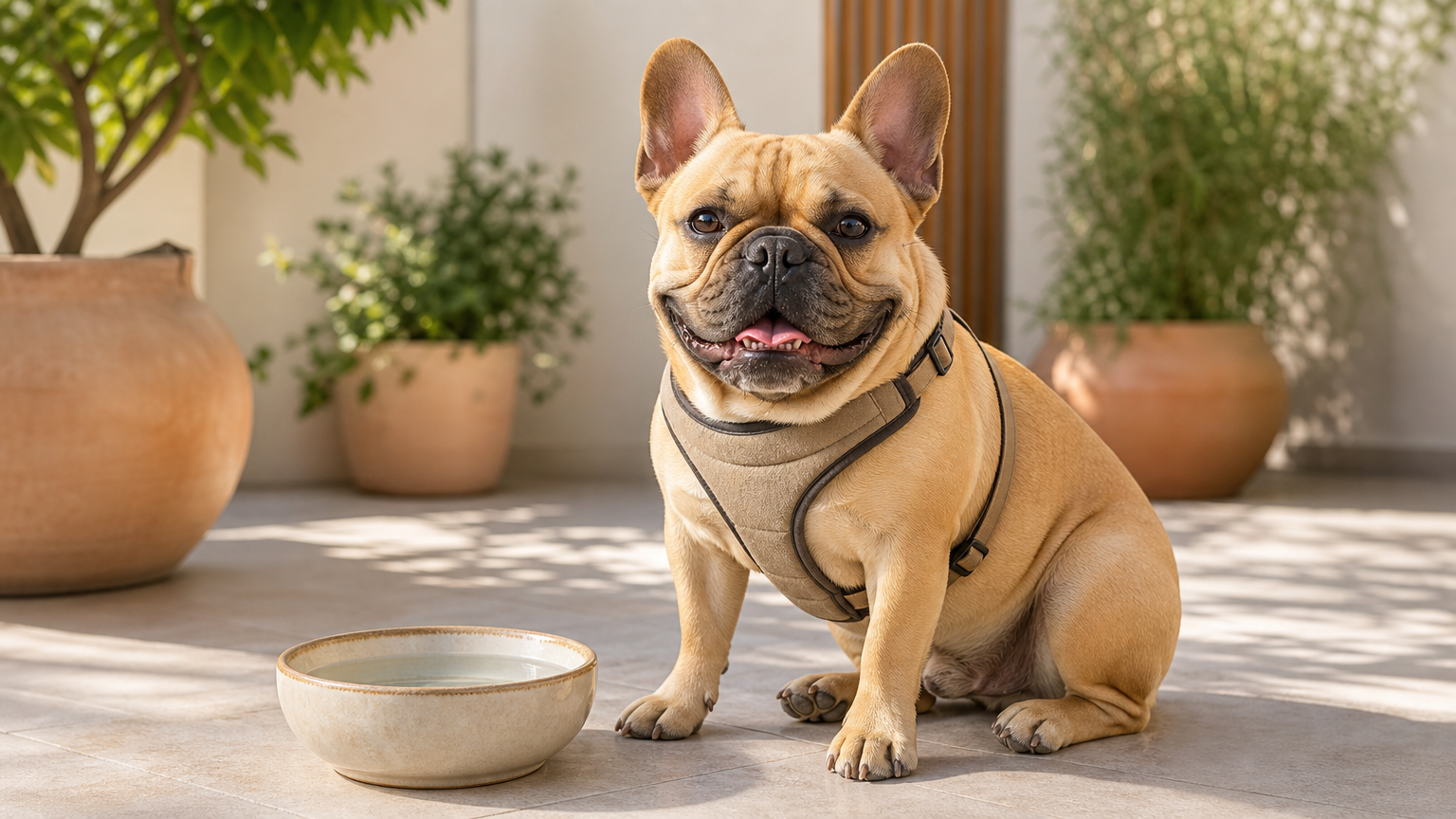
French Bulldog Health Problems: 7 Essential Care Tips
Few breeds win hearts as fast as the French Bulldog. The flat face, the bat ears, the goofy charm — it’s easy to see why they’re one of the most beloved dogs in the world. But that irresistible look comes at a price: the breed is one of the most demanding when it comes to veterinary care — and French Bulldog health problems deserve close attention from day one.
The good news? Most French Bulldog health problems can be prevented or managed with daily care, attention to warning signs, and regular vet visits.
If you’re looking for extra peace of mind for the unexpected moments, a pet health plan is an option worth checking out — [verify benefits].
In this article, you’ll understand why the breed is so sensitive and discover the 7 essential care tips that make all the difference in your Frenchie’s health and happiness.
Why Do French Bulldogs Need Special Care?
It all comes down to body structure. The French Bulldog is a brachycephalic breed — meaning it has a short skull and a flat face, which compresses the airways and makes breathing harder. That trait, combined with a compact body and folded skin, creates a set of predispositions no owner should ignore.
The numbers put it in perspective: a German survey published in 2025 found that around 70% of French Bulldogs show some sign of brachycephalic obstructive airway syndrome (BOAS). It’s no exaggeration to say the breed’s health starts with breathing.
That’s why the essential care tips below aren’t optional — they’re the foundation for a long, comfortable life.
The 7 Essential Care Tips for French Bulldog Health
1. Breathing: the #1 Priority for the Breed
Brachycephalic obstructive airway syndrome (BOAS) is the most characteristic French Bulldog health problem. Narrow nostrils, an elongated soft palate, and a narrow trachea make it hard for air to pass through — and the effort of breathing tires the dog out even during simple activities.
Warning signs:
- Constant, intense snoring (even while awake)
- Noisy or labored breathing at rest
- Getting tired quickly on short walks
- Blue or purple tongue and gums (cyanosis)
- Fainting or collapsing after exertion
What to do: avoid intense exercise, keep walks short and at cool times, use a harness instead of a collar (collars press on the trachea), and for moderate to severe cases, talk to your vet about corrective airway surgery, which dramatically improves quality of life.
For owners who want to be prepared for unexpected vet costs, pet health insurance is worth considering — [verify benefits].
2. Heat: The Silent Enemy
Because of their narrow airways, French Bulldogs can’t cool themselves down properly — they pant, but hot air barely reaches their lungs. Hyperthermia (overheating) is a real emergency and can be fatal within minutes.
Golden rules:
- Never leave your Frenchie in hot places or in the car, not even “for a minute”
- Walk only in the early morning or late evening during summer
- Always provide fresh water; consider cooling mats or a shallow kiddie pool
- Extra caution with puppies, seniors, and overweight dogs
If you want to make regular vet visits and treatments more affordable, a pet insurance plan is a great option to explore — [verify benefits]
Signs of overheating: intense panting, excessive drooling, bright red gums, weakness, and vomiting. At the first sign, move the dog to a cool place, wet the body with room-temperature water, and get to the vet immediately.
See, you might also enjoy reading: Probiotic Dog Food: What’s Myth and What’s True
3. Skin and Folds: Hygiene That Prevents Dermatitis
The facial and tail folds are adorable — but they trap moisture, dirt, and bacteria. Without regular cleaning, they become the perfect breeding ground for fold dermatitis, itching, and odor. The breed is also highly prone to skin allergies (atopic and food-related).
Practical care:
- Clean the folds daily with a damp cloth or wipe, then dry thoroughly
- Use pet-specific products (no alcohol or perfumes)
- Watch for excessive itching, redness, hair loss, and constant licking
- For recurring allergies, your vet may recommend an elimination diet or dermatological treatment
4. Spine: Careful With Jumps and Stairs
The French Bulldog’s compact body hides a serious predisposition: spinal issues, especially intervertebral disc disease (IVDD) and hemivertebrae (malformed vertebrae). A jump off the couch can be enough to trigger intense pain or even paralysis.
How to protect:
- Prevent jumping from sofas, beds, and cars — use ramps or steps
- Limit stair access whenever possible
- Support the dog’s body when holding him (never by the front legs)
- Watch for reluctance to walk, pain on touch, trembling, or dragging the back legs — that’s a veterinary emergency
5. Eyes: Sensitivity That Demands Vigilance
The large, prominent eyes are another breed trademark — and another vulnerable spot. French Bulldogs are predisposed to corneal ulcers, cherry eye (prolapsed third eyelid gland), dry eye, and entropion.
Care tips:
- Check the eyes daily: redness, discharge, excessive blinking, or rubbing the face are warning signs
- Never use human eye drops on your own
- Protect the dog from contact with plants, furniture, and other animals
- Any eye injury needs immediate veterinary attention — corneal ulcers progress fast
6. Weight: Every Extra Pound Weighs on Breathing
Excess weight is especially cruel to French Bulldogs: each extra pound stresses the airways, joints, and spine, worsening nearly every french Bulldog health problem.
Tips:
- Follow the daily portion recommended on the bag (adjusted by your vet)
- Avoid excessive treats and “table food”
- Prefer light, frequent exercise over intense exertion
- Regular weight checks at the vet’s office
A lean Frenchie breathes better, moves better, and lives longer.
7. Regular Check-Ups: Prevention Is the Best Medicine
Many French Bulldog health problems are silent at first. Regular vet visits — at least once or twice a year — allow early detection of heart disease, orthopedic issues, allergies, and respiratory changes.
Also keep in mind: the breed has difficulty with natural reproduction (most females need C-sections) and requires special attention during surgery, since anesthesia is riskier in brachycephalic dogs. If you’re thinking about breeding or getting a puppy, look for ethical breeders who run health tests and avoid breeding extreme specimens.
See, you might also enjoy reading: The 5 Most Popular Pet Reptiles in the US: A Vet’s Guide to Choosing Your First Scaly Friend
Quick Checklist for French Bulldog Owners
- ✅ Walks at cool times, with a harness, without overdoing it
- ✅ Fresh water always and good ventilation
- ✅ Daily cleaning of skin folds
- ✅ Ramps for the couch and limited stair access
- ✅ Eyes and ears inspected weekly
- ✅ Controlled weight and balanced diet
- ✅ Vet check-up every 6–12 months
- ⚠️ Emergency: breathing difficulty, overheating, spinal pain, or eye injury
Conclusion: Loving a French Bulldog Means Caring for One
Having a French Bulldog is a one-of-a-kind experience — and a one-of-a-kind responsibility.French Bulldog health problems are real, but the vast majority can be prevented or well managed with the 7 essential care tips you just read: breathing, heat, skin, spine, eyes, weight, and check-ups.
Every daily choice — the walk time, the fold cleaning, the ramp by the couch — is an act of love that translates into more years together and less suffering.
And if you’d like to protect your Frenchie against the unexpected, health coverage for your Frenchie is a great place to start — [verify benefits]
Start today: schedule a full veterinary evaluation and adopt at least one new care habit from this list. Your Frenchie will thank you with that crooked smile only he has.



[…] See, you might also enjoy reading: French Bulldog Health Problems: 7 Essential Care Tips […]